This oracle cards guide is for anyone curious about the colorful, image-rich decks that have become a fixture of modern self-reflection practices. Oracle cards are intuitive divination tools used for personal insight, mindfulness, and daily guidance, and unlike tarot, they follow no fixed structure or card count. Each deck is its own world, built around a theme, an artist’s vision, and a guidebook meant to help the reader translate symbol into meaning.
What Is an Oracle Cards Guide Meant to Teach You?
Before diving into spreads and rituals, it helps to understand what oracle cards are and where they came from. The word “oracle” reaches back to antiquity, to figures and sites believed to channel messages from beyond ordinary human knowledge, the Oracle of Delphi being perhaps the most famous example in Western history. Ancient oracles spoke in riddles and allegory, offering guidance that required interpretation rather than literal instruction. That spirit of symbolic, open-ended insight is exactly what modern oracle decks aim to recreate, just in a more accessible and personal form.
Unlike tarot, which has carried a standardized 78-card structure (split into Major and Minor Arcana) for centuries, oracle decks have no such rulebook. A creator can design a deck with twenty cards or two hundred. The artwork might draw from animal spirits, angels, ancestral wisdom, astrology, botanicals, or even pop culture irreverence. This freedom is part of what has made oracle cards so popular over the last two decades: they’re flexible enough to mirror almost any belief system or aesthetic sensibility a person resonates with.
Modern oracle decks really took off in the wellness and spirituality boom of the 1990s and 2000s, when authors and artists began self-publishing decks paired with companion guidebooks. Today, the market includes everything from minimalist affirmation decks to deeply researched cultural decks rooted in specific heritages and folklore. What ties them together isn’t structure, it’s purpose: oracle cards exist to prompt reflection, not to predict fixed outcomes.
It’s worth being clear about something many newcomers wonder early on: an oracle cards guide isn’t a guide to fortune-telling in the Hollywood sense. Most practitioners today describe the practice less as predicting the future and more as taking a kind of internal weather reading, a way of checking in with intuition before making decisions or facing a busy day.
How Oracle Cards Work

The mechanics behind oracle cards are simpler than most beginners expect. There’s no certification required, no secret language to memorize, and no “correct” way to hold the deck. At its core, the practice involves three basic steps: forming a question, shuffling the deck, and drawing one or more cards to reflect on.
Many readers like to begin by clearing the energy of the deck, which can be as simple as tapping the cards against a table, ringing a small bell near them, or simply taking a breath before starting. This isn’t a scientifically necessary step, but for many it functions as a mental transition, a way of signalling to themselves that they’re shifting into a more receptive, reflective state.
From there, the reader sets an intention. This usually takes the form of an open-ended question rather than a yes-or-no prompt. Something like “What do I need to know today?” or “Where should my focus be this week?” tends to work better than narrow questions, because oracle cards are designed to offer perspective rather than verdicts.
Shuffling is intentionally unstructured. Some people shuffle until a card physically falls out and treat that as significant. Others shuffle a set number of times out of habit. There’s no wrong approach here, the goal is simply to mix the deck in a way that feels natural before stopping when something tells you to draw.
Once a card (or several) is drawn, the reading itself happens in two stages. First, the reader looks at the imagery and notices their immediate, gut-level reaction, before consulting the guidebook. Then they read the companion explanation and blend it with whatever they felt instinctively. This combination of personal intuition and the creator’s written interpretation is really the heart of how oracle cards work. The deck offers a prompt; the reader supplies the meaning that fits their actual life.
Benefits of an Oracle Cards Practice
People who use oracle cards regularly tend to describe a handful of recurring benefits, though it’s important to separate what’s anecdotally reported from what’s been formally studied.
The most consistently reported benefit is increased self-reflection. Pulling a card and sitting with its message functions similarly to a journaling prompt: it interrupts autopilot thinking and invites a moment of pause. Psychological research on reflective practices and structured journaling has shown general associations with reduced stress and improved emotional clarity, and many practitioners say oracle card pulls give them that same kind of grounding moment, even though the cards themselves haven’t been the subject of dedicated clinical research.
Another commonly cited benefit is mindfulness. Because the practice typically starts with a brief pause, a breath, a moment of quiet intention, it shares structural similarities with other grounding rituals like meditation or morning pages. For people who struggle to sit in silence, having a tactile object and a visual focus can make the practice feel more approachable than meditation alone.
Many longtime users also describe oracle cards as a tool for decision-making support, not because the cards predict outcomes, but because the act of articulating a question out loud or in writing often clarifies what someone already half-knows. This is sometimes called the “mirror effect,” the card itself may be neutral, but the act of interpreting it surfaces thoughts the person was already circling.
It’s worth being honest here: there is no peer-reviewed evidence that oracle cards possess predictive or supernatural power, and reputable sources in the space tend to frame the practice as a reflective tool rather than a scientific one. What is supported, even if loosely, is the value of structured self-reflection generally, which oracle cards happen to facilitate in an engaging, low-pressure format.
How to Get Started with Oracle Cards
Starting an oracle card practice doesn’t require much beyond curiosity and a deck. Here’s a straightforward path for a complete beginner.

1. Choose a deck that resonates visually.
With thousands of decks on the market, ranging from angel-themed sets to nature and animal archetype decks, the best starting point is simple: pick one based on artwork that genuinely draws you in rather than one that seems the most “serious” or popular. A deck you enjoy looking at is one you’ll use.
2. Find a quiet moment.
You don’t need candles or a special room, though some people enjoy that ritual element. A few quiet minutes, morning coffee in hand, is enough.
3. Clear the deck (optional but common).
Tapping the cards, giving them a light shuffle, or simply taking a breath before beginning can help mentally separate this moment from whatever came before it.
4. Ask an open-ended question.
“What do I need to know today?” is the classic beginner prompt because it works in almost any situation and doesn’t box the answer into a narrow yes-or-no.
5. Shuffle until it feels right.
There’s no required number of shuffles. Stop whenever you feel a pull to.
6. Draw one to three cards.
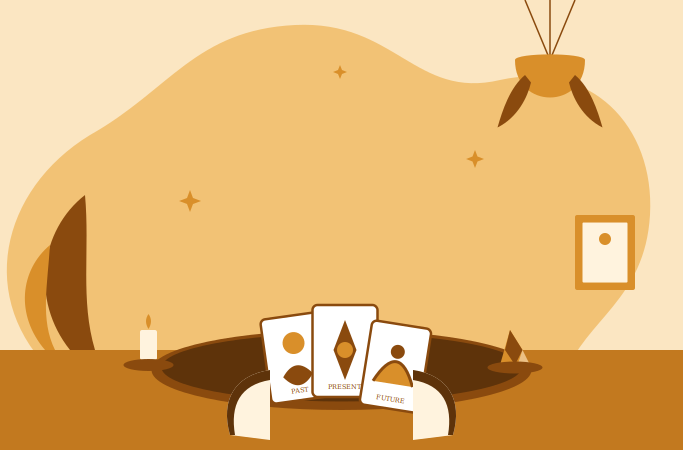
For a daily practice, a single card is plenty. Three-card spreads (often representing past, present, and future, or mind, body, and spirit) work well once you’re comfortable.
7. Notice your first reaction, then read the guidebook.
Let your gut response come first, then layer in the deck creator’s written interpretation.
8. Reflect or journal.
Some people keep the card visible on their desk all day as a reminder; others write a few lines about what came up.
There’s genuinely no wrong way to begin. The structure above is a starting point, not a rulebook, and most practitioners adapt it within a few weeks into something that fits their own rhythm.
Common Misconceptions About Oracle Cards
“Oracle cards predict the future.” This is probably the most persistent misunderstanding. Most experienced readers describe the cards as a mirror for present-moment intuition rather than a forecasting tool. The insight tends to be about what’s already happening internally, not a literal prophecy.
“You need special training or psychic ability to use them.” Reading oracle cards doesn’t require any formal certification or innate gift. The practice is built around personal reflection and the guidebook included with the deck, which means anyone willing to sit with a question and an open mind can use one.
“Oracle cards and tarot are the same thing.” They’re related but structurally different. Tarot follows a fixed 78-card system with established meanings refined over centuries. Oracle decks are far more freeform, varying wildly in card count, theme, and interpretive style from one deck to the next.
“If the message doesn’t make sense immediately, the reading failed.” Sometimes a card’s relevance only becomes clear hours, days, or even weeks later. A reading that doesn’t click instantly isn’t a sign of doing it wrong, it’s simply part of how reflective insight often works.
“You have to follow exactly what the card says.” Oracle cards offer perspective, not instructions. Practitioners generally agree that the reader retains full agency over what to do with the message, including the option to set it aside entirely if it doesn’t resonate.
Oracle Cards for Beginners: Tips and Best Practices
Getting comfortable with oracle cards is less about mastering technique and more about building a consistent, low-pressure habit. A few things tend to make the early stages easier.

Start with a single card rather than elaborate spreads. It’s tempting to dive into multi-card layouts right away, but a one-card daily pull is enough to build familiarity with your deck’s symbolism and your own intuitive responses.
Keep a small notebook nearby. Even a sentence or two about what a card brought up can reveal patterns over weeks and months that a single reading never would.
Avoid pulling cards repeatedly until you get an answer you like. This is one of the more common pitfalls for beginners. If a message feels uncomfortable or doesn’t match what you hoped to hear, sitting with it tends to be more useful than reshuffling for a different result.
Don’t expect every card to make immediate sense. Give messages room to land over the course of a day rather than forcing an interpretation on the spot.
Treat the guidebook as a starting point, not a rigid script. Over time, most readers develop their own associations with specific cards that may diverge from the original text, and that personal layer is part of what makes a deck feel like a real practice rather than a manual to memorize.
Finally, choose decks that feel sustainable for you. Some people enjoy collecting multiple decks for different moods or questions; others prefer sticking with one deck long enough to build a deep, personal relationship with it. Neither approach is more “correct” than the other.
If exploring oracle cards has opened questions about your own path, you may find value in Bahlon’s free daily transmissions, brief insights for people seeking clarity. Subscribe here to receive them.
Related Readings:
Frequently Asked Questions About Oracle Cards
Are oracle cards the same as tarot cards?
No. Tarot follows a standardized 78-card system with established structure, while oracle decks are freeform, varying in card count, theme, and style depending on the creator.
Do I need to be psychic to read oracle cards?
No special ability is required. The practice relies on personal reflection and the included guidebook rather than any innate psychic skill.
How many cards should a beginner pull?
One card per day is a great starting point. It builds familiarity with the deck without becoming overwhelming, and three-card spreads can come later once you’re comfortable.
What if my card doesn’t make sense?
That’s common and not a sign of failure. Sometimes meaning surfaces hours or days later, and sometimes a particular pull simply doesn’t resonate, which is fine too.
Can oracle cards predict the future?
Most practitioners and experienced readers describe oracle cards as tools for reflection and present-moment insight rather than literal fortune-telling. There’s no scientific evidence supporting predictive accuracy, though many people find genuine value in the self-reflective process the cards encourage.