Learning how to develop your intuition starts with a simple shift: treating it less like a mystical gift and more like a skill you can train. Intuition is your mind’s ability to recognize patterns and pull meaning from experience faster than conscious reasoning can keep up. With consistent practice, most people can sharpen it, and the process looks less like waiting for a lightning bolt of insight and more like building a habit, one quiet moment at a time.
That reframing matters. So much of the conversation around intuition treats it as something people either have or don’t, a trait as fixed as eye color. But the more you look into how intuition actually functions, in psychology, in neuroscience, and in centuries of contemplative tradition, the more it resembles something closer to a muscle. Muscles respond to use. So does this.
What Intuition Actually Is?
At its simplest, intuition is the subconscious mind doing pattern recognition and handing you the result without showing its work. Your conscious mind processes information slowly and sequentially. It reads one word at a time, follows one logical step after another, holds a handful of variables in working memory. The subconscious mind operates differently. It absorbs enormous amounts of sensory and experiential data simultaneously and stores it as pattern, not as narrative.
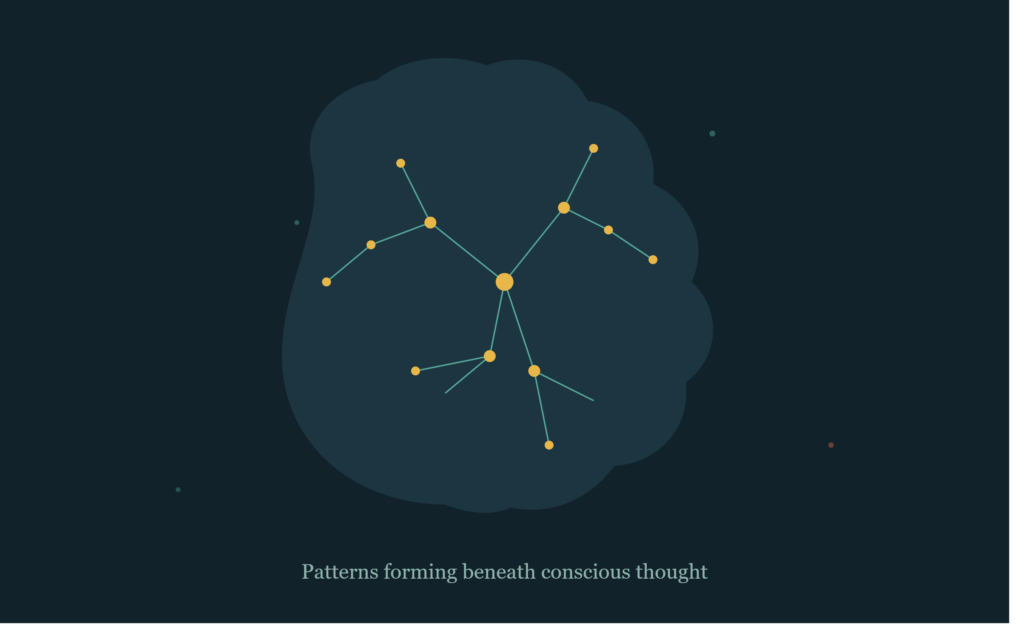
When that stored pattern gets triggered, often by something as subtle as a tone of voice, a facial micro-expression, or a situation that resembles one you’ve lived through before, it surfaces as a feeling rather than a fully reasoned argument. That’s the “gut instinct” people talk about. It isn’t information arriving from nowhere. It’s information arriving from somewhere you can’t consciously trace.
This is worth sitting with, because it changes how you relate to your own hunches. A hunch isn’t random. It’s a compressed conclusion built from real data your brain has already processed. The work of developing intuition, then, is really the work of learning to notice that compressed conclusion before your analytical mind talks you out of it.
Traditions outside of psychology describe this differently, of course. Many contemplative and spiritual frameworks describe intuition as an inner knowing, a form of guidance that operates outside ordinary sensory channels, sometimes tied to the heart, sometimes to a specific energy center in practices like chakra work. Those descriptions are experiential rather than empirical, and they deserve to be taken seriously on their own terms even where they haven’t been tested in a lab. The practical techniques for developing intuition tend to overlap heavily across both the scientific and the traditional framing, which is part of why this article focuses on practices rather than picking a single explanatory model.
How Intuition Works: The Mechanics Behind the Feeling
Cognitive scientists sometimes describe two broad modes of thinking: a fast, automatic, associative mode, and a slower, deliberate, analytical one. Intuition lives largely in the fast mode. It’s the product of what researchers call “thin slicing,” the brain’s ability to find patterns in narrow windows of experience based on thin slices of information.
This is why intuition tends to get more reliable with domain experience, not less. A chess grandmaster looks at a board and “just knows” the right move because their brain has absorbed thousands of prior games and can match the current position to stored patterns almost instantly. A veteran nurse can sense when a patient is about to decline before the vital signs confirm it. An experienced firefighter can feel a structure is unsafe seconds before it collapses. In each case, what looks like a sixth sense is really pattern recognition built on genuine, repeated exposure.
That’s an important nuance for anyone learning how to develop intuition and psychic abilities as separate but related pursuits. Experience-based intuition, the kind grounded in pattern recognition from a specific domain, has real empirical support. Claims of psychic or extrasensory intuition, the kind that reaches beyond personal experience or known information, remain in the realm of the experiential and traditional rather than the scientifically established. Both deserve honest treatment: one has measurable research behind it, the other is a matter of personal and cultural belief that many people find meaningful and consistent in their own lives, even without controlled evidence.
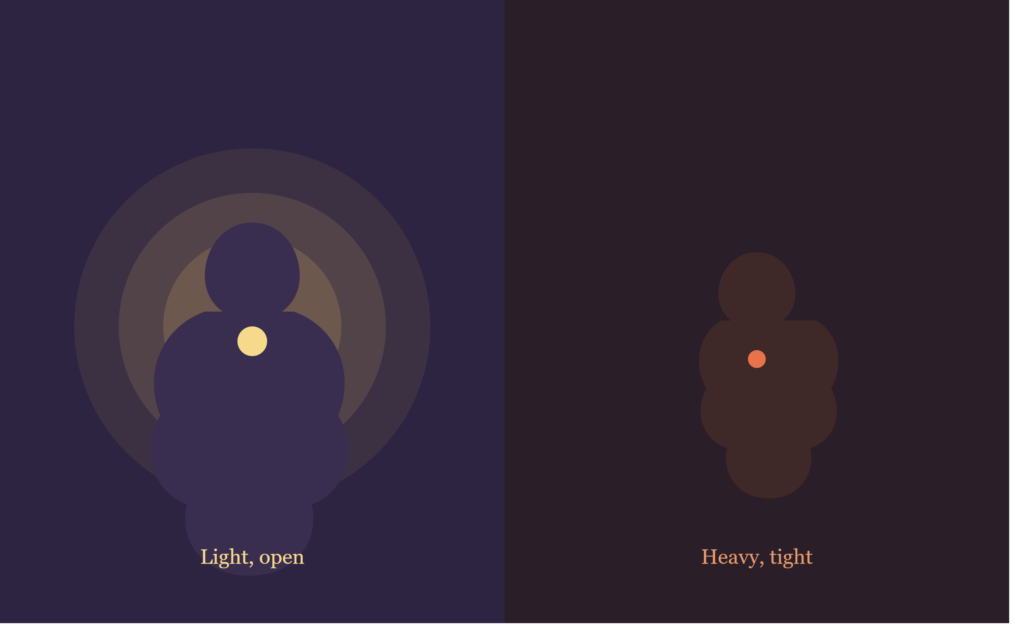
Physiologically, intuitive signals often show up in the body before they show up as thought. A light, open, expansive feeling tends to correlate with alignment or a “yes.” A heavy, tight, or contracted feeling tends to signal caution or a “no.” This isn’t superstition. The gut and heart both have extensive neural networks (sometimes loosely called the “second brain” in the case of the enteric nervous system) that communicate constantly with the brain and can register a reaction before conscious thought catches up.
Evidence, Perspectives, and Where the Research Actually Stands
Research on intuitive decision-making is genuinely substantial, particularly in behavioral economics and cognitive psychology. Studies on expert intuition consistently find that professionals in high-feedback environments, chess, firefighting, medicine, financial trading, develop remarkably accurate snap judgments, but only in domains where they’ve had extensive practice and clear feedback on outcomes. Intuition trained in one domain doesn’t automatically transfer to another; a brilliant diagnostician’s gut feelings about patients won’t necessarily serve them well at the poker table.
Neuroscience adds another layer. Areas like the basal ganglia and insula appear to play a role in fast, non-conscious pattern matching and interoception (the sense of your body’s internal state), which lines up with the common description of intuition as something felt physically rather than reasoned out loud.
Traditional and contemplative perspectives add a different, complementary body of insight. Many meditation lineages, indigenous wisdom traditions, and energy-based systems describe intuition as a faculty that sharpens with stillness and self-observation, often connecting it to specific practices: quieting the mind, working with the body’s energy centers, or cultivating what is sometimes called inner listening. These frameworks are experiential and passed down through lived practice rather than laboratory study, and millions of people report that they work reliably for them. It would be dishonest to claim these traditions are unscientific and therefore invalid; it would be equally dishonest to claim they’ve been proven in the way expert pattern recognition has. The most balanced position is simply to note both approaches, because in practice, the daily habits they recommend overlap almost completely.
How to Develop Your Intuition: Practical, Daily Techniques
This is the part most people actually want, so here are 7 tips to strengthen your intuition that show up consistently across both psychological research and contemplative practice.
1. Create Mental Space
Intuitive signals are quiet, and a noisy, overstimulated mind drowns them out. Meditation, time outdoors, and simply reducing screen time all create the kind of mental spaciousness where subtler impressions can surface. You don’t need an hour of silent sitting. Ten minutes without a phone in hand is often enough to notice the difference.
2. Tune Into Bodily Sensations
Since intuition often registers physically before it registers as a coherent thought, body awareness is one of the fastest ways to develop your intuition. Before a decision, pause and scan your body. Does the idea create a light, open sensation, or a heavy, tight one? Practicing this regularly, even with trivial decisions, trains you to recognize your own signal more quickly when it matters.
3. Practice Deep, Slow Breathing
Slow breathing activates the parasympathetic nervous system, calming the body’s stress response. A calm nervous system is far more receptive to subtle internal signals than one running on adrenaline. A few minutes of deliberate breathing before a decision can clear enough noise to let intuition through.
4. Keep an Intuition Journal
Writing things down is one of the most consistently recommended intuition exercises across every tradition and discipline. Note gut feelings, unusual ideas, and dreams as they happen, then go back later and check them against outcomes. Over weeks and months, this journal becomes evidence, and evidence is what builds genuine trust in your own inner signal, rather than trust based on wishful thinking.
5. Test Low-Stakes Decisions
Guess who’s calling before you check the phone. Choose a route without GPS. Predict small, inconsequential outcomes and track how often you’re right. This kind of light, low-risk practice does two things: it builds the pattern-recognition skill itself, and it gives you calibrated confidence, so you learn when your hunches tend to be reliable and when they tend to be noise (often anxiety or wishful thinking masquerading as intuition).
6. Protect Time Alone, Ideally in Nature
Constant social and digital input keeps the analytical mind busy and the subconscious mind quiet. Solitude, particularly outdoors, reliably produces the kind of unstructured mental state where insight tends to arrive. This is one of the more universally agreed-upon points across psychology and contemplative practice alike.
7. Balance Intuition with Logic, Not Instead of It
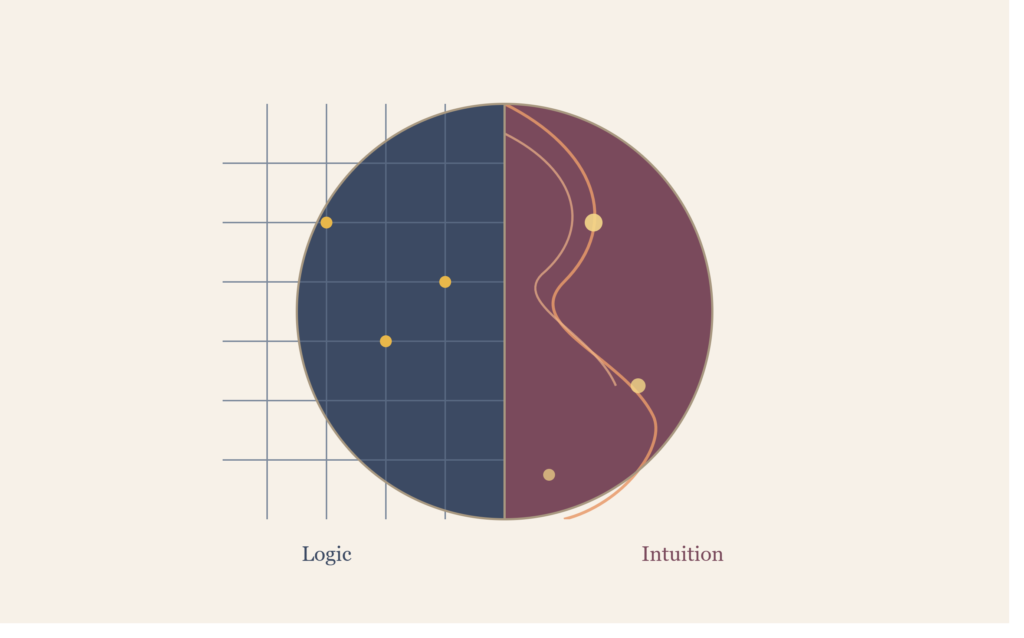
The single most common misconception in this space is that developing intuition means abandoning rational thought. It doesn’t. The people with the most reliable intuition, from expert clinicians to seasoned entrepreneurs, use their gut feelings as one data point among several, then check that feeling against evidence and reasoning. Intuition flags a direction worth investigating. Logic still has to do the investigating.
Alongside these core habits, a few supporting practices consistently show up in both psychological and traditional advice: paying attention to recurring dream imagery, introducing small changes to routine to interrupt autopilot thinking, engaging in creative expression like art, music, or free writing (which lowers the internal critic and lets subtler impressions through), and practicing gratitude, which research links to broader, more open attention. None of these are shortcuts. They’re the conditions under which the deeper skill of learning how to develop intuition actually takes root.
Common Questions and Misconceptions
One persistent misconception is that intuition should feel dramatic, a sudden flash of certainty. In practice, it’s usually quieter than that: a mild pull toward one option, a vague unease about another. Waiting for a thunderclap of clarity often means missing the more ordinary, reliable signal that’s already there.
Another misconception is that acting on intuition means acting impulsively. The two aren’t the same. Impulsivity tends to come from urgency or emotional reactivity. Intuition, by contrast, often arrives calmly, even when it’s urging quick action.
It’s also worth naming the signs you’re ignoring your intuition, because recognizing them is often the first step toward listening better: repeatedly overriding a hunch and later regretting it, feeling physically tense or unsettled around a decision you’ve already “logically” made, staying in situations that consistently drain your energy despite no obvious external reason, or noticing the same warning thought resurface again and again before you finally act on it. These patterns are common and noticing them is itself a form of practice.
Finally, people often ask about specific expressions of this skill, such as how to develop mathematical intuition or how to develop physics intuition. These operate on the same underlying mechanism as everyday intuition: repeated, deep exposure to a domain until the mind starts recognizing patterns before conscious calculation catches up. A physicist’s intuitive sense for whether an equation “looks right” comes from the same pattern-recognition process as a chess player’s sense for a strong position, just built through thousands of hours in a different domain.
For daily insights on consciousness, clarity, and trusting yourself, explore Bahlon’s free daily transmissions. Subscribe to receive them directly in your inbox.
Related Readings:
- Intuition Guide
- Developing Intuition: Tips for Success
- Entrepreneurial Intuition: Psychic Guidance for Startups
Frequently Asked Questions
What is intuition, in simple terms?
Intuition is the subconscious mind’s ability to recognize patterns from past experience and deliver a conclusion as a feeling, rather than a fully reasoned thought. It draws on real information your brain has processed, even when you can’t consciously trace where the feeling came from.
How long does it take to develop stronger intuition?
There’s no fixed timeline, but most people who practice consistently, through journaling, body awareness, and small decision-testing, notice clearer signals within a few weeks and much stronger trust in those signals after several months of steady practice.
Can intuition be wrong?
Yes. Intuition can be distorted by fear, anxiety, bias, or wishful thinking, which is why pairing it with logical evaluation matters. Testing small, low-stakes decisions over time helps you learn to tell the difference between genuine intuitive signal and ordinary emotional noise.
Is intuition the same as psychic ability?
Not necessarily. Experience-based intuition, pattern recognition built from real exposure to a domain, has solid research behind it. Psychic or extrasensory intuition is a separate, more traditional and experiential claim that many people find meaningful in their own lives, though it hasn’t been established through controlled scientific study.
What’s the fastest way to start developing intuition today?
Start an intuition journal. Every time you notice a gut feeling, a strong hunch, or a vivid dream, write it down along with what happened afterward. That simple habit builds the self-awareness and evidence base that everything else in this article depends on.