Energy healing is a complementary practice built on the idea that an invisible life force flows through and around the human body, and that illness or emotional distress can arise when that flow becomes blocked or unbalanced. Practitioners work to clear those blockages, sometimes through touch and sometimes without it, to support the body’s own capacity to heal. It’s a field that spans thousands of years of tradition, a growing body of modern research, and a wide range of specific techniques, from Reiki to acupuncture to sound healing.
That’s the short answer. The longer one involves centuries of medical philosophy, a handful of genuinely interesting clinical studies, and a fair amount of honest uncertainty. Here’s what’s actually known.
What Energy Healing exactly is?
At its core, energy healing rests on a single premise: that the body has a biofield, an energy system that isn’t visible but that shapes physical and emotional health all the same. When this energy moves freely, the body is thought to function as it should. When it stalls or becomes disrupted, practitioners believe the result can show up as pain, fatigue, anxiety, or illness.
The techniques used to address this vary widely. Some, like Reiki, involve a practitioner placing or hovering their hands near the body. Others, like acupuncture, use fine needles at specific points. Still others rely on sound, movement, or breathwork. What ties them together isn’t a shared method but a shared goal: restoring balance to the body’s energetic system so that self-healing, relaxation, and general well-being can follow.
It’s worth being precise about what energy healing is not. It isn’t a diagnosis, and reputable practitioners don’t present it as a replacement for medical care. It sits alongside conventional treatment, not instead of it, and most people who practice it seriously will say the same.
A Practice with Deep Historical Roots
Energy healing isn’t a modern invention dressed up in old language. Its foundations go back thousands of years, developed independently across cultures that arrived at strikingly similar conclusions.
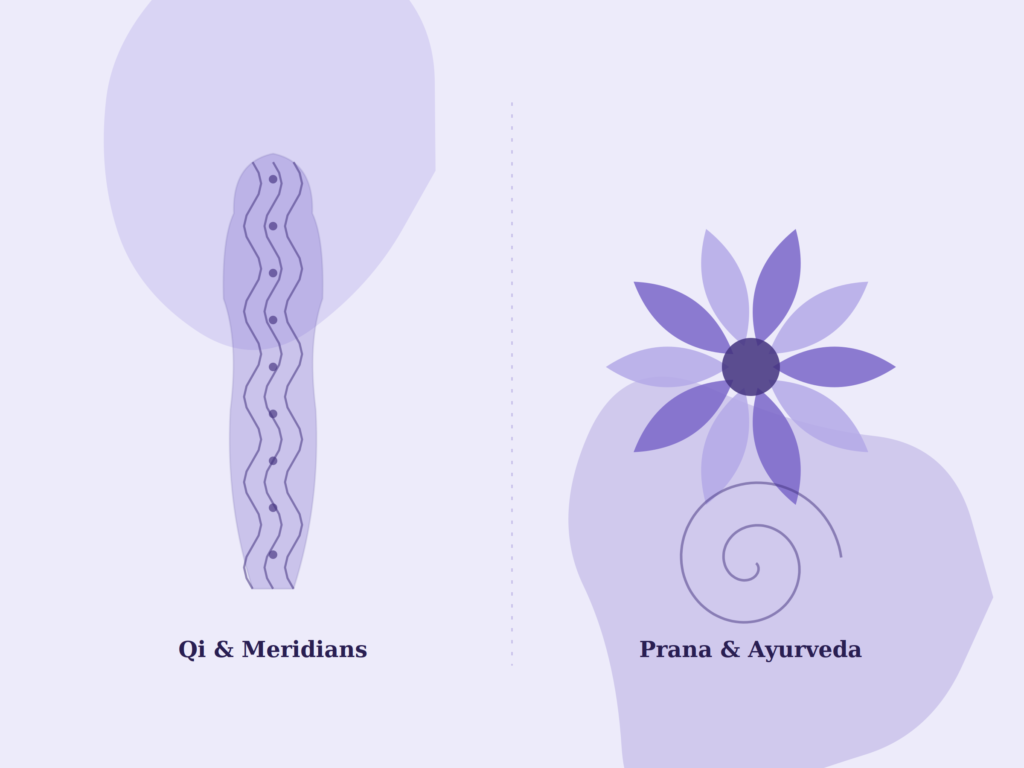
Traditional Chinese Medicine built an entire framework around an energy called qi, which is believed to travel through pathways in the body known as meridians. When qi flows smoothly, the body is considered healthy. When it’s blocked, illness follows. That understanding is the basis for acupuncture and acupressure, both of which aim to restore the free movement of qi.
Ayurveda, the traditional medical system of India, dates back more than 3,000 years and centers on a related concept called prana, or life energy. Ayurvedic practice ties balanced prana to physical and mental health, using tools like yoga, breathwork, and specific movement practices to keep that energy flowing.
Despite arising in different parts of the world with no direct contact, both systems reached the same essential idea: health is a state of energetic balance, and illness reflects its disruption. That convergence is part of why energy healing has persisted across so many cultures and centuries, evolving into the many modern forms practiced today.
How Energy Healing Is Believed to Work
Here’s where honesty matters most. There is no scientific consensus explaining how energy healing works, and no instrument has definitively measured the biofield that practitioners describe. This doesn’t mean the practice lacks value, but it does mean any explanation of its mechanics is rooted in tradition and practitioner experience rather than established biology.
The general belief, shared across most schools of energy healing, is that life experiences, emotions, and physical health are all influenced by this underlying energy field. Blockages or imbalances within it are thought to manifest as physical pain, emotional distress, illness, or recurring negative patterns. The techniques themselves, whether that’s a Reiki practitioner’s hands, an acupuncturist’s needles, or a sound healer’s tuning forks, are meant to clear those blockages and encourage the energy to move freely again.
Some researchers have proposed that the benefits people report may stem from more familiar mechanisms: the relaxation response, the placebo effect, the power of focused attention, or simply the therapeutic value of one-on-one care in a calm setting. These aren’t dismissals so much as alternative explanations, and it’s entirely possible that both traditional and physiological factors play a role in why people feel better after a session.
Types of Energy Healing
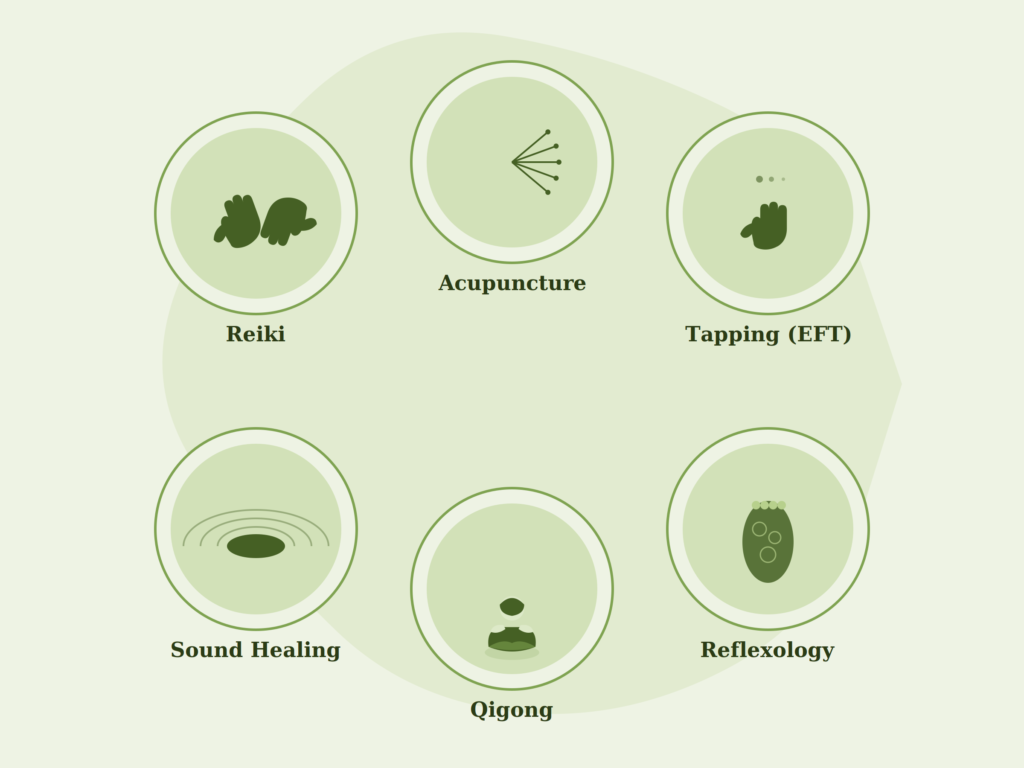
Energy healing isn’t one practice but an umbrella covering many distinct techniques, each with its own history and method.
Reiki
Reiki is a Japanese energy healing technique in which the practitioner channels energy through their hands, either through light touch or by hovering just above the body. It’s centered almost entirely on relaxation and supporting the body’s natural healing process, and it’s one of the most widely recognized and accessible forms of energy work available today.
Acupuncture and Acupressure
Acupuncture uses thin needles inserted at specific points along the body’s meridians, while acupressure applies physical pressure to those same points instead. Of all the energy healing techniques listed here, acupuncture has the most substantial body of scientific research behind it, particularly for pain management.
Emotional Freedom Technique (EFT / Tapping)
EFT combines physical tapping on specific points of the body with a verbal focus on a particular emotion or memory. The idea is to interrupt and release emotional blockages the same way acupuncture aims to address physical ones.
Sound Healing
Sound healing uses vibration, often from singing bowls, tuning forks, or gongs, to encourage a state of relaxation and energetic balance. Sessions can be deeply calming even for people who are skeptical of the underlying energy claims.
Qigong
Qigong blends slow, deliberate movement with breathing exercises and meditation. It’s both a standalone healing practice and a foundational element of Traditional Chinese Medicine more broadly, and it’s often recommended for people looking for a gentler, more active entry point into energy work.
Reflexology
Reflexology applies targeted pressure to specific points on the feet (and sometimes the hands or ears) that are believed to correspond to different organs and systems throughout the body.
Other Modalities Worth Knowing
Beyond these core techniques, a broader spiritual energy healing landscape includes healing touch and therapeutic touch, chakra balancing, polarity therapy, crystal healing, shamanic healing practices, aura cleansing, and newer approaches sometimes described as quantum energy healing. Each has its own tradition and following, and the right fit often comes down to personal comfort and intention rather than any single “correct” method.
What the Evidence Actually Shows
This is the section where nuance matters most, and where an honest article has to resist the urge to oversell.

Some smaller studies have found meaningful benefits associated with specific forms of energy healing, particularly for pain, anxiety, depression, and general well-being. Reiki and Qigong, for example, have both been studied in the context of pain relief and stress reduction, with some encouraging results. There’s also emerging interest in how these practices might support people undergoing cancer treatment, not as a cure, but to improve quality of life and ease discomfort alongside conventional care.
That said, the research base remains limited. Many existing studies are small, poorly controlled, or inconsistent in their findings, and some show no significant clinical effect beyond what would be expected from relaxation or attention alone. Researchers broadly agree that more rigorous, well-designed trials are needed before firm conclusions can be drawn about how, or how much, energy healing works on a physiological level.
Traditional and practitioner perspectives tell a different kind of story; one built on generations of experiential knowledge rather than controlled trials. That doesn’t make it less real to the people who practice or receive it, but it does mean it occupies a different category of evidence than a peer-reviewed clinical study. A fair account of energy healing holds both truths at once: the science is still catching up, and the lived experience, for many, is genuinely meaningful.
Reported Benefits
People who practice energy healing regularly, or who try it as a complementary approach alongside medical treatment, commonly report a range of effects. These include:
- Deep relaxation and a general sense of well-being, often described as one of the most consistent effects across nearly all forms of energy work.
- Reduced stress and anxiety, potentially through a calming effect on the nervous system.
- Pain relief, with some of the strongest evidence coming from Reiki and Qigong research specifically.
- Improved mood, including some reported easing of depression and anxiety symptoms.
- Better sleep, likely tied to the same relaxation response that underlies many of the other benefits.
- Emotional release, with some people describing energy healing sessions as a way to process grief and trauma or difficult emotions they hadn’t fully worked through.
It’s generally considered safe and noninvasive, which is part of why so many people feel comfortable trying it as a complement to, rather than a substitute for, medical treatment.
What to Expect in a Session
A typical session usually begins with a short conversation about your goals, concerns, and what you’re hoping to get out of the experience. During the session itself, you’ll normally lie down fully clothed while the practitioner works through touch or by hovering their hands over different parts of the body. No two sessions feel identical, and what you notice can shift considerably from one visit to the next.
Common sensations during or after a session include tingling, waves of heat or cold, muscle twitching, yawning or coughing, mild dizziness, flashes of color or imagery, and a deep sense of relaxation or tiredness. None of these are considered cause for concern, and practitioners typically explain them as signs that energy is moving or shifting.
Afterward, it’s common to be advised to drink water, rest, and eat something light. Some people notice effects fading within the hour; others feel a shift that lingers for days.
Finding a Practitioner and What to Ask
Because there’s no universal licensing body governing most forms of energy healing, quality and training can vary significantly from one practitioner to the next. Before booking a session, it’s worth checking a practitioner’s certification, how long they’ve been practicing, and whether they have client reviews or referrals you can investigate.
A few questions worth asking directly: What kind of training do you have, and how long have you been practicing? What does a typical session look like, and what does it cost? Do you recommend any kind of ongoing or daily practice alongside sessions?
Costs for energy healing typically range from about $75 to $300 per hour, depending on the practitioner’s experience, location, and specialty. Some offer sliding-scale pricing or occasional free sessions, so it’s worth asking if cost is a barrier.
For daily insights on consciousness, clarity, and trusting yourself, explore Bahlon’s free daily transmissions. Subscribe to receive them directly in your inbox.
Related Readings:
Frequently Asked Questions
Is energy healing real?
Whether energy healing is “real” depends on what’s being asked. The subjective experience many people report, relaxation, reduced pain, emotional relief, is well documented anecdotally and supported by some smaller studies. Whether an actual measurable biofield exists in the way traditional systems describe it remains scientifically unproven.
What is energy healing called in different traditions?
Names vary by culture and system. Traditional Chinese Medicine refers to it as working with qi, Ayurveda calls it prana, and Western practices often use terms like “life force” or simply “energy work.” Reiki, a Japanese energy healing technique, is one of the most widely known modern forms.
What are the different types of energy healing?
Common types include Reiki, acupuncture and acupressure, Emotional Freedom Technique (tapping), sound healing, Qigong, reflexology, chakra balancing, crystal healing, and therapeutic touch, among others.
Are there side effects of energy healing?
Energy healing is generally considered safe and noninvasive. Some people experience mild, temporary sensations like dizziness, emotional release, or tiredness during or after a session, but serious side effects are rare.
Can energy healing replace medical treatment?
No. Reputable practitioners and available research both support using energy healing as a complement to conventional medical care, not a substitute for it, particularly for diagnosed conditions.