The third eye is a concept found across Eastern spiritual traditions, referring to an inner center of intuition, insight, and higher awareness, symbolically located between the eyebrows. It is not a physical organ but an energetic one, often called the Ajna chakra, and “opening” it means clearing the mental and emotional static that gets in the way of clear perception. For some, this idea overlaps with the pineal gland, a small structure in the brain tied to sleep, dreaming, and biological rhythm.
That short answer covers the basics, but the third eye is one of those topics that rewards a closer look. It sits at the intersection of ancient philosophy, modern neuroscience, and personal experience, and each of those lenses tells a slightly different part of the story.
What Is the Third Eye?
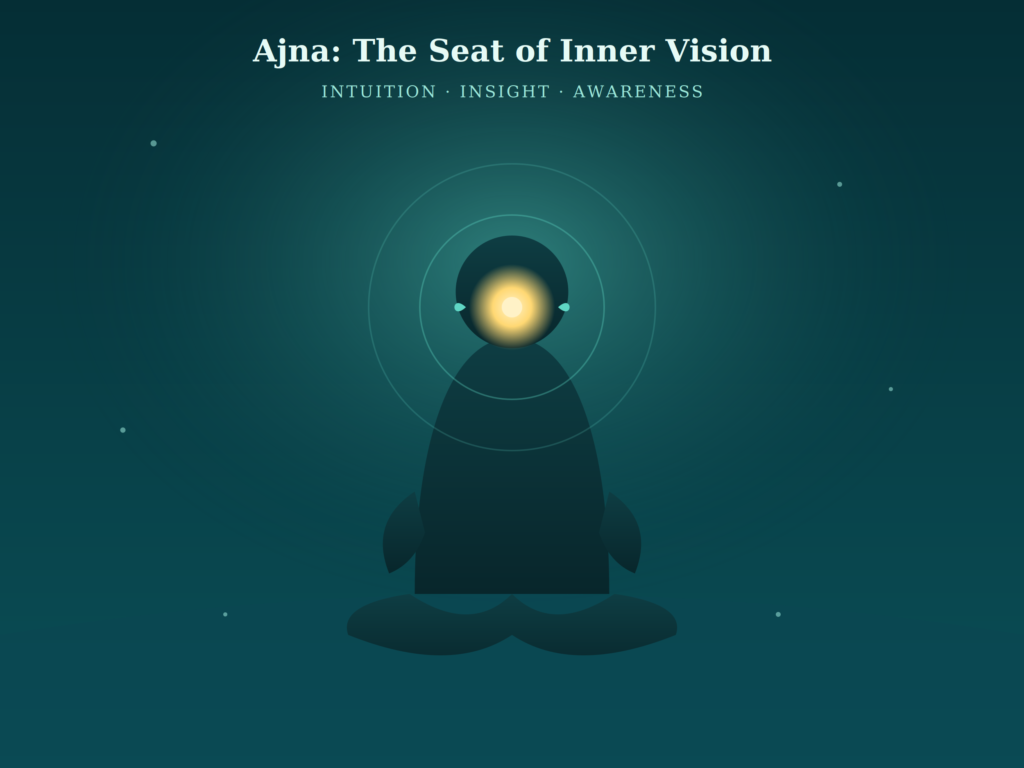
In most yogic and Tantric frameworks, the third eye corresponds to the Ajna chakra, the sixth of the seven primary energy centers described in the chakra system. Ajna translates roughly to “command” or “perceive,” and practitioners describe it as the seat of intuition, foresight, and inner vision, the part of a person that senses what isn’t obvious on the surface.
Unlike the physical eyes, which take in light and shape, the third eye is described as a faculty for perceiving patterns, meaning, and truth that ordinary senses miss. It’s sometimes called a gateway to the soul, a phrase meant to capture its role as a bridge between the outer world a person navigates every day and the inner world of intuition, memory, and self-knowledge.
It’s worth being precise about what “third eye” means here. It is not a literal eye, and no serious tradition claims otherwise. It’s a symbolic and experiential concept, similar to how “heart” is used to describe emotional depth rather than the organ that pumps blood. Understanding this distinction matters, because it shapes how a person should approach the idea of opening or activating it.
The Pineal Gland Connection: Where Anatomy Meets Symbolism
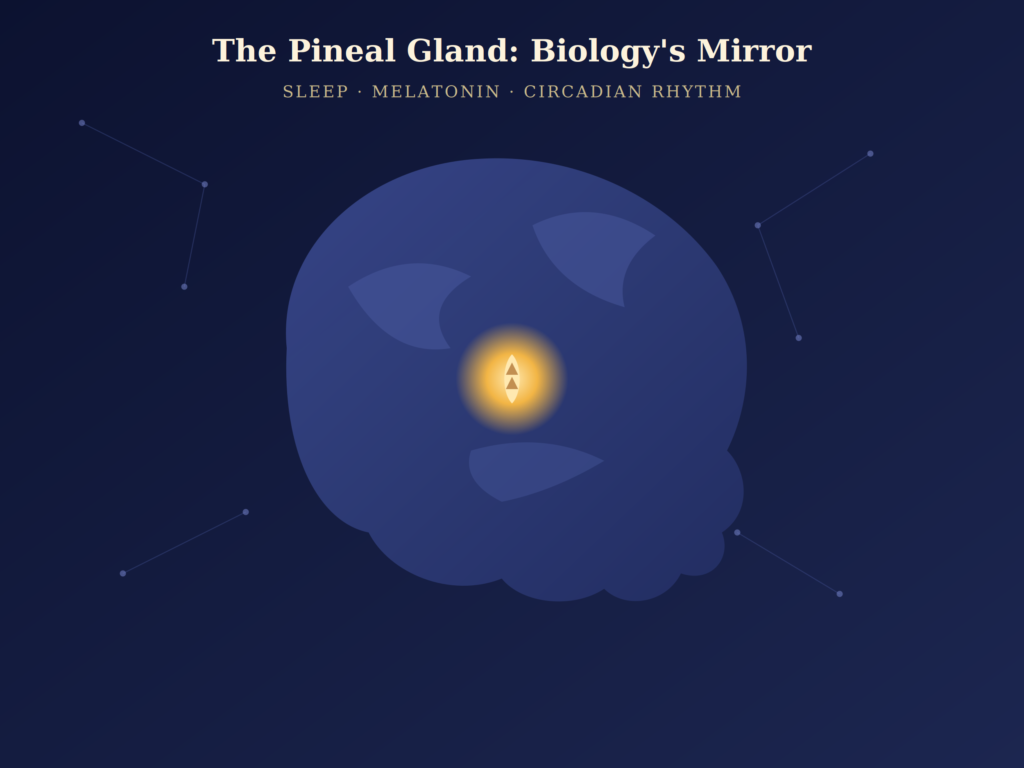
No discussion of the third eye is complete without mentioning the pineal gland, a pea-sized structure located near the center of the brain. This small gland produces melatonin, the hormone that regulates sleep-wake cycles, and it plays a documented role in circadian rhythm, mood, and dreaming.
The pineal gland’s central position in the brain, roughly aligned with the point between the eyebrows, has led many spiritual traditions and modern writers to treat it as the biological counterpart to the third eye. Some call it the “seat of intuition” or the “seat of the soul,” a phrase that traces back centuries to philosophers who were fascinated by the gland’s singular, unpaired structure in a brain that otherwise duplicates most of its parts.
It’s important to separate what’s established from what’s interpretive here. Science confirms the pineal gland regulates melatonin and sleep cycles, and there’s ongoing research into its broader role in circadian health. What science does not confirm is that the pineal gland is a literal organ of psychic perception. That link is symbolic and traditional, not clinical. A fair-minded look at the topic holds both truths at once: the gland is real and well studied, and its spiritual meaning is a separate, experiential layer laid on top of the biology by centuries of contemplative traditions.
Third Eye Opening: Signs, Symptoms, and What People Report
Third eye opening symptoms are described consistently enough across traditions and personal accounts that they’re worth outlining, even though they remain subjective and haven’t been measured in controlled studies.
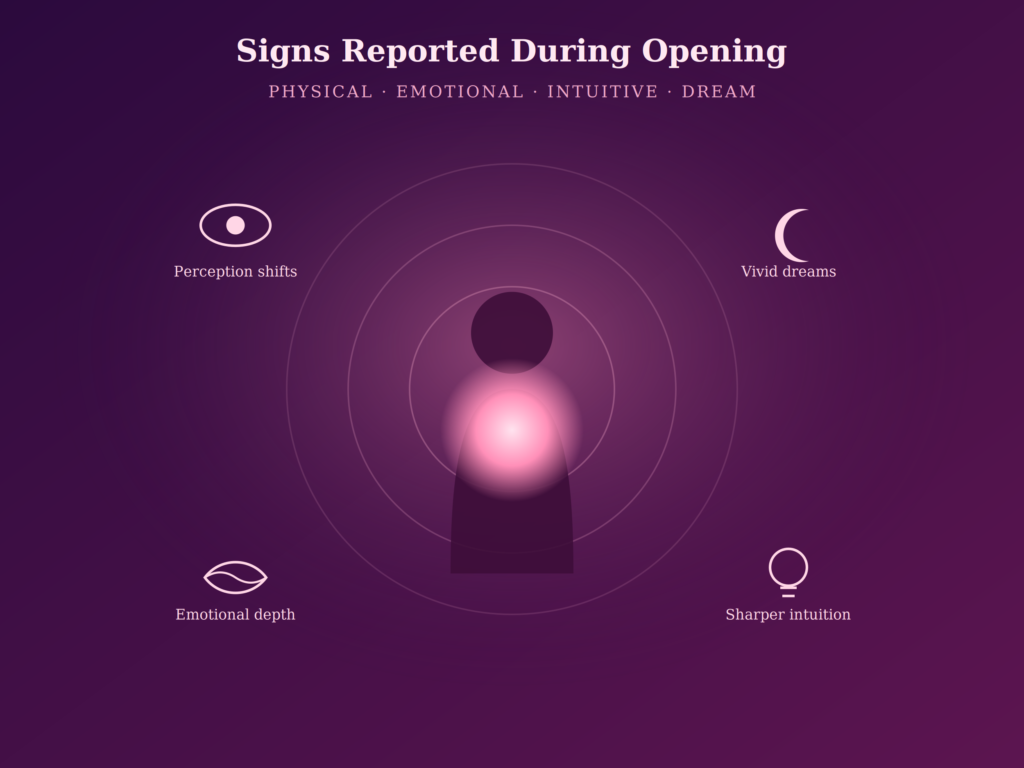
Physical sensations commonly reported include a tingling or light pressure between the eyebrows, mild sensitivity to bright light, and occasional shifts in visual perception, such as noticing more detail or color than usual.
Mental and intuitive changes are among the most frequently described effects. People report sharper gut instincts, clearer thinking, and a growing tendency to notice patterns or deeper meaning in everyday situations.
Emotional shifts can include heightened sensitivity to others’ moods, a stronger sense of inner calm, or a feeling of being more emotionally attuned than before.
Dream-related changes are another common thread. Dreams may become more vivid, symbolic, or memorable, and some people find they carry a sense of insight upon waking.
It’s worth noting that these signs vary enormously from person to person, and none of them are exclusive to third eye work. Meditation, better sleep, and reduced stress can produce similar effects on their own, which is a reasonable and evidence-supported explanation worth keeping in mind alongside the more traditional framing.
Is It Dangerous to Open Your Third Eye?
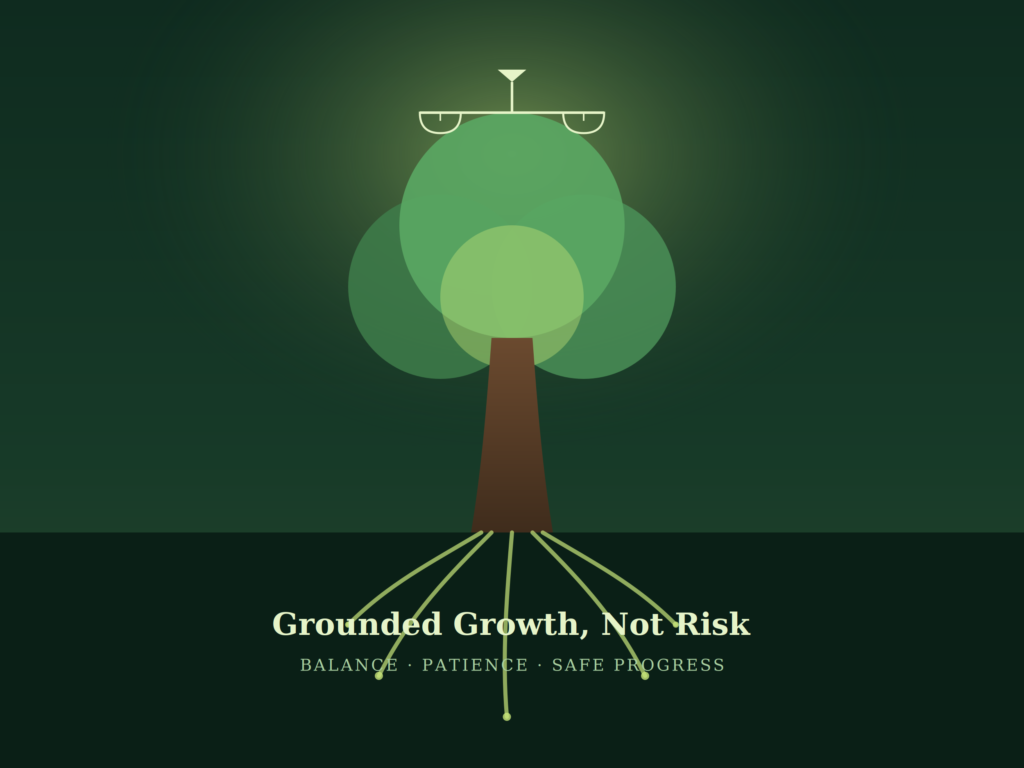
This is one of the most common questions people ask, and the honest answer is nuanced. Most traditional teachings describe third eye activation as a gradual, personal unfolding rather than a sudden event, and they generally treat it as safe when approached with patience and grounding.
That said, some people report a temporary overactive state during periods of intense meditation or spiritual practice. Signs of this imbalance include racing thoughts, difficulty distinguishing imagination from reality, and a general sense of sensory overwhelm. Traditional guidance treats this as a signal to slow down and ground, not as evidence that something has gone fundamentally wrong.
There is no clinical or scientific evidence that meditation practices aimed at the third eye cause harm in physically or mentally healthy individuals when practiced in moderation. However, anyone with a history of psychosis, severe anxiety, or dissociative episodes should approach intensive meditation practices carefully and ideally in consultation with a mental health professional, since any practice that alters attention and perception deserves the same common-sense caution as other intensive mind-body work.
How to Open the Third Eye: Safe, Practical Steps
For readers wondering how to open the third eye in a grounded, sustainable way, most traditions converge on a similar set of practices. None of them promise instant results, and that’s by design. The process is described as cumulative, built through consistency rather than a single technique.
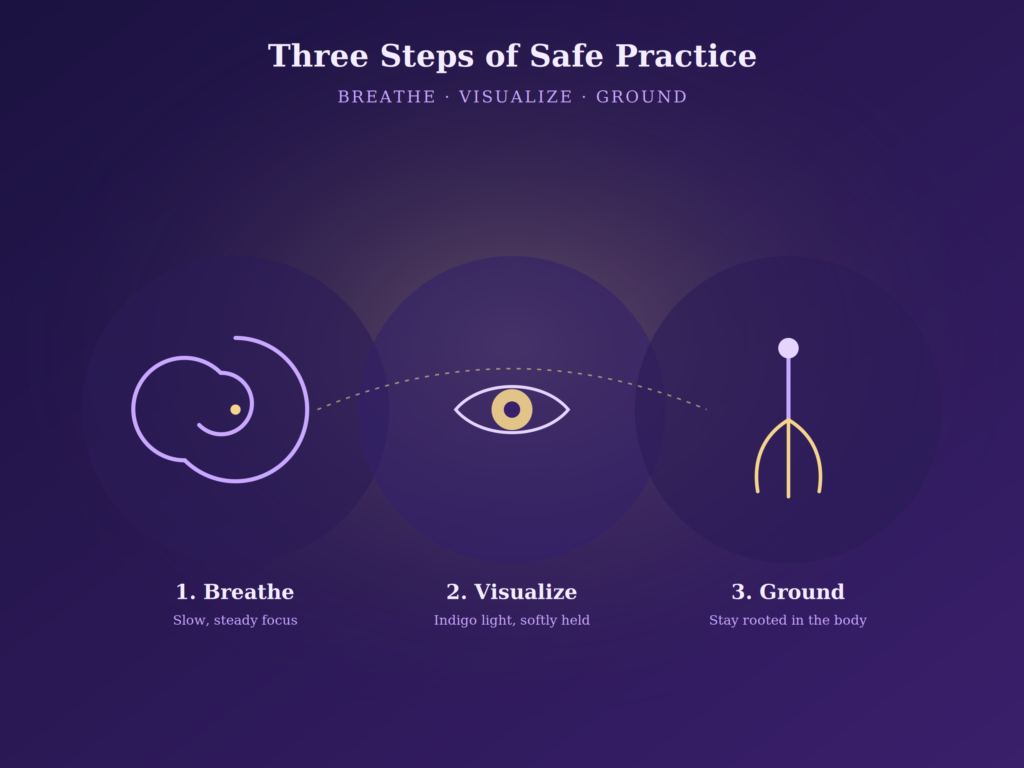
Start with meditation.
If you’re new to sitting practice, it helps to begin with a beginner’s guide to daily meditation before layering on more specific techniques. Sit comfortably, close your eyes, and bring gentle attention to the space between your eyebrows. Slow, steady breathing helps calm mental chatter. Many practitioners visualize a soft indigo light in this area, indigo being the color traditionally associated with the Ajna chakra and with intuition and inner wisdom more broadly.
Use visualization thoughtfully.
Some people picture the third eye gently opening or expanding, allowing thoughts and images to arise and pass without gripping onto them. The goal isn’t to force a particular experience but to create space for awareness to sharpen naturally.
Prioritize grounding.
Because this kind of inner work can increase sensitivity, staying connected to the physical body and the present moment matters. Time in nature, mindful walking, and body-awareness practices like yoga all help balance the more expansive, inward-facing work of meditation.
Support the pineal gland through lifestyle.
Since the pineal gland regulates sleep and circadian rhythm, consistent sleep habits, reduced screen exposure before bed, and a balanced diet are practical, evidence-backed ways to support the biological side of this practice. For more on this link, see how sleep quality shapes mental clarity.
Set a clear intention.
Before beginning, it helps to identify what you’re actually working toward, whether that’s better intuition, emotional steadiness, or a deeper sense of spiritual connection. A clear intention tends to make the practice feel purposeful rather than vague.
Preparation matters as much as the practice itself. Basic self-care, including regular movement, adequate sleep, and a reasonably balanced diet, creates the physical and mental stability that makes deeper inner work more sustainable. Stress, poor sleep, and a scattered mind are frequently cited as the biggest obstacles to progress, more so than any lack of advanced technique.
Timeframes vary widely. Some people notice subtle shifts within weeks of consistent practice; for others, changes unfold over months or longer. Traditional teachings are consistent on one point: patience and regularity matter more than intensity.
Common Misconceptions About Third Eye Activation
A few misunderstandings come up often enough to address directly.
The third eye is a literal, physical structure that can be switched on. In reality, it’s a symbolic and experiential concept tied to intuition and awareness, not an anatomical feature waiting to be unlocked.
Opening it always happens suddenly, in a dramatic moment. Most traditional and contemporary accounts describe it as a slow, cumulative process, closer to strengthening a muscle than flipping a switch.
Everyone who meditates on the third eye will see visions or develop psychic abilities. Some traditions do associate a highly developed Ajna chakra with clairvoyant or intuitive gifts, but this is described as a rare and advanced experience, not a guaranteed outcome, and it should be approached with grounded expectations rather than as the goal of the practice.
If nothing seems to happen, the practice isn’t working. Subtle shifts in clarity, decision-making, and self-awareness often precede any more dramatic signs, and many practitioners describe those quieter changes as the more valuable part of the process.
Maintaining an active, balanced third eye, according to most traditions, involves the same practices used to open it: regular meditation, mindfulness, creative outlets like art or music, journaling (particularly around dreams and intuitive insights), and occasionally connecting with a teacher or community for guidance and perspective.
For daily insights on consciousness, clarity, and trusting yourself, explore Bahlon’s free daily transmissions. Subscribe here to receive them straight to your inbox.
Related Readings:
Frequently Asked Questions
What is the third eye chakra called?
It’s known as the Ajna chakra, the sixth of the seven primary chakras in the yogic system, associated with intuition, insight, and inner vision.
How do I open my third eye?
Most traditions recommend consistent meditation focused on the space between the eyebrows, paired with visualization, grounding practices, and healthy sleep habits that support the pineal gland.
What are the symptoms of third eye opening?
Commonly reported signs include a tingling sensation between the brows, heightened intuition, more vivid dreams, increased light sensitivity, and a stronger sense of inner clarity.
Is it dangerous to open your third eye?
Generally, no, when approached gradually and with grounding practices. Some people experience temporary overactive symptoms, like racing thoughts or sensory overwhelm, which traditional guidance treats as a cue to slow down rather than a serious risk.
What color represents the third eye?
Indigo is the color most consistently associated with the third eye and the Ajna chakra, symbolizing intuition, depth, and inner wisdom.