Learning how to connect with your higher self starts with a simple but demanding practice: quieting the ego long enough to hear what lies beneath it. For most people, that means carving out daily silence, paying attention to intuition rather than reaction, and slowly building trust in a form of inner knowing that doesn’t shout, but waits patiently to be noticed. It isn’t a one-time breakthrough so much as a relationship you build over weeks and months of showing up.
That may sound abstract at first. But the practices behind it are concrete, and they show up across meditation traditions, psychological research, and centuries of contemplative writing. What follows is a grounded look at what the higher self actually refers to, how the connection is thought to work, what evidence and experience have to say about it, and how to begin building the habit yourself.
What Is Higher Self?
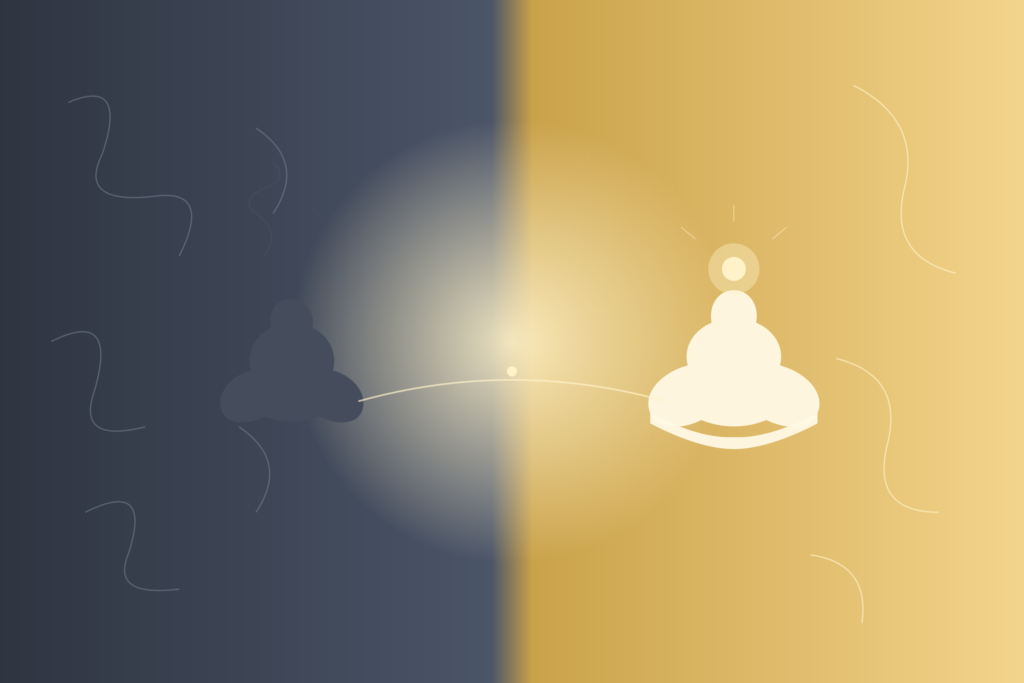
The term “higher self” doesn’t belong to any single tradition, which is part of why it can feel slippery. In Vedantic philosophy, it echoes the concept of atman, a deeper self distinct from the fluctuating mind. In Jungian psychology, it resembles what Carl Jung called the Self, the archetype of wholeness that integrates conscious and unconscious material. In modern wellness language, it’s often described more simply: the part of you that exists beneath the noise of daily thought, unclouded by fear, ego, or social conditioning.
Ask ten practitioners for the meaning of higher self and you’ll likely get ten slightly different answers. But most converge on a few shared qualities. The higher self is described as calm rather than reactive. It tends to respond to situations with patience, compassion, and courage rather than anxiety or defensiveness. Where the ego often reacts emotionally and personally, the higher self is said to observe more objectively, almost as a neutral witness to your life rather than a participant caught up in it.
It’s worth being honest about the limits here: there’s no laboratory test that confirms a higher self exists as a distinct entity. What can be said with more confidence is that people across cultures and eras have consistently described accessing a calmer, wiser internal perspective through very similar practices, regardless of what they call it.
How the Connection Actually Works
Most traditions agree on the basic mechanics, even when they disagree on the metaphysics. The ego mind is loud. It’s shaped by fear, comparison, past wounds, and the constant chatter of planning and judging. To hear anything quieter than that, you generally have to slow the chatter down first.
This is why meditation for beginners sits at the center of nearly every approach to reaching a higher self. Meditation calms the nervous system, increases present-moment awareness, and creates enough mental space for something other than habitual thought to surface. It doesn’t force insight into being. It simply clears enough room for insight to be noticed if it’s there.
A basic version of this practice looks like setting aside roughly 15 minutes of uninterrupted quiet each day. You sit, breathe slowly, and observe whatever thoughts arise without judging them or trying to control them. If the mind feels particularly restless, some practitioners recommend a brief reset: standing up, moving for a few seconds, then sitting back down in a slightly different position before continuing. The goal isn’t to empty the mind completely (which is a common and unhelpful misconception) but to stop being pulled around by every thought that passes through it.
Breath plays a functional role here too. Slow, deliberate inhales and exhales activate the parasympathetic nervous system, which is the body’s rest-and-digest state, as opposed to the fight-or-flight response that dominates so much of modern life. Some practitioners pair this with intention: imagining that each inhale draws in clarity or goals, while each exhale releases tension or negativity. Whether or not that visualization has any measurable effect, the underlying breathwork does have a well-documented calming effect on the body.
What the Evidence and Different Perspectives Say
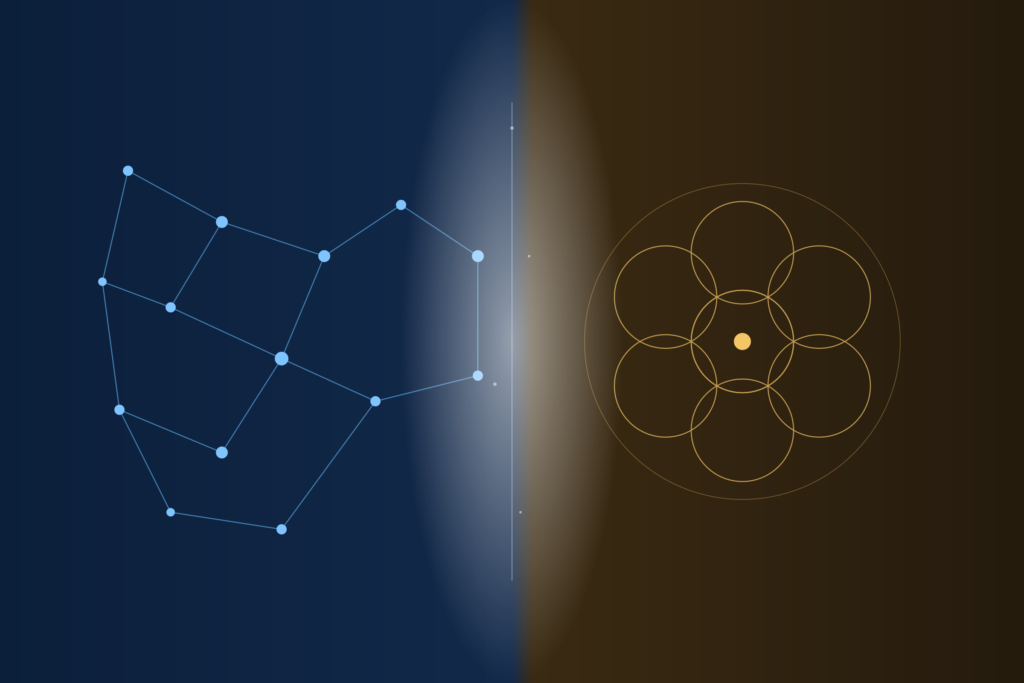
It helps to separate what’s testable from what’s experiential, because both matter here in different ways.
On the scientific side, the picture is fairly solid when it comes to meditation’s effects on the brain and body. Regular meditation has been linked in numerous studies to reduced activity in the brain’s default mode network, the system associated with mind-wandering, rumination, and self-referential thought. Quieting that network is one plausible mechanistic explanation for why meditators report a felt sense of “stepping back” from their usual thought patterns. Research has also connected consistent mindfulness practice to lower cortisol levels, improved emotional regulation, and increased activity in brain regions associated with sustained attention and compassion. None of this proves the existence of a higher self as a metaphysical entity, but it does support the idea that the state people describe when they talk about it (calm, clear, less reactive) is real and measurably different from ordinary waking consciousness.
On the traditional and experiential side, the descriptions are remarkably consistent even across unrelated cultures. Contemplatives describe a felt shift from identifying with thoughts and emotions to observing them. Many report that decisions made from this state feel less driven by fear and more aligned with long-term values. Practitioners of journaling-based techniques often describe writing out a question and then answering it in a detached, third-person voice, noting that the tone of the response often shifts from anxious and reactive to calm and matter of fact. Whether that shift reflects contact with some deeper aspect of consciousness or simply a well-known psychological technique called cognitive defusion, where distancing language reduces emotional intensity, is genuinely debated. Both explanations can be true at once without canceling each other out.
The honest summary: the practices work, in the sense that people who do them consistently report calmer minds and clearer decision-making. What exactly is happening beneath that experience remains a matter of belief, interpretation, and ongoing inquiry, and different traditions will describe it differently. A good article on this topic doesn’t pretend to resolve that question. It respects that reasonable, thoughtful people land in different places on it.
How to Connect With Your Higher Self Through Daily Practice
If you want to actually connect with your higher self rather than just read about the idea, a handful of practices show up again and again across traditions.

Create a calm space before you begin.
Environment matters more than most people expect. A quiet corner, a cushion, a candle, even just closing a door and silencing your phone can signal to your nervous system that it’s time to shift gears. This isn’t about aesthetics for their own sake; it’s about reducing the number of things competing for your attention before you even sit down.
Practice higher self meditation daily, even briefly.
Fifteen minutes is a reasonable starting point. Sit comfortably, breathe slowly, and let thoughts move through without chasing or suppressing them. Consistency tends to matter more than duration. A short daily practice generally builds the skill faster than an occasional long one.
Try higher-perspective journaling.
Write down a question you’re wrestling with, then answer it in the third person, as though a calm and wise outside observer were responding. Many people find that this simple shift in grammar changes the emotional tone of the answer almost immediately. It’s a technique worth trying even if you’re skeptical, since the cost of trying it is a few minutes and a notebook.
Take mindful walks in nature.
Time outdoors, away from screens and to-do lists, tends to lower stress and restore a sense of perspective. Focus on what you actually see, hear, and feel rather than replaying conversations or planning. This kind of grounded attention is one of the more accessible ways to interrupt habitual thought patterns.
Check your choices against fear versus alignment.
Before a decision, pause and ask whether it’s coming from anxiety and self-protection or from something steadier. This single question, asked honestly and often, is one of the more practical tools for building the habit of listening inward.
Use guided visualization.
Close your eyes and imagine the most grounded, capable version of yourself. Picture stepping into that version, then ask what guidance feels most relevant right now. This works well as a complement to meditation rather than a replacement for it.
Set intentions, then release the grip on outcomes.
Writing goals in the present tense, as though they’re already unfolding, is a common technique for clarifying what you want. Just as important is the second half: letting go of exactly how or when it happens and returning periodically to notice what’s shifted.
None of these practices require special equipment, belief systems, or years of training to begin. What they require is repetition.
Signs Your Higher Self Is Talking to You (and Common Misconceptions)
Anyone learning how to connect with your higher self eventually asks how to tell the difference between genuine inner guidance and ordinary wishful thinking or anxiety dressed up as intuition. There’s no perfect test, but a few patterns are commonly cited.

Guidance from the higher self is generally described as calm rather than urgent. Fear-based thinking tends to feel pressured, repetitive, and loud. A quieter, steadier sense of knowing that doesn’t need to convince you through panic is more often associated with trusting your intuition. It also tends to arrive with a sense of alignment rather than obligation, and it rarely asks you to abandon your values to get what you want.
A common misconception is that this connection requires some dramatic mystical experience to count. In practice, most people describe it as subtle: a moment of clarity during a walk, an unexpected calm before a hard conversation, a decision that simply feels right without a long list of justifications. Another misconception is that the goal is to silence the ego permanently. Most traditions don’t frame it that way at all; the ego serves useful, practical functions in daily life. The aim isn’t to eliminate it but to stop letting it run the whole show uncontested.
It’s also worth being clear that this isn’t a fast process for most people, and that’s fine. Building trust in a quieter internal voice, especially in a culture that rewards speed and certainty, takes time. Occasional practice will produce occasional results. Regular practice tends to produce a gradual, cumulative shift that’s easier to notice in hindsight than in the moment.
For daily insights on consciousness, clarity, and trusting yourself, explore Bahlon’s free daily transmissions. Subscribe here to receive them directly.
Related Readings:
Frequently Asked Questions
What is your higher self, in simple terms?
It’s generally described as the calmer, wiser part of your consciousness that exists beneath everyday ego-driven thought, associated with clarity, compassion, and steadier decision-making.
What are the signs your higher self is talking to you?
Common signs include a quiet, steady sense of knowing rather than urgency, decisions that feel aligned with your values instead of fear, and moments of unexpected calm or clarity during ordinary activities like walking or journaling.
How long does higher self meditation take to show results?
Most practitioners notice small shifts, like reduced reactivity or clearer thinking, within a few weeks of consistent daily practice. Deeper or more lasting change tends to build gradually over months rather than appearing all at once.
Do I need a spiritual background to do this?
No. The core practices, breathwork, quiet reflection, and mindful journaling, are accessible regardless of belief system, and many people approach them from a purely psychological or stress-reduction angle rather than a spiritual one.
Can this replace therapy or professional support?
No. These practices can support emotional clarity and self-awareness, but they aren’t a substitute for professional mental health care, especially for anyone dealing with significant distress, trauma, or a diagnosed condition.
What’s the simplest way to connect with your higher self?
For most people, the simplest starting point is a short daily meditation, even five to fifteen minutes, paired with a few minutes of honest journaling afterward. Consistency matters more than any single method.