There are several recognized types of channeling, and they differ mainly in how much awareness and control a person retains while information moves through them. Trance channeling involves stepping aside almost entirely, conscious channeling keeps the practitioner fully present and translating in real time, and automatic writing lets the hand move ahead of the thinking mind. Beyond these three core forms, people also describe intuitive knowing, spoken-word channeling, and movement-based channeling as part of the same broader family of experience.
Whether you come to this topic as a skeptic, a curious beginner, or someone who has already felt something shift through your hands or your voice, the goal here is to lay out what each type actually involves, what researchers and long-time practitioners say about it, and how you might explore it responsibly if you’re drawn to try.
What Channeling Actually Means?
At its simplest, channeling is the process of receiving and relaying information, energy, or a sense of guidance that doesn’t seem to originate from ordinary, linear thought. People who practice it describe the source in different ways: a higher self, a spirit guide, a collective or universal intelligence, ancestral wisdom, or something they simply can’t name with precision. What tends to unite these accounts isn’t the label attached to the source, but the shared sensation that the material is arriving rather than being constructed.
This distinction matters. Most creative or intellectual work involves deliberate effort: outlining, drafting, revising. Channeling, by contrast, is usually described as a kind of receptivity, closer to tuning a radio to a signal than composing a song from scratch. It can show up as spoken words, written text, physical movement, or a diffuse felt sense of energy moving through the body. And it doesn’t require any particular belief system to occur. Many practitioners frame it less as faith in an external entity and more as a discipline of deep listening, similar to how a musician listens for the next note rather than calculating it.
The Three Main Types of Channeling
Most discussions of channeling organize the practice into three primary categories, largely based on how much conscious control the channeler keeps during the experience.
Trance Channeling

Trance channeling is the deepest and most dramatic of the three. The practitioner enters a hypnotic or sleep-like state and partially or fully steps aside, allowing another voice, presence, or awareness to speak or move through the body. Tone, cadence, vocabulary, and even posture can shift noticeably during a session. Most trance channelers report little to no memory of what was said once they return to ordinary awareness, which is why sessions are almost always recorded.
The best-known historical example is Edgar Cayce, often called “The Sleeping Prophet,” who reportedly delivered thousands of readings while in a self-induced sleep state, unaware of what he had said until someone read the transcript back to him. Because so much control is surrendered in this state, most experienced teachers strongly recommend that beginners only attempt trance work with guidance, whether in a class setting or alongside a practiced facilitator who can recognize the signs of an approaching trance and keep the session safe.
Conscious Channeling

Conscious channeling sits at the opposite end of the spectrum. The person remains fully awake, alert, and in control of their body throughout the entire process. Rather than stepping aside, they act as an active translator, converting impressions, images, or felt concepts into spoken or written language in real time. It’s often described as a cooperative process, something closer to simultaneous interpretation than possession.
This is the form most seen in public teaching settings. Esther Hicks, for instance, has spoken for decades about consciously bringing through material she attributes to a group she calls Abraham, all while remaining aware and responsive to her audience. Because the practitioner’s own mind stays engaged, conscious channeling tends to be easier to learn, easier to evaluate critically, and easier to stop at will, which is part of why it’s frequently recommended as a starting point for people new to the practice.
Automatic Writing
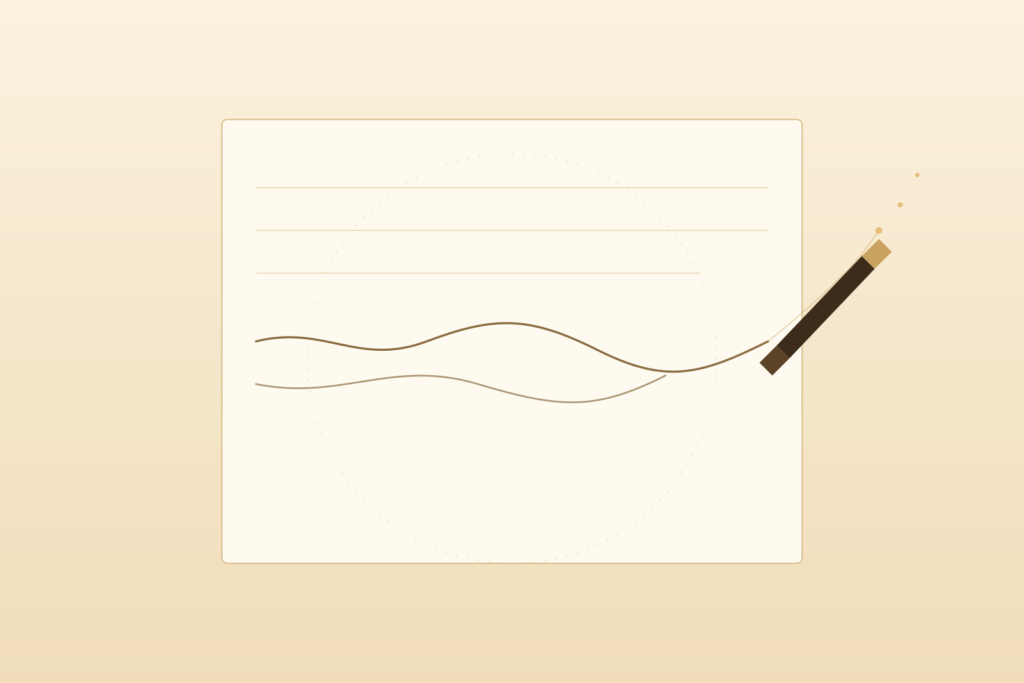
Automatic writing, sometimes called psychography, is a written form of channeling that happens in a relaxed, meditative, or lightly altered state. The hand moves across the page with little or no conscious editing; the writer may watch the words appear almost as an observer, feeling a degree of detachment from the sentences forming under their own pen. Some automatic writers stay in a light trance throughout, while others remain more alert and simply allow the analytical mind to step back.
Historically, this practice has a long and well-documented lineage. Jane Roberts produced the Seth material through a related channeling process in the 1960s and 70s, and journalist Ruth Montgomery reportedly typed out several books this way, describing her hands as moving independently once she settled into the right state. Of the three core types of channeling, automatic writing is often considered the most accessible entry point, since it requires no audience, no vocal performance, and can be tried privately with nothing more than a notebook and a quiet room.
How Channeling Works: The Mechanics Behind the Experience
Regardless of which type of channeling a person practices, the underlying mechanics share a few common threads. Most sessions begin with some form of relaxation or induction: slow breathing, meditation, rhythmic sound, or simply sitting in stillness until the analytical chatter of the mind begins to quiet. As that mental noise fades, practitioners describe a narrowing of the usual gap between impulse and expression. A thought or image arrives, and instead of being filtered through deliberation, it moves directly into speech, writing, or motion.
Depth is really the key variable. In trance states, the gap between impression and expression nearly disappears, and so does much of ordinary self-awareness. In conscious channeling, the gap narrows but the observing mind stays present, watching and even lightly shaping the process as it unfolds. In automatic writing, the gap collapses specifically around the physical act of writing, while the rest of the person’s awareness may remain relatively normal.

People also report experiencing channeling in more incidental ways, well outside formal sessions: a sudden burst of clarity while walking, a solution to a problem that appears without any traceable reasoning, an idea for a project that seems to arrive whole rather than assembled piece by piece. Some practitioners fold these moments into a fourth category, often called intuitive or claircognizant channeling, precisely because they lack a clear ritual or induction and simply happen.
What the Evidence and Different Perspectives Say
Any honest treatment of this topic has to hold two things at once: this is an area where rigorous scientific consensus is limited, and it’s also an area with a long, carefully documented history of personal and cultural significance.
From a scientific standpoint, mainstream psychology tends to explain automatic writing and trance-like states through concepts like dissociation, where a part of ordinary conscious control temporarily detaches, and ideomotor activity, in which small, involuntary muscle movements are guided by unconscious mental processes rather than an external source. Hypnosis researchers have long studied trance-adjacent states in clinical settings, and much of what shows up in channeling sessions, including altered voice, changed body language, and memory gaps, has documented parallels in hypnotic research. This doesn’t necessarily disprove the experiential claims practitioners make; it simply offers one lens, grounded in what can be measured, for understanding what’s physiologically happening.
From within spiritual and metaphysical traditions, the picture looks different. Practitioners across many lineages, from mediumship to shamanic traditions to modern channeling communities, describe consistent, repeatable sensations: a felt shift in energy, a recognizable “signature” to a particular guide or source, and information that surprises the channeler as much as anyone listening. These accounts are experiential rather than measurable in a lab, and the most credible voices in the field tend to say so plainly rather than dressing subjective experience up as proven fact.
The honest middle ground, and the one most serious writers on the topic land on, is this: whether the source of the information is external, internal, or some blend the current tools of science can’t yet fully separate, channeling clearly produces real psychological and creative effects for the people who practice it. That’s worth taking seriously on its own terms, independent of how the metaphysical question eventually gets settled.
Practical Ways to Explore Channeling
If you’re curious to try this yourself, automatic writing and conscious channeling are generally the safest and most accessible starting points, since neither requires surrendering full control the way trance work does.
A few grounded practices to begin with:
- Set the space. Find a quiet room with minimal distraction. Consistency matters more than atmosphere; the same chair or corner at roughly the same time each day helps signal to your nervous system that this is a different kind of attention than usual.
- Set an intention, not a demand. A simple, grounded question, such as “What do I need to understand right now?”, tends to work better than a rigid request for a specific answer.
- Try intuitive journaling. Put pen to paper and write continuously without pausing to edit, judge, or reread as you go. Speed and lack of self-correction are the point.
- Build the habit slowly. Most practitioners describe the process getting clearer and more distinct with repetition, not with intensity. Ten quiet minutes daily tends to outperform one long session a week.
- Stay discerning. Whatever comes through, whether you consider it your own subconscious, a higher self, or something else entirely, evaluate it the way you would any other piece of guidance. Does it feel aligned, useful, and grounded, or does it feel confusing and off? Trust that filter.
Movement-based or somatic channeling, expressed through dance, breathwork, or free-form movement, is another accessible entry point for people who find stillness harder than motion. It’s often described as more emotional and cathartic than the written forms, useful for releasing stored feeling as much as receiving new insight. For a deeper look at building a consistent inner practice, see our guide to daily meditation habits, and if journaling is more your style, our piece on starting a reflective writing practice covers useful techniques that overlap closely with automatic writing.
Common Misconceptions About Channeling
One of the most persistent misconceptions is that channeling is reserved for a small number of gifted or specially chosen people. In practice, most teachers describe it as a skill on a spectrum, something closer to musicality or intuition than a fixed trait you either have or don’t. Everyday experiences like sudden clarity, a gut feeling that turns out to be accurate, or an idea that arrives fully formed are often the same underlying mechanism in a milder, more ordinary form.
Another common misunderstanding is that all channeling looks like a dramatic trance session with a visibly altered voice. Most people who practice this regularly are doing conscious channeling or automatic writing, quiet, private, undramatic processes that rarely resemble what pop culture depicts. There’s also a tendency to conflate channeling with any form of intuition or creative insight, but most practitioners draw a meaningful line: channeling specifically involves a felt sense of connection to something beyond ordinary personal thought, whereas everyday intuition may simply be pattern recognition happening below conscious awareness. For readers interested in that boundary, our article on the difference between intuition and overthinking explores it from a more psychological angle.
For daily insights on consciousness, clarity, and trusting yourself, explore Bahlon’s free daily transmissions. Subscribe here to receive them straight to your inbox.
Related Readings:
- What Is Channeling and How Does It Work?
- How Will A Trance Channeling Guide Change Your Life?
- Discover the Hidden Power of Trance Channeling
Frequently Asked Questions
What are the main types of channeling?
The three most discussed types of channeling are trance channeling, conscious channeling, and automatic writing. Some practitioners also include intuitive knowing, verbal channeling, and movement-based channeling as related forms.
Is channeling the same as mediumship?
Not exactly. Mediumship typically refers specifically to communicating with the deceased, while channeling covers a broader range of sources, including higher self, guides, universal wisdom, or unnamed intelligence.
Can anyone learn to channel?
Most experienced teachers believe channeling exists on a spectrum of natural ability, like intuition or creativity, and that it can be developed with regular practice, particularly through conscious channeling or automatic writing, which don’t require surrendering full bodily control.
Is there scientific proof that channeling works?
There’s no scientific consensus confirming an external source for channeled information. Psychology offers explanations rooted in dissociation and unconscious mental processing, while practitioners describe consistent, meaningful experiential effects. Both perspectives are worth holding honestly rather than dismissing either one outright.
What’s the safest type of channeling to try first?
Automatic writing and conscious channeling are generally considered more accessible and lower-risk starting points than trance channeling, since the practitioner retains awareness and control throughout the process.