Astral projection is not something science has ever been able to confirm as an objective event, but that hasn’t stopped millions of people from reporting the sensation of leaving their physical body behind. Researchers generally treat it as a subjective mental experience, something closer to a vivid dream or an altered state of consciousness than a literal journey of the soul. For the people who have lived through it, though, the question of whether it’s “real” often feels almost beside the point. What they experienced felt undeniably real to them, and that gap between clinical explanation and personal conviction is where most of the confusion begins.
This piece takes both sides seriously. It looks at what the research actually says, what spiritual and esoteric traditions have long claimed, and what a reasonable, curious person should know before attempting the practice themselves.
What Is Astral Projection?

Astral projection refers to the reported experience of consciousness, spirit, or an “astral body” separating from the physical body and traveling independently, often through what practitioners call the astral plane. It’s frequently used interchangeably with the term out-of-body experience, or OBE, though the two aren’t always identical in how they’re described. An out-of-body experience is the broader clinical term for the sensation of viewing your body from outside it; astral projection carries the added spiritual framing that something has actually gone somewhere.
Surveys suggest that somewhere between 8% and 20% of people report having had an experience resembling this at some point in their lives. Most of these episodes happen during sleep, while falling asleep, or while waking up, though a smaller number of people describe them occurring during deep relaxation or hypnosis. The common thread is a sensation of floating, of separating from the body, and of perceiving the surrounding environment from an external vantage point.
It’s worth noting that the word itself carries older roots. “Astral” derives from a Latin word meaning “of the stars,” and in older esoteric writing, the astral realm was imagined as a kind of intermediary plane between the physical world and something more purely spiritual or cosmic.
A Brief History of the Idea
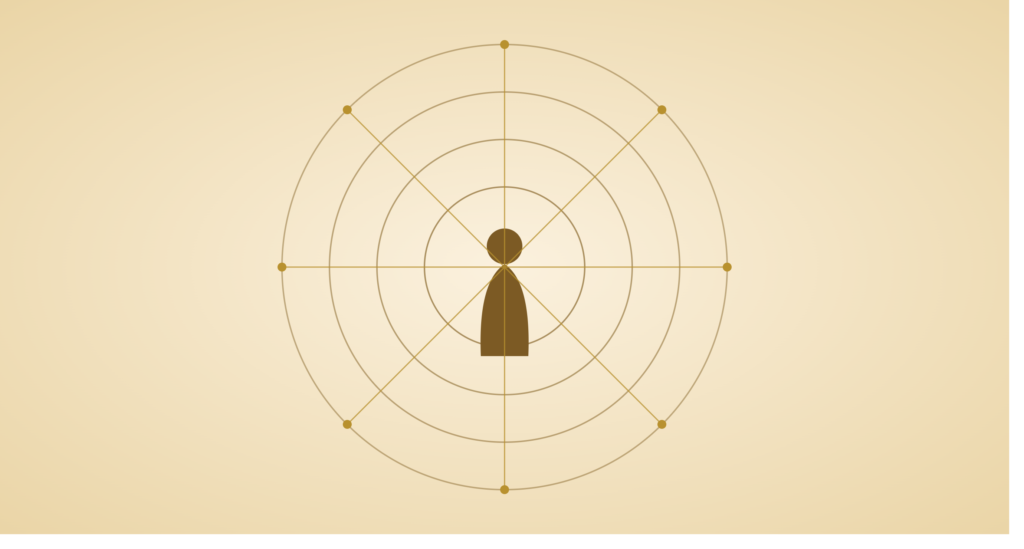
The modern concept owes a great deal to the Theosophical Society, founded in New York in 1875 by Helena Blavatsky. Theosophy taught that human beings possess seven distinct bodies, ranging from the purely physical to increasingly refined spiritual and mental layers, one of which is the astral body. According to this system, the astral body can detach from the physical and etheric bodies and move through astral planes independently of the flesh.
That framework shaped a great deal of 19th and early 20th century mysticism, and it eventually filtered into popular fiction. Dennis Wheatley’s 1941 novel Strange Conflict features a character who astrally travels the globe while asleep, and the idea has continued to surface in entertainment ever since, from Marvel’s Doctor Strange films to Netflix’s Behind Her Eyes. What started as a niche spiritual doctrine gradually became a recognizable cultural shorthand for consciousness untethered from the body.
Long before Theosophy gave it a formal name, though, similar beliefs existed across many traditions. Shamanic practices in various cultures describe vivid dream journeys used to contact ancestors or spirits, and several religious and folk traditions describe the soul wandering during sleep. The specific vocabulary is modern, but the underlying intuition, that consciousness might not be strictly bound to the body during sleep, is very old.
Is Astral Projection Real? What the Evidence Actually Shows
This is the question most people are really asking, and the honest answer requires separating two different claims. The first claim is that people genuinely experience something that feels like leaving their body. That part isn’t in serious dispute; the sensation is well documented and consistently reported across cultures. The second, much stronger claim is that consciousness or a spiritual body literally exits the physical body and can perceive real information from a distance. That claim has never been demonstrated under controlled conditions.
Researchers have tried. One classic experimental design involves hiding an object or a hidden number in a location unknown to the subject, then asking someone attempting to astrally project to travel there and report what they see. If the astral body genuinely left the physical body and perceived the real world, results should be verifiable and repeatable. Across decades of these attempts, no experiment has produced results that hold up to scrutiny or replication.
Psychologist Susan Blackmore, who has extensively researched out-of-body experiences, has connected much of the modern framework back to Theosophical ideas and has also studied who tends to report these episodes. Her research, along with related work in the field, suggests that people who report astral travel score higher on measures of hypnotizability and “absorption,” meaning the capacity to become completely immersed in an experience, even an imagined one, the way a person might lose themselves in a film or a novel. People who report OBEs also tend to be more imaginative, more suggestible, and more prone to vivid fantasy, though notably, they don’t show elevated rates of substance use or diagnosable mental illness. In other words, this isn’t a symptom of pathology; it appears more closely tied to a particular cognitive and imaginative style.
Neurologically, several explanations have been proposed for why the sensation feels so convincing. Sleep paralysis, which occurs when the mind wakes before the body’s natural sleep-related muscle immobility switches off, is one common trigger, often accompanied by vivid, sometimes frightening sensory experiences. Deep relaxation and the liminal state between wakefulness and sleep, sometimes called the hypnagogic state, can also produce the floating, separating sensation people describe.
There’s also a physical angle involving the inner ear. A 2017 study of roughly 210 patients with vestibular disorders, the system responsible for balance, found that about 14% of them reported out-of-body experiences, compared with roughly 5% of people without vestibular issues. Since the vestibular system is deeply tied to the brain’s sense of where the body is in space, disruption there offers a plausible mechanism for why some people feel like they’re floating outside themselves.
Clinical literature has also linked reported astral projection to conditions such as epilepsy, migraine, dissociative disorders, depersonalization, and in rare cases, psychosis. A 2021 case study published in the journal Cureus documented a 15-year-old boy who described an out-of-body experience during a period of worsening depression, social withdrawal, and irritability; the authors concluded his experience was most consistent with a dissociative episode rather than an isolated spiritual event. That doesn’t mean everyone who reports astral projection is dealing with a dissociative disorder, but it does illustrate that the sensation can arise from a range of underlying states, some benign and some worth discussing with a doctor.

None of this proves astral projection is meaningless. It simply means that, as of now, there’s no reliable scientific evidence that consciousness physically exits the body and perceives real, verifiable information from elsewhere. The experience appears to originate within the brain rather than outside it, even when it feels utterly convincing to the person having it.
What Practitioners Say
Set the lab results aside for a moment and the practitioner community tells a different, equally important story. People who describe astral travel meditation as part of a regular spiritual practice often say the experience feels categorically different from an ordinary dream: sharper, more lucid, and accompanied by a distinct sense of separating from the physical form. Commonly reported sensations include floating, moving through space, and perceiving surroundings with unusual clarity.
Many practitioners describe the practice as meaningful in ways that have nothing to do with whether a lab could measure it. Some say it eased a fear of death. Others describe it as a profound meditative tool for exploring consciousness or working through emotional material. Online communities, including large astral projection threads on Reddit, reflect just how varied the experience is: some describe it as transcendent, others as unsettling or physically exhausting, and plenty land somewhere in between.
This is a case where the traditional and scientific perspectives aren’t necessarily in direct conflict. Science is largely silent on subjective meaning; it can’t measure whether an experience changed someone’s relationship with mortality or deepened their sense of connection to something larger. Traditional and practitioner accounts, meanwhile, generally aren’t built to answer objective, testable questions like whether someone could describe a hidden object in another room. Both bodies of knowledge are simply answering different questions, and readers deserve to have both laid out honestly rather than forced into a single verdict.
How to Approach Astral Projection Safely
For readers genuinely curious about trying it, there are a few practical realities worth knowing beforehand.
Sleep disruption. Many techniques involve interrupting a normal sleep cycle deliberately, such as waking after four or five hours of sleep and then attempting to re-enter a relaxed, drowsy state. Done occasionally this is harmless for most people, but doing it frequently can interfere with the restorative stages of sleep.
Sleep paralysis. This is one of the most commonly reported companions to attempted astral projection. During sleep paralysis, the body remains temporarily immobile even though the mind is awake, sometimes accompanied by a sense of pressure, buzzing sounds, or a feeling of falling. It’s unsettling if you don’t expect it, but it is a well-understood physiological state, not a sign of danger.
Psychological intensity. The transition into this liminal state can involve vivid, occasionally disturbing sensory experiences. Approaching the practice with realistic expectations, rather than treating every unusual sensation as sinister, tends to make the process far less frightening.
Safety. According to the accounts and research on this topic, there is no credible basis for the fear that a person could become physically “stuck” outside their body. Intense fear, or simply consciously focusing on the physical body, tends to snap a person back to ordinary waking awareness almost immediately.
If you’re interested in exploring the calmer end of this spectrum, deep relaxation and body-scan meditation are a gentler entry point than more intense induction techniques, and they carry essentially none of the risk. For readers who want to build that kind of practice gradually, a guide to grounding meditation techniques is a useful starting point, as is an explainer on the mechanics of sleep paralysis for anyone concerned about that specific sensation.
Common Questions and Misconceptions
A recurring misconception is that astral projection must be real simply because the experience feels so vivid, or because people from unrelated cultures and eras describe strikingly similar sensations. Vividness alone isn’t evidence of an external event; dreams and hallucinations can feel just as real in the moment. Cross-cultural similarity is also less mysterious than it first appears, since human brains share the same basic neurology regardless of culture, so it makes sense that altered states would produce comparable sensations worldwide.
Another misconception worth addressing directly is the idea that astral projection could have real-world investigative uses, such as remotely observing a disaster site or a dangerous location. If consciousness genuinely could travel and gather verifiable information, the implications would be enormous, and it would represent one of the most important discoveries in the history of science. No such capability has ever been demonstrated under controlled conditions, and claims along these lines remain entirely anecdotal.
Guided imagery and expectation also play a larger role than people often realize. When an authority figure, whether a teacher, author, or online guide, describes in detail what an astral journey is supposed to feel like, that framing shapes what the person subsequently experiences. This doesn’t make the experience fake or dishonest; it simply means expectation is a powerful ingredient in how these states unfold, which is a well-documented phenomenon in psychology more broadly, closely related to how expectation shapes lucid dreaming.
For daily insights on consciousness, clarity, and trusting yourself, explore Bahlon’s free daily transmissions. New reflections arrive each morning, built for anyone trying to understand their own mind a little better.
Related readings:
Frequently Asked Questions
Is astral projection dangerous?
For most people, no. The two most common side effects, temporary sleep paralysis and disrupted sleep from altered sleep-cycle techniques, are unpleasant but not physically harmful. People with a history of psychosis, severe dissociation, or certain seizure disorders should be more cautious and may want to talk to a doctor first, since altered states can sometimes intersect with those conditions.
Can you get stuck outside your body?
There’s no credible evidence supporting this fear. Reported experiences consistently end on their own, and fear or conscious awareness of the physical body tends to bring a person back to normal waking consciousness almost immediately.
Is astral projection the same as lucid dreaming?
They’re related but not identical. Lucid dreaming involves becoming aware that you’re dreaming while still inside the dream narrative. Astral projection, by contrast, is typically described as a sensation of leaving the body altogether, often felt as more lucid and less narrative than a typical dream.
What does science say causes the sensation?
Leading explanations include sleep paralysis, hypnagogic states between wakefulness and sleep, and disruptions in the vestibular system, which governs balance. In rarer cases, it has been associated with neurological conditions like epilepsy or migraine, or with dissociative states.
Is astral projection considered a sin or spiritually risky in any tradition?
Views vary widely by religion and denomination, and this is a matter of belief rather than something with a single settled answer. Some traditions view these practices with caution or outright disapproval, while others, including various New Age and esoteric frameworks, treat them as a legitimate path toward spiritual growth.