Learning how to surrender to the universe starts with a simple shift: releasing the need to control every outcome and choosing instead to trust the natural unfolding of life. It sounds simple in theory, yet for most people it’s one of the hardest things to actually practice, because it asks you to loosen a grip you’ve spent years tightening. This article looks at what surrender really involves, why it’s so uncomfortable, what evidence and tradition suggest about it, and how you can begin practicing it in a grounded, realistic way.
How to Surrender to the Universe: A Practical Approach
The word “surrender” often gets mistaken for giving up. In this context, it means something closer to the opposite. Surrendering isn’t about becoming passive or indifferent to your life. It’s about distinguishing between what you can influence and what you can’t, and putting your energy where it actually belongs.
Psychologically, this overlaps with what researchers call an “internal locus of control” paired with acceptance, the ability to take responsibility for your actions while acknowledging that outcomes are shaped by countless forces beyond your reach. Spiritually, the same idea appears across nearly every tradition, just with different vocabulary. Some call it surrendering to God. Others call it trusting Source, the Tao, or simply the universe. The label changes, but the underlying practice is consistent: release your grip on the outcome, stay engaged with the process, and trust that things can work out even when you can’t see how.
It’s worth being precise here, because the definition of surrender matters for how you practice it. Surrender is not resignation. Resignation says “nothing I do matters.” Surrender says “I’ve done what’s mine to do, and now I release the rest.” That distinction shows up again and again in both contemplative writing and clinical psychology, where acceptance is treated as an active, effortful stance rather than a passive one.
Why Surrender Is So Hard to Practice
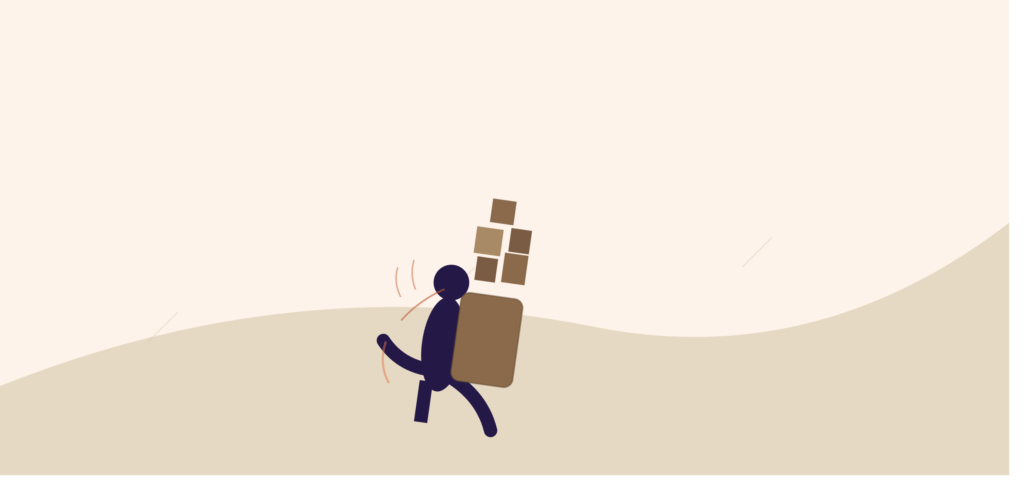
If surrender were easy, it wouldn’t need a guide. Most people struggle with it for reasons that are less about willpower and more about conditioning.
From early on, many of us are taught that control equals safety, and that safety equals worth. Work harder, plan further ahead, anticipate every variable, and you’ll be rewarded with certainty. That message is reinforced constantly, in school, in careers, in how achievement gets praised. Letting go feels like abandoning the one strategy that’s supposed to keep you secure.
There’s also a fear layer underneath the conditioning. Uncertainty triggers real discomfort in the nervous system. Not knowing what happens next can feel, at a bodily level, similar to danger. Gripping tightly to control becomes a defense mechanism against that discomfort, even when the grip itself is what’s generating stress and tension in the first place. This is the paradox at the center of surrender: the harder you try to force an outcome that isn’t ready to arrive, the more resistance and suffering you tend to create, almost like swimming against a current that was never going to move in your favor.
None of this means the fear is irrational or something to be ashamed of. It means the fear is doing exactly what it evolved to do, protect you from the unknown, even when the unknown isn’t actually a threat.
What Research, Tradition, and Practitioners Say About Letting Go
Much of what’s written about how to surrender to the universe draws equally from empirical research and centuries of contemplative teaching.
On the research side, meditation has a substantial evidence base. Studies consistently link regular meditation practice to reduced stress reactivity, improved emotional regulation, and greater interoceptive awareness, the ability to notice internal bodily signals that often inform what people describe as intuition. Mindfulness research shows similar patterns: people who practice mindfulness tend to have an easier time recognizing automatic thoughts and unhelpful behavioral patterns, which makes it easier to loosen their attachment to outcomes they can’t control. None of this proves that “the universe” is communicating with anyone, but it does support the mechanism many surrender practices rely on, a calmer, more self-aware mind is genuinely better equipped to let go.
On the traditional and spiritual side, surrender has been central to contemplative teaching for millennia. Lao Tzu is widely quoted as saying that to the mind that is still, the whole universe surrenders, a line that captures the Taoist idea that stillness, not force, is what aligns a person with the flow of life. In Christian scripture, the invitation in Matthew to ask, seek, and knock reflects a similar posture: engaged effort paired with trust in something larger. Islamic tradition carries a parallel idea in the very meaning of the word Islam, submission or surrender to God’s will. Buddhist teaching on non-attachment addresses much the same territory from another direction, suggesting that suffering often comes from clinging rather than from circumstances themselves.
On the experiential side, people who describe a surrender practice often report noticing synchronicities, meaningful coincidences that feel significant once they start paying closer attention. This is subjective and can’t be verified the way a clinical trial can. It’s also worth being honest that confirmation bias plays a role, once you’re primed to notice coincidences, you’ll spot more of them. That doesn’t make the experience meaningless to the person having it. It does mean it belongs in the category of personal, traditional insight rather than established fact, and it deserves to be presented that way.
How to Surrender to the Universe: A Practical Approach
There’s no single formula for how to surrender to the universe, but the practices below build the skill in layers.
Start With Intuition, Not Instruction
A lot of guidance on how to surrender to the universe begins with learning to listen, but listening only helps if you can tell the difference between intuition and anxious, ego-driven thinking. One useful distinction: fear-based thoughts tend to spiral and demand immediate action, while intuitive nudges tend to feel calm, even quiet, and don’t require you to convince yourself of anything. Practicing this distinction, rather than assuming every strong feeling is guidance, is what makes intuition trustworthy over time.
Use Meditation and Time in Nature to Quiet Mental Noise
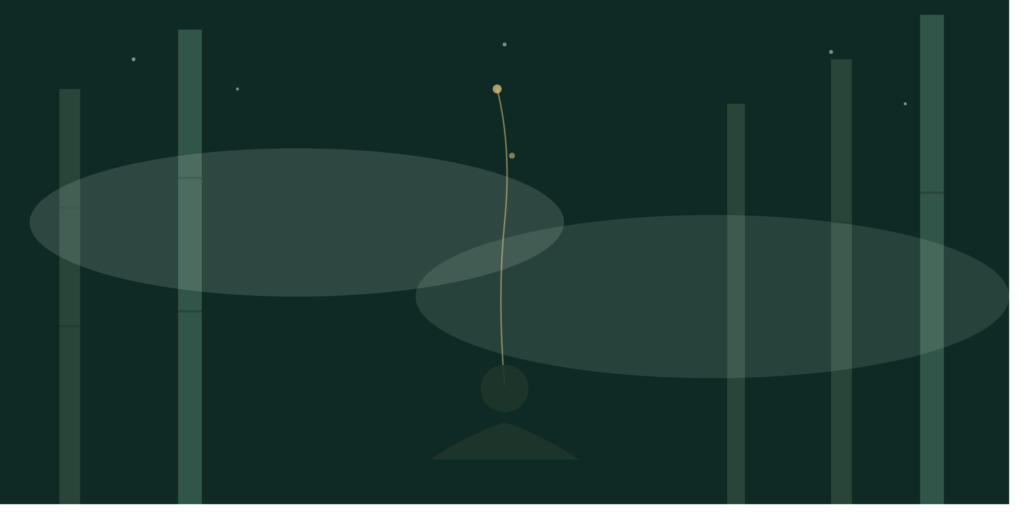
A restless mind struggles to notice subtle signals. Regular meditation, even ten minutes a day, has been shown to reduce the mental clutter that drowns out quieter forms of self-awareness. Spending time outdoors adds another layer for many people, a sense of being part of something larger than their immediate worries, which can make trust feel more accessible.
Build Tolerance for Not Knowing
This is arguably the core skill. Instead of trying to eliminate uncertainty, practice sitting with it in small doses. Make a decision without needing to know every outcome in advance. Notice the discomfort, and notice that you survive it. Over time, this builds genuine tolerance rather than the illusion of control.
Practice Gratitude Deliberately
Gratitude has one of the strongest evidence bases in positive psychology, consistently linked to improved mood and a more balanced perspective on daily events. Whatever your beliefs about the universe, taking a few minutes each day to notice what’s already going well tends to shift attention away from what feels missing or out of control, which makes surrender feel less like loss and more like relief.
Take Small Steps Outside Your Comfort Zone
Trust is built through evidence, and you build evidence by testing it. Choose a low-stakes situation where you can practice letting go of the outcome, then notice what actually happens versus what you feared would happen. Repeated small experiments do more for surrender than any single leap of faith.
Let Timing Be Part of the Practice
One of the hardest parts of surrender is accepting that things may unfold on a timeline you don’t control. Continuing the inner work, without a fixed deadline for results, is itself an act of trust.

Common Misconceptions About Surrender
A few misunderstandings tend to get in the way of learning how to surrender to the universe effectively.
Surrender means doing nothing. In practice, surrender usually pairs with continued effort, just effort aimed at what’s actually within your control, rather than at forcing a specific result.
Surrender means suppressing your desires. Letting go of attachment to a particular outcome isn’t the same as pretending you don’t want anything. You can want something fully and still release your grip on exactly how or when it arrives.
Surrender is a one-time decision. For most people, it’s a daily, sometimes hourly, practice, especially in moments of stress when the old instinct to control resurfaces.
Surrender requires a specific belief system. Whether someone frames it as trusting God, the universe, Source, or simply the unpredictability of life, the practical mechanics, tolerating uncertainty, reducing resistance, staying present, are remarkably similar across belief systems.
For daily insights on consciousness, clarity, and trusting yourself, explore Bahlon’s free daily transmissions. Subscribe to receive them straight to your inbox each morning.
Related Readings:
Frequently Asked Questions
What does it mean to surrender?
To surrender means releasing the need to control an outcome while still taking responsible action within your power. It’s an active form of trust, not passivity.
How do you surrender to God?
Many traditions describe this as consistent prayer, humility, and a willingness to accept outcomes as part of a larger plan, paired with continued effort in daily life rather than waiting passively for change.
What is the difference between surrender and giving up?
Giving up usually comes from despair and stops effort altogether. Surrender comes from trust, and it typically continues effort while releasing attachment to a specific result or timeline.
How do I know if I’m surrendering or avoiding responsibility?
A useful check is whether you’re still doing what’s genuinely within your control, your actions, your choices, your effort, while only releasing what was never yours to control in the first place, like other people’s decisions or precise timing.
Is there scientific evidence that surrender works?
Directly, no, the concept itself isn’t something science can measure. Indirectly, yes: meditation, mindfulness, and gratitude, the practices most associated with surrender, all have solid research support for reducing stress and improving emotional regulation.
How long does it take to learn how to surrender to the universe?
There’s no fixed timeline. For some people, the shift happens gradually over months of consistent practice, meditation, mindfulness, small acts of trust. For others, a single moment of crisis or clarity accelerates it. What matters more than speed is consistency: learning how to surrender to the universe tends to deepen the more it’s practiced, rather than arriving as a one-time realization.