To trust the timing of your life means accepting that your path unfolds on its own schedule, not one borrowed from someone else’s milestones. It means acknowledging that you may not understand why something is happening, or when it will resolve, while still choosing to move forward. This isn’t passive waiting. It’s an active practice of releasing forced deadlines while staying committed to the actions within your control.
For most people, this idea arrives during a season that feels stuck: a relationship that hasn’t materialized, a career that seems delayed, a goal that keeps slipping out of reach. The phrase itself has become something of a cultural touchstone, showing up on tattoos, bracelets, and wallpaper quotes precisely because so many people are looking for language to describe a feeling they can’t quite resolve on their own. Below is a comprehensive look at what the concept actually means, how it functions psychologically and spiritually, what evidence and tradition say about it, and what you can realistically do with it.
What It Means to Trust the Timing of Your Life
At its core, trusting the timing of your life is a reframe. Instead of measuring your progress against a calendar built from other people’s expectations, comparisons, or cultural norms, you accept that your journey has its own internal logic, even when that logic isn’t visible yet.
This is distinct from resignation. Trusting the timing of your life doesn’t mean you stop wanting things, stop working toward goals, or stop caring about outcomes. It means separating your effort from your anxiety about the clock. You can want something deeply and still release the belief that it needed to have happened already.
Many people first encounter this idea through a quote or a short phrase they see online, one of the countless “everything happens for a reason, so relax and let go” style sayings that circulate on social media. While the exact wording circulates widely and its original author is difficult to trace with certainty, the sentiment draws from much older traditions, from Stoic philosophy’s emphasis on accepting what is outside your control, to religious teachings about divine timing, to more contemporary psychological research on acceptance and uncertainty tolerance.
It’s worth being honest here: this is partly a spiritual or philosophical stance, and partly a psychological coping strategy. Both are legitimate. Neither requires you to abandon reason or effort.
The Mechanics: How Trusting Timing Actually Works
Understanding how trusting the timing of your life makes it far easier to apply. It tends to rest on a few interlocking shifts.
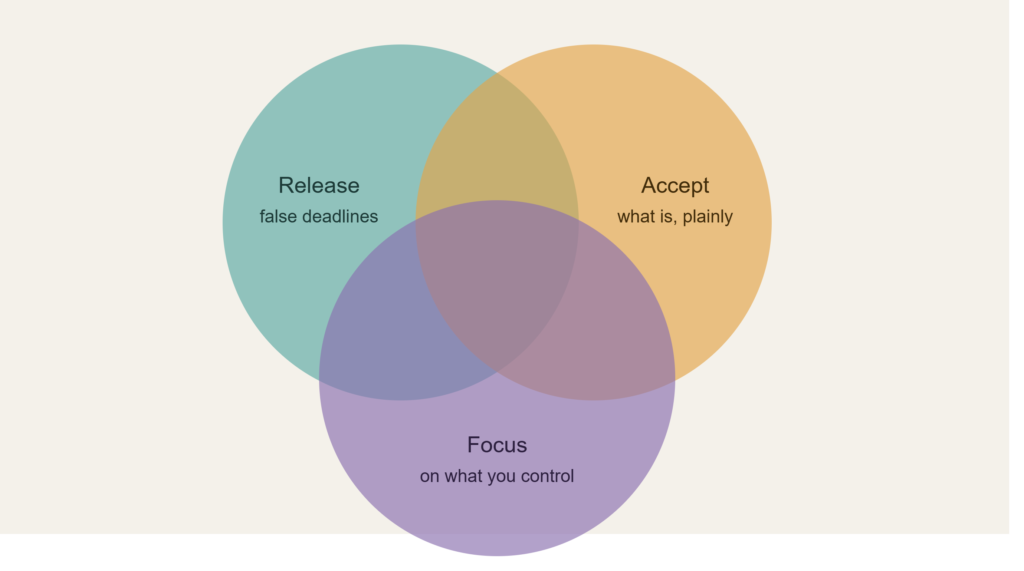
Releasing false deadlines
Many of the deadlines people feel pressure around were never truly their own. They came from a parent’s expectations, a peer group’s pace, or a cultural script about what should happen by a certain age. The first mechanical step in trusting the timing of your life is identifying which of your deadlines are genuinely yours and which were inherited. Once you separate the two, a surprising amount of pressure tends to lift on its own, because you’re no longer being “late” to a race you never signed up for.
Accepting current circumstances without approving of them
Acceptance is often misunderstood as agreement. It isn’t. Acceptance simply means acknowledging where you actually are, rather than the version of your life you wish were true. Psychologists who study acceptance-based approaches to stress, including those behind Acceptance and Commitment Therapy, have found that resisting reality tends to prolong suffering, while honestly naming your circumstances creates the stable ground from which change becomes possible.
Focusing effort on what’s controllable
You cannot dictate exactly when a job offer arrives, when a relationship forms, or when a health outcome resolves. What you can control is your daily effort, your responses to setbacks, and how you prepare for opportunities you can’t yet see. This distinction, between effort and outcome, is a recurring theme across both ancient philosophy and modern performance psychology, and it’s arguably the most practical mechanism behind trusting the timing of your life.
Evidence and Perspectives: What Research, Tradition, and Practitioners Say
A fair treatment of this topic has to hold multiple lenses at once, because the idea sits at the intersection of psychology, spirituality, and personal experience.
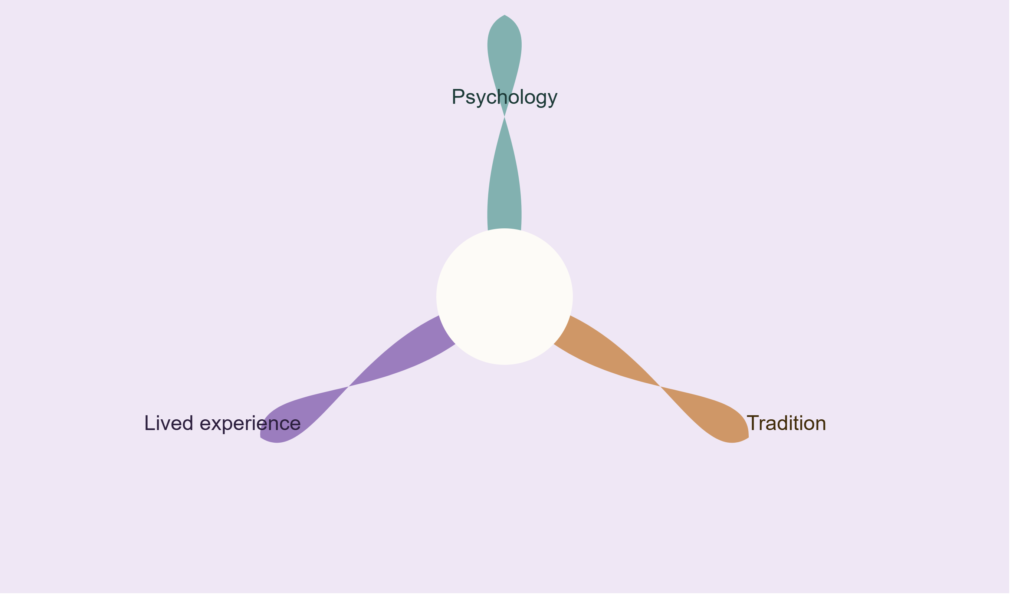
The psychological research angle. There is meaningful science behind pieces of this practice, even if “timing” itself isn’t a term researchers use. Studies on intolerance of uncertainty consistently link the inability to sit with not-knowing to higher anxiety and rumination. Work on hindsight bias, the well-documented tendency for people to see past events as more predictable and coherent once they know the outcome, helps explain why looking backward so often makes a confusing chapter of life feel like it “made sense” in the end. This doesn’t prove that timing is orchestrated by some outside force, but it does explain why the retrospective feeling of things falling into place is so common and so psychologically real.
The spiritual and traditional angle. Many spiritual and religious traditions carry some version of this idea, though they frame it differently. In Christian teaching, verses such as Ecclesiastes 3:1, which speaks of a season for every purpose, are frequently cited in connection with divine timing. In Buddhist thought, the emphasis falls more on non-attachment to outcomes and the impermanence of circumstance. New Age and Universe-centered frameworks describe timing as something the Universe orchestrates on your behalf, even when you can’t perceive the plan. These are meaningfully different worldviews, and this article isn’t claiming they’re interchangeable. What they share is a common instruction: stop forcing, start trusting the process.
The practitioner and anecdotal angle. Outside of formal research or doctrine, this concept persists largely because people report that it helps. A frequently cited example is the story often associated with Steve Jobs, who described being unable to connect the dots of his life looking forward, only being able to connect them by looking backward. That’s an anecdote, not a study, but it captures something many people recognize from their own experience: delays that felt senseless in the moment sometimes reveal their purpose only in hindsight. It’s honest to note that this is a subjective, retrospective pattern rather than a predictive or testable claim.
How to Actually Trust the Timing of Your Life: A Practical Framework
This mindset is easiest to sustain when it’s broken into concrete habits rather than treated as a single decision you make once. If you want a deeper foundation for the mindset work involved here, our guide on learning to sit with uncertainty without spiraling covers the emotional groundwork that supports everything below.
1. Separate your deadlines from your desires. Write down the timelines you’re holding yourself to and ask honestly where each one came from. Keep the ones that reflect your actual values. Release the rest.
2. Practice acceptance as a starting point, not a finish line. Name your current situation plainly, without softening it or catastrophizing it. This clarity is what allows forward movement.
3. Do the work that’s within reach. Instead of fixating on the final outcome, invest your energy in skill-building, preparation, and the choices available to you today.
4. Reframe the waiting itself. Rather than treating a delay as wasted time, consider what it might be quietly developing in you, whether that’s readiness, resilience, or clarity you didn’t have before.
5. Stay committed without gripping tightly. Hold your goal firmly while loosening your attachment to the exact method or moment it arrives. This balance, sometimes called being “detached but devoted,” shows up repeatedly in both performance psychology and contemplative traditions.
6. Ground yourself when anxiety spikes. A short grounding practice, slow breathing, noticing physical sensations, stepping outside, can interrupt the spiral of overthinking that makes trust feel impossible in the moment.
7. Look for small, tangible evidence. Whether you interpret these as coincidence, intuition, or something more, noticing and writing down small signs of progress can counter the feeling that nothing is moving.
8. Talk to someone you trust. Voicing your uncertainty to a friend, mentor, or therapist does two things: it lightens the emotional load, and it gives the people who care about you a chance to actually show up.
9. Keep taking small steps. Trusting timing is not the same as doing nothing. Continued, modest action, sending the email, showing up to the appointment, having the conversation, keeps you aligned with your goal while you wait for conditions to shift.
10. Extend yourself some patience. When things don’t happen on your expected schedule, self-criticism rarely speeds anything up. It just adds suffering on top of the wait. If self-kindness is a struggle for you generally, our piece on building a gentler inner dialogue may be a useful next read.
Common Questions and Misconceptions
This mindset doesn’t mean stop trying. One of the most persistent misreadings of the phrase is that it’s an excuse for passivity. It isn’t. The people who apply this concept most effectively tend to be the ones still working, still preparing, still showing up, while releasing the specific belief that the outcome is overdue.
It doesn’t mean everything happens for a “good” reason. Some difficult things happen simply because life is unpredictable, not because they’re secretly beneficial. A more honest version of the idea is that you can often find meaning or growth after a hard season, even if the hard season itself wasn’t sent to teach you something.
It isn’t only a spiritual claim. Even readers who don’t relate to language about the Universe or divine timing can benefit from the psychological components here, uncertainty tolerance, acceptance, and effort-outcome separation are all well-studied on their own terms.
It doesn’t apply equally to every situation. Timing framing works well for personal growth, relationships, and long-term goals. It’s a poor substitute for urgent action in situations involving safety, health, or harm, where waiting isn’t wisdom, it’s risk.
For daily insights on consciousness, clarity, and trusting yourself, explore Bahlon’s free daily transmissions. Subscribe here to receive them each morning.
Related Readngs:
- How to Let Go of Control: A Spiritual Approach
- What Does It Mean to Surrender Spiritually?
- How to Surrender to the Universe (and Why It’s So Hard)
Frequently Asked Questions
What does “trust the timing of your life” actually mean?
It means accepting that your life unfolds according to its own pace and process, rather than a deadline imposed by comparison, culture, or fear, while still taking the actions within your control.
Is there a bible verse about trusting the timing of your life?
Ecclesiastes 3:1, which describes a season for every purpose under heaven, is the verse most commonly connected to this idea, along with passages in Proverbs and Psalms about waiting on divine timing.
Who is the original author of the “trust the timing of your life” quote?
The phrase circulates widely across social media and quote collections without a single verifiable original author; it appears to have evolved organically as a piece of shared, informal wisdom rather than a documented literary source.
How do I actually start trusting the timing of my life when I feel stuck?
Start small: separate which deadlines are truly yours, accept your current situation honestly, and focus your energy on one action within your control today rather than the entire outcome.
Is trusting the timing of your life a spiritual concept or a psychological one?
It’s genuinely both. Spiritual and religious traditions frame it as trust in a larger plan, while psychology explains related mechanisms like uncertainty tolerance, acceptance, and hindsight bias; neither framing cancels out the other.