Knowing how to make a vision board starts with a simple idea: the board is a tool for clarity, not a wish list. Choose a few goals that matter to you, pick images and words that evoke the feeling you want, and then pair the board with consistent, real-world action. Without that last step, a vision board is mostly decoration.
What Is a Vision Board, and What Is It For?
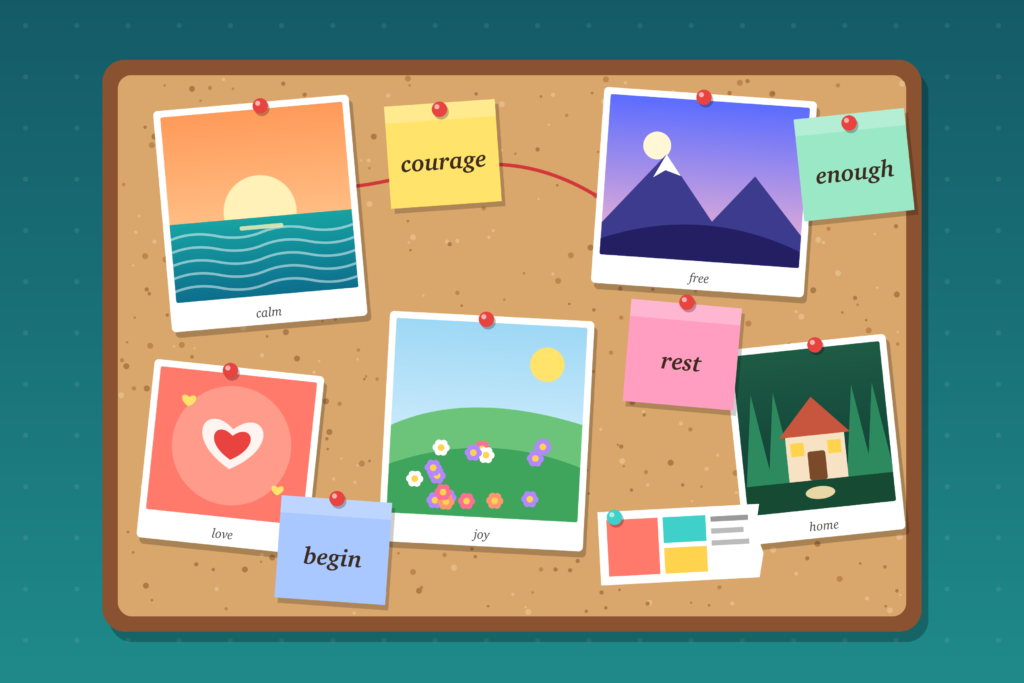
A vision board is a visual collage of images, words, and symbols that represent what you want to bring into your life. It can be a corkboard covered in magazine clippings, a poster board of hand-drawn sketches, or a digital vision board saved as your phone wallpaper. People use them to clarify goals at the start of a year, to mark a life transition, or to stay connected to something they care about.
The practice draws on several traditions. In the manifestation and law of attraction communities, vision boards are a way to focus intention and invite what you desire. In coaching and personal development, they are a visualization tool for making abstract goals concrete. Many people simply find that the act of gathering images tells them something about themselves. These perspectives overlap, and they differ mainly in how much they credit the board itself versus the person behind it.
What most serious practitioners agree on is this: the board does not create change on its own. It works best as a compass that points you toward the person you are becoming, while your choices and actions carry you there.
How to Make a Vision Board Step by Step
Here is a process that holds up whether you work with scissors and glue or a laptop. Set aside an hour or two, because rushing is the fastest way to end up with a board that feels hollow.
Step 1: Clarify What You Genuinely Want
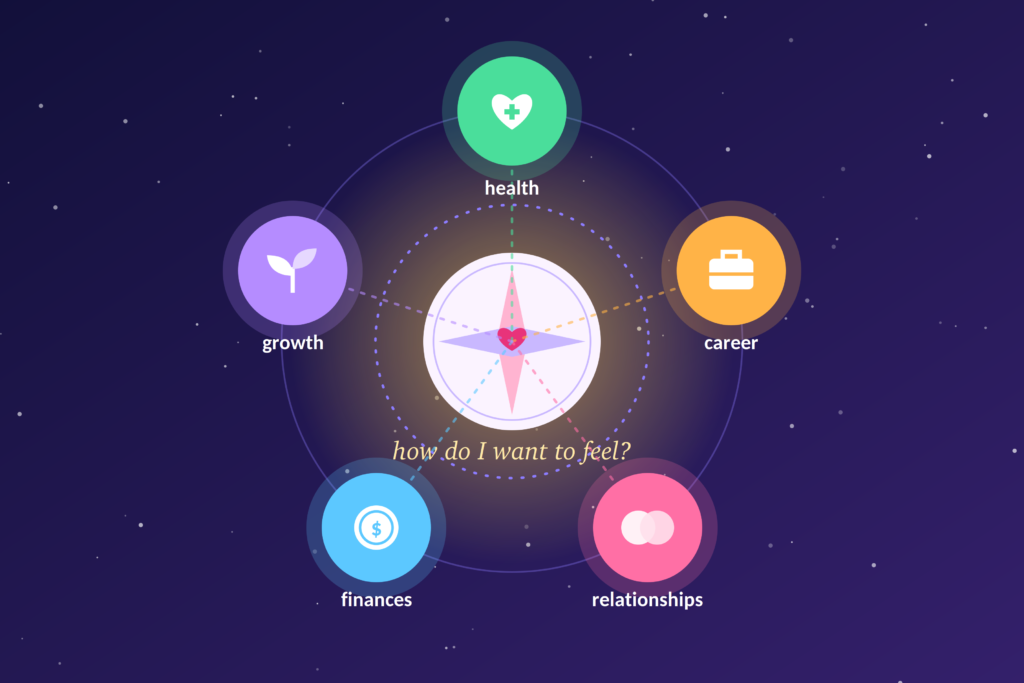
Before touching a single magazine, ask yourself a few honest questions. What do I really want? What do I need? What do I value? How do I want to feel when this becomes part of my life?
Try naming the feeling in a single word: free, open, joyful, calm, secure. A simple word is easier to hold onto than a paragraph, and it becomes the test you apply to every image later.
Next, look across the main areas of life: health, career, relationships, finances, and personal growth. Choose goals that matter to you, not ones you think you should want because someone else wants them. Keep the list short. A board with three or four focused intentions is far easier to take seriously than one crowded with twenty.
Step 2: Gather Your Supplies
For a physical board, you will need a base such as poster board, corkboard, or mixed-media paper. You will also need glue, tape, or pins, along with scissors, markers or paint, and a stack of magazines or books you are happy to cut up. Printed photographs and colored paper for handwritten words are useful too.
For a digital vision board, tools like Canva and Google Slides let you build a collage and then use it as a wallpaper. More on that below.
Step 3: Create a Comfortable Space
Choose a place where you feel relaxed and unhurried. A large table or a clear patch of floor works well. The space does not need to be special. It just needs to feel safe enough that you can pay attention to your reactions without distraction.
Step 4: Find Images and Words That Match Your Intention
Here is where many boards go wrong. Gather far more material than you need, and do not glue anything yet. Simply notice what catches your attention.
Your sources can include magazine pictures, personal photographs, online images, single-word affirmations, drawings, or your own handwriting on colorful paper. If you cannot find the image you have in mind, make it. Print it, sketch it, or write it out.
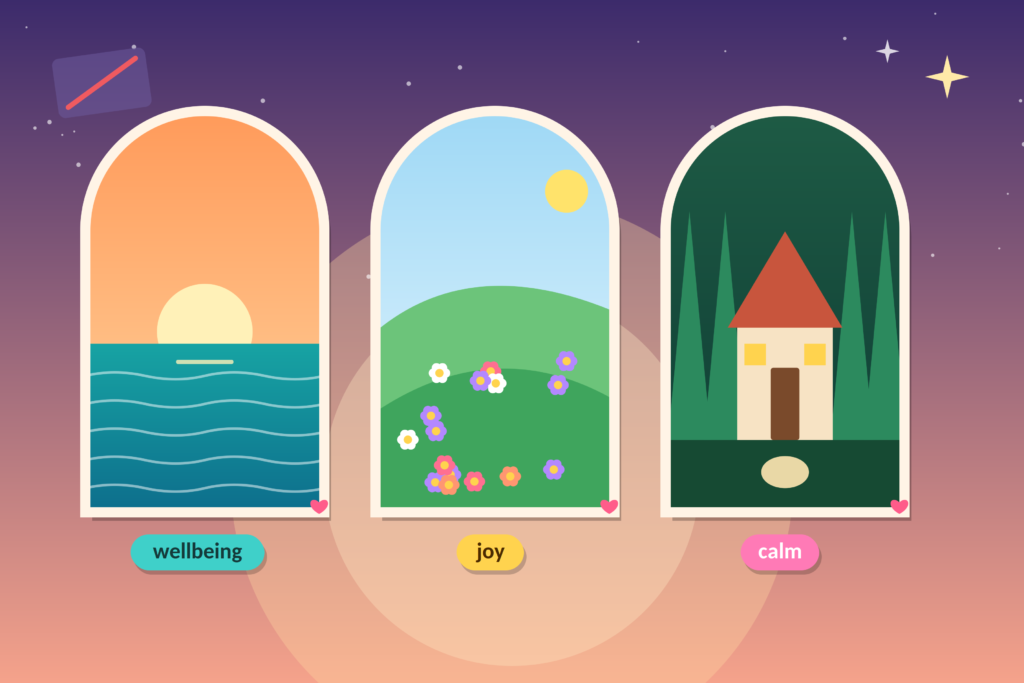
The test for each piece is emotional: does it create the feeling underneath your intention? Suppose your intention is to love yourself more and the feeling you want is wellbeing. A photo of a fitness model or a green smoothie may not deliver that feeling, and for some people it triggers the opposite, a sense of inadequacy or of never measuring up. A field of wildflowers, the ocean, or a quiet cottage in the woods might evoke wellbeing far more strongly. This is personal. Trust your own reaction over what a board is “supposed” to look like.
Step 5: Choose and Arrange the Images
Go through your pile and keep only the pieces that produce the feeling you named. Then arrange them on the board before attaching anything, and adjust until it feels right.
One principle worth building in: show the process as well as the outcome. Pair a picture of studying with one of graduation, or a picture of running with a finish line. A board made only of rewards can leave you picturing the destination without the work required to reach it. Adding personal touches, such as your own photograph or your name, can make the board feel more like yours.
Step 6: Decide How Often You Will Look at It
There is no universal rule. Some people hang the board in their bedroom or use it as a wallpaper so it stays in view. Others prefer to make the board, trust it, and look at it only at chosen moments, putting their energy into action instead.
Experiment and observe. Do you feel more connected when you see it daily? Does it energize you or add pressure? Let your own experience decide.
Step 7: Build a “Make It Real” List
This step separates a vision board that works from one that gathers dust. Write down the actions you can take now that align with your intention, and start with things you control: your choices, habits, thoughts, and behavior. You cannot control other people or outside circumstances, so if an item on your list depends on someone else changing, reframe it around what you can do.
If your board shows a healthier life, the list might include booking a doctor’s appointment, planning three walks this week, or cooking at home twice. Small and concrete beats grand and vague.
Step 8: Notice and Work Through Resistance
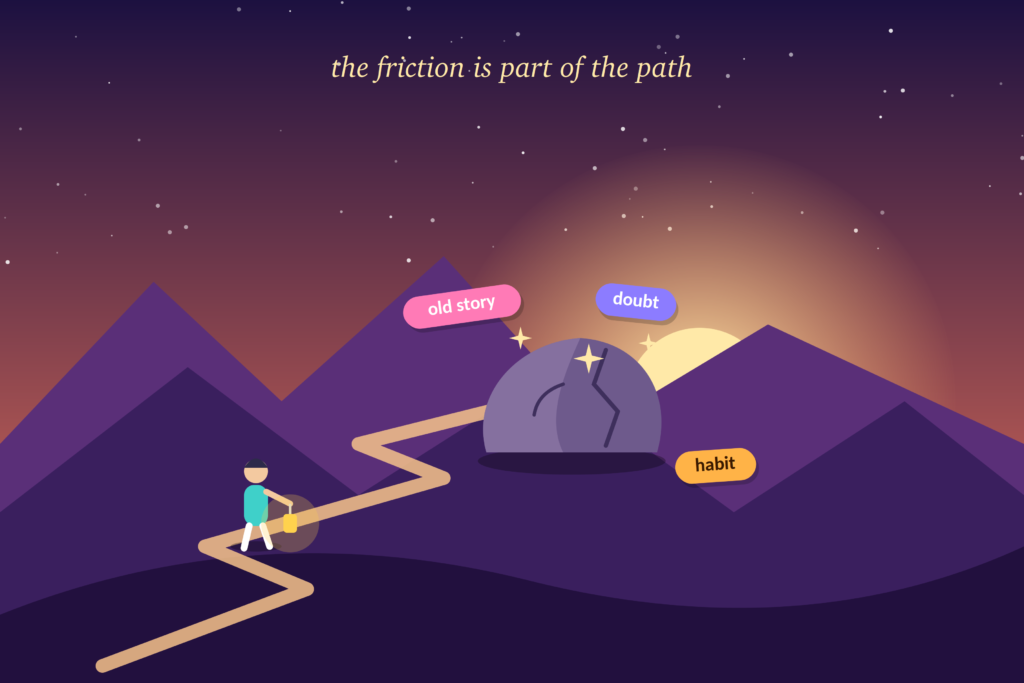
Once you start acting, you will probably meet some friction. It might show up as limiting beliefs, old stories about what you deserve, habits that pull you backward, or unprocessed emotional wounds. Many traditions and practitioners treat this stage as the real work. Ask yourself what blocks you are noticing and what you need in order to move through them. For some people that means journaling, for others therapy, meditation, or conversation with a trusted friend.
Step 9: Review, Adjust, and Repeat
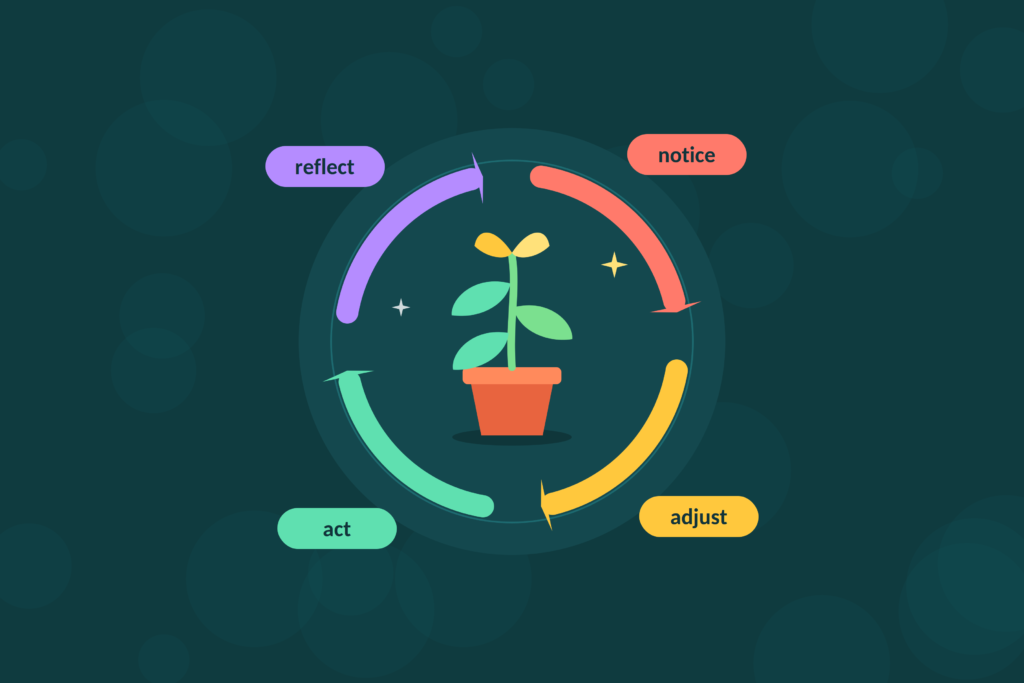
A vision board is not a one-time project. Check in with yourself regularly. Notice what is working, what has stopped mattering, and what needs to change. Your board can evolve as you do, and refreshing it each season or each year keeps it honest.
What to Put on a Vision Board: Ideas and Examples
If you are staring at a blank board, these vision board ideas can help you get started. The best vision board examples for adults tend to blend three kinds of content.
- Feeling images: landscapes, light, colors, and textures that capture the emotion you are after, such as calm, adventure, or belonging.
- Specific goals: a house with a garden, a stage with a microphone, a savings milestone, a passport stamp.
- Words and phrases: single-word affirmations like “rest,” “courage,” or “enough,” or short phrases you have written yourself.
Some people organize the board by life area, with a section each for health, work, relationships, money, and growth. Others prefer a freer collage built around one central theme. Men and women alike often find that a single focused theme, such as a career change or a year of rebuilding, produces a clearer board than trying to represent everything at once.
How to Make a Digital Vision Board in Canva
If you prefer screens to scissors, a Canva vision board is a quick option. Open a new design, choose a phone wallpaper or a standard collage layout, and search the free templates for “vision board.” Then replace the template photos with your own images, add text boxes for your single-word feelings, and arrange everything on the page. Once it is finished, download it as an image and set it as your lock screen.
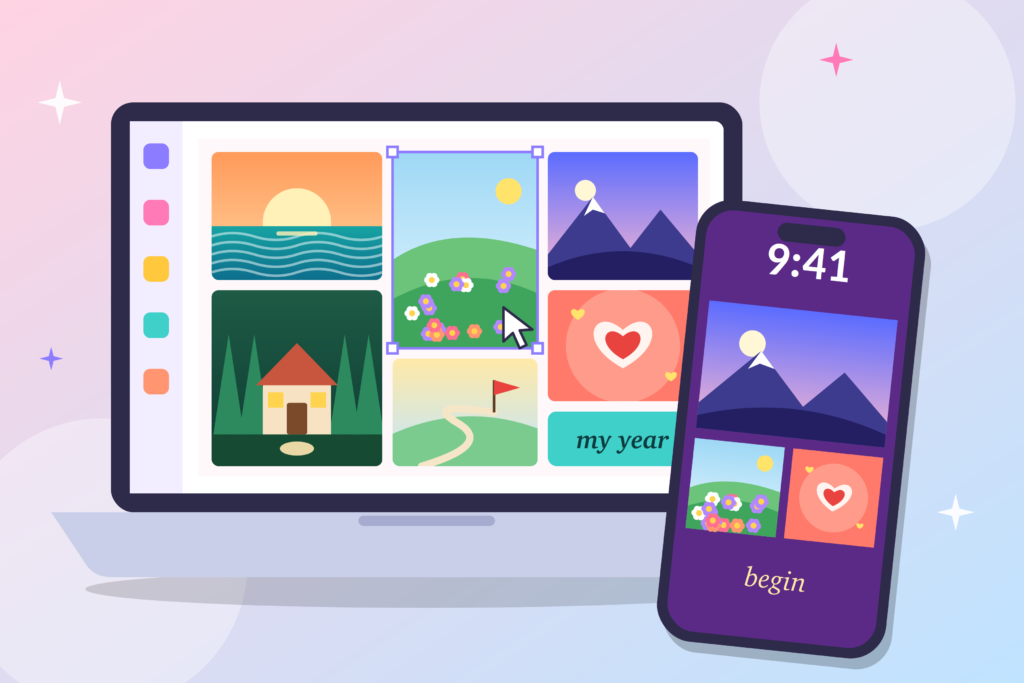
A digital vision board has real advantages. It is easy to edit, always with you, and effortless to update. The tradeoff is that choosing images on a screen can turn into endless scrolling. Using the same discipline as with a physical board helps: collect first, then keep only what creates the right feeling.
What Research and Tradition Say About Vision Boards
It helps to be honest about what is known and what is not.
What research supports. Studies on goal setting consistently find that people do better when they pursue goals that are personally meaningful rather than imposed. Work by psychologists Kennon Sheldon and Andrew Elliot on self-concordant goals found that people who pursue goals aligned with their own values tend to sustain effort more effectively and report greater wellbeing. That supports Step 1.
Research on visualization also offers a caution. Psychologist Gabriele Oettingen has found that fantasizing only about a positive outcome can reduce motivation, in part because the mind feels as though it has already arrived. Her approach, called mental contrasting, pairs the desired future with a realistic look at the obstacles in between. Separate research by Lien Pham and Shelley Taylor found that students who pictured the process of studying did better than those who pictured only a good grade. These findings are a strong argument for building the “process and outcome” balance into your board.
What is experiential or traditional. Many people who practice manifestation report that vision boards sharpen their focus, shift their mood, and open them to opportunities they might have missed. Those accounts are meaningful to the people who give them, and they reflect a long human history of using imagery and intention. They are not, however, the same as controlled evidence that a board will bring about specific external results. Holding both truths at once is the most grounded way to approach the practice.
Common Mistakes When You Make a Vision Board
Treating the board as the finish line. Cutting and pasting can feel productive, which is exactly why it can substitute for action. The board is the beginning.
Cramming in too much. A crowded board dilutes your focus. Fewer, clearer goals are more useful.
Choosing images that sting. If a picture leaves you feeling behind or inadequate, it is working against you, however impressive it looks.
Chasing what you think you should want. Boards built around other people’s expectations rarely motivate anyone.
Making goals depend on other people. “My partner finally changes” is out of your hands. “I communicate openly and set healthy boundaries” is not.
Never revisiting it. People change. A board that no longer reflects who you are should be redone.
For daily insights on consciousness, clarity, and trusting yourself, explore Bahlon’s free daily transmissions.
Related articles:
- Manifestation Guide: Everything You Need to Know
- Manifestation Techniques to Attract Your Dreams
- Manifestation Journaling Secrets: The Power of Words
Frequently Asked Questions
What is the best way to make a vision board?
Start by clarifying what you want and the feelings behind it. Then gather images and words that evoke those feelings, arrange them on a board that shows both the effort and the result, and write a list of actions you can take. Review it regularly.
What should I put on a vision board?
Include images and words that create the emotion you want, such as calm, freedom, or confidence, alongside a few specific goals in areas like health, career, relationships, finances, and personal growth. Add pictures of the process, not only the outcome.
Do vision boards really work?
A vision board works as a focusing tool when it is tied to meaningful goals and real action. Research suggests that picturing only the positive outcome can reduce effort, while combining vision with planning and awareness of obstacles is more effective. Many people also find them emotionally clarifying.
How often should I look at my vision board?
It depends on you. Some people display it daily, while others look only at set times. Try both and notice whether seeing it motivates you or adds pressure.
Is a digital vision board as good as a physical one?
Yes, if it connects with you. A digital vision board is convenient and easy to update, while a physical one offers a hands-on, tactile experience. Choose the format you will actually use.