Psychometry is the claimed psychic ability to sense information about an object’s history, its past owners, or events connected to it simply by touching it. Practitioners, known as psychometrists, describe receiving images, emotions, or impressions from items such as a ring, a letter, or a family heirloom. The practice is also called token-object reading, and while mainstream science has not verified it, it has a rich history and remains one of the most personal forms of intuitive exploration.
What Is Psychometry? A Clear Definition
The standard psychometry definition describes a form of extrasensory perception in which a person gains knowledge about an object through physical contact rather than through the ordinary senses. Some writers also call it psychoscopy. The central idea is that an object can act like a quiet archive, holding impressions of the people and moments that surrounded it.
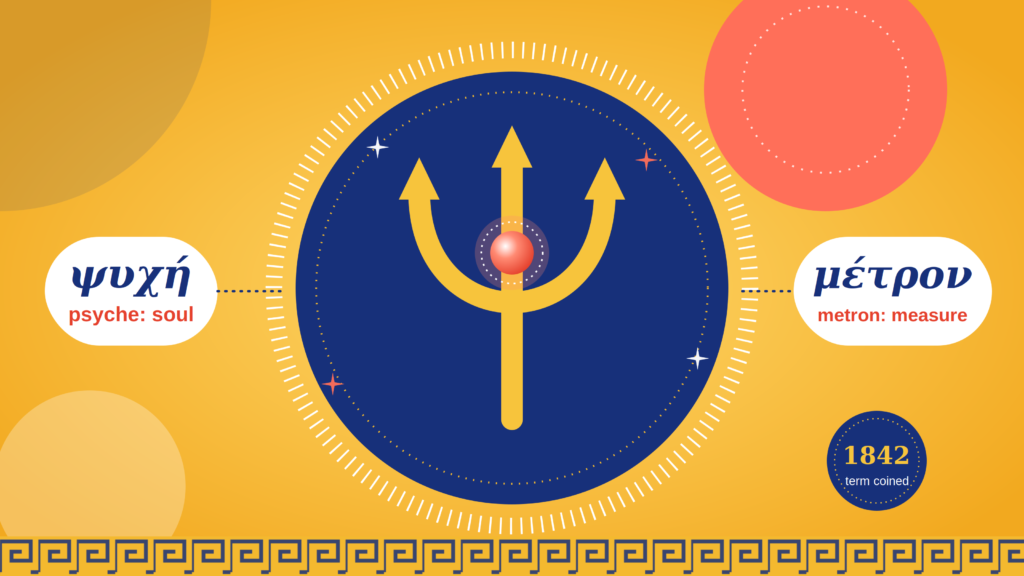
The word itself comes from two Greek roots: psyche, meaning soul or spirit, and metron, meaning measure. American physician and professor Joseph Rodes Buchanan coined it in 1842, and he understood it as a way of measuring the soul. His choice of words tells you something about his ambition. He did not see psychometry as a parlor trick. He saw it as the beginning of a new science.
Today, when people ask what psychometry is, they usually mean the modern spiritual and metaphysical practice. A client hands over a personal item, the psychometrist holds it, and impressions arise that are interpreted as part of the object’s story.
How Psychometry Works According to Practitioners
Proponents describe the mechanics in terms of retention and reception. In their view, objects absorb a kind of residual energy, vibration, or impression from the people who owned, wore, or touched them. A sensitive person then acts as a receiver, using the object as a conduit or antenna for that stored information.
Almost any personal item can serve as a token object. Jewelry, watches, keys, photographs, letters, handkerchiefs, and historical artifacts are among the most common. Items worn close to the body or handled often are generally considered the richest, because practitioners believe they carry stronger impressions.
A typical psychometry reading tends to follow a loose pattern:
- The psychometrist holds, touches, or rubs the object, sometimes placing it against the forehead or chest.
- They reduce distractions, often by closing their eyes.
- They settle into a relaxed, meditative, or receptive state.
- They attempt to attune to the object’s alleged energy without forcing an answer.
- Impressions arrive as mental images, emotions, sounds, smells, or intuitive knowing.
- The psychometrist describes these impressions and weaves them into a narrative.
Consider a tarnished silver locket passed through several generations of a family. A psychometrist might hold it quietly and report the image of a woman wearing it, a sense of the 1920s, a wave of longing or heartbreak, and perhaps a place where the locket was once lost and found. The client then weighs those impressions against what they know of their family.
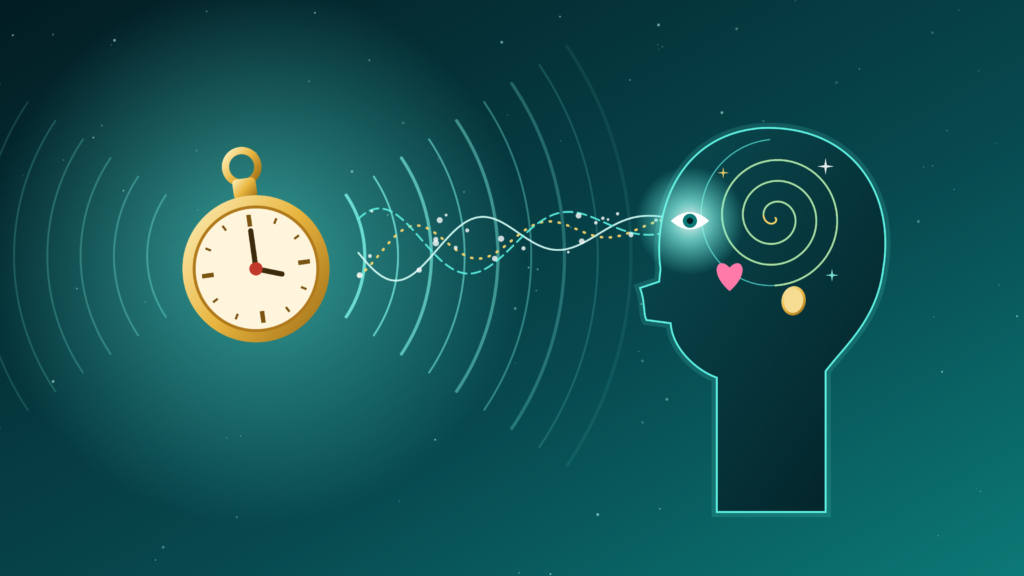
Practitioners often stress that the experience is subtle. Impressions can be fleeting, symbolic, or emotional rather than literal, and interpretation is considered as much a skill as the sensing itself.
The Origins of Psychometry: From Buchanan to Spiritualism
Buchanan’s early experiments involved placing minerals, substances, and historical objects on the foreheads of willing subjects and asking them to describe what they felt. Subjects reported physical sensations, tastes, emotional impressions, and even historical visions. From these trials, which were not controlled by modern standards, Buchanan concluded that humans respond to emanations from matter.
He developed the idea further in his 1885 work, Manual of Psychometry: The Dawn of a New Civilization. His guiding image was that the past is entombed in the present. Just as geologists read Earth’s history in rocks and fossils, Buchanan believed a psychometrist could read human history in what he called mental fossils preserved within objects. He described the faculty as a mental telescope, a way of looking across time. In his analogy, a thermometer measures heat, an electrometer measures electrical conditions, and a psychometer measures the soul.
Others carried the idea forward. Geologist William Denton published The Soul of Things in 1863, filled with case studies and experiments involving objects and historical impressions. Philosopher Stephen Pearl Andrews folded psychometry into his system of Universology. Through the nineteenth century, the concept spread through spiritualist and metaphysical circles.
Eventually it moved from lecture halls to public life. Psychometry became a staple of stage demonstrations, séances, and spiritualist gatherings, where an audience member would offer a ring, a sealed letter, or a handkerchief for the medium to read. Today it survives at psychic fairs, New Age gatherings, and private consultations, and it often overlaps with clairvoyance and mediumship. The difference is that psychometry anchors the experience in a physical object.
What Science and Skeptics Say About Psychometry
Honest coverage of psychometry needs to separate personal experience from tested claims. Here the picture is clear: there is currently no empirical evidence that objects store personal history in a detectable energy field, that people can retrieve such information through touch, or that psychometric impressions can reliably produce verifiable facts under controlled conditions. For that reason, mainstream scientific and academic communities do not accept psychometry, and it is generally classed within parapsychology, a field many scientists regard as pseudoscience.
Skeptics offer ordinary psychological explanations for why readings can feel so accurate:
- Cold reading: A skilled reader can use general statements, body language, and subtle cues from the client to appear highly specific. A remark about “a woman who loved this piece” fits a surprising number of situations.
- Confirmation bias: Clients tend to remember the hits and quietly forget the misses. Vague statements get stretched to fit.
- Selective memory and wishful thinking: When a person deeply wants to feel connected to a loved one, a reading can seem more accurate than it was.
These explanations deserve to be taken seriously, and they do not require anyone to be dishonest. A well-meaning psychometrist can be completely sincere while these processes operate in the background.
At the same time, many people find value in readings that has little to do with proof. A reading can prompt reflection, open a conversation about a grandparent, or help someone feel emotionally close to an heirloom. Those are genuine human experiences, even if the proposed mechanism remains unverified. Both perspectives can be held at once: the claim has not been scientifically demonstrated, and the experience can still be meaningful to the person having it.
The Psychic Detective Question
One of the most discussed claims is that psychometrists can help solve crimes by handling items linked to a victim or a scene. The record here is not encouraging. Police statements and inquiries have generally described psychic involvement as unhelpful, citing false leads, misdirection, and wasted resources. Psychologist Leonard Zusne observed that second-hand accounts of psychic success often fell apart when checked against the facts. Law enforcement professionals do not treat psychometry as a credible investigative tool, and anyone dealing with a missing person should rely first on official channels.
Psychometry vs. Psychometrics: Clearing Up the Confusion
Many people searching for psychometry actually want something different. The two words share Greek roots, but they describe unrelated worlds.
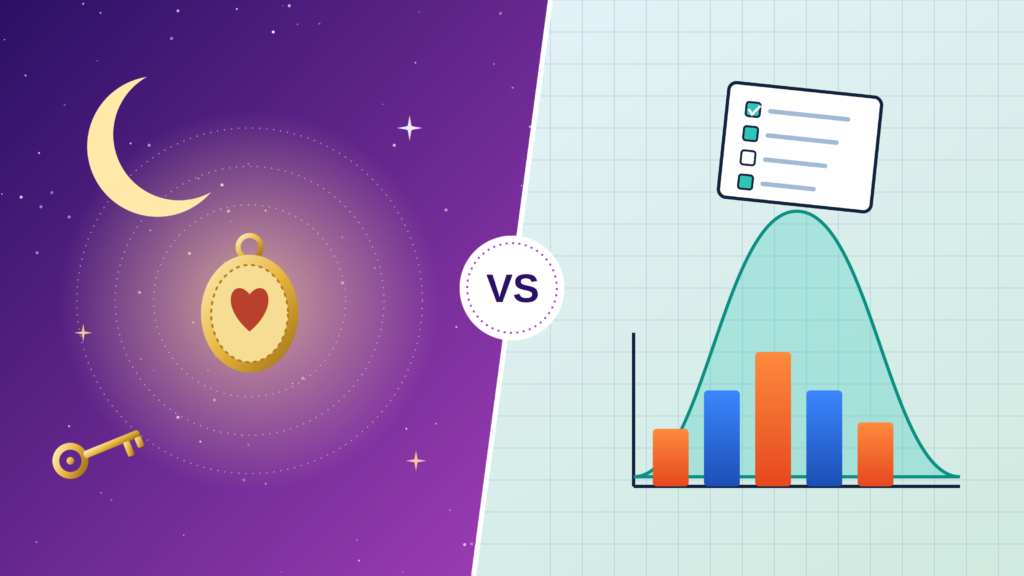
Psychometry is the psychic practice described above: claimed information gained by touching objects.
Psychometrics is an established scientific discipline within psychology and education. It focuses on designing and validating tests and questionnaires, applying statistical analysis, and measuring knowledge, abilities, attitudes, personality traits, and educational achievement. It relies on controlled research and empirical testing.
The confusion extends to job titles. A psychometrist in a clinical or educational setting is a trained professional who administers and scores standardized psychological or neuropsychological tests, often working alongside psychologists. A psychometrician, by contrast, typically focuses on the statistical design and analysis of those tests. People researching a psychometrist job, psychometrist certification, or psychometrist salary are looking at this scientific career path, not the psychic one. Requirements and pay vary by country and employer, so checking current listings and professional associations is the best route.
So when you meet the word psychometrist, context decides everything. In a spiritual setting it means a token-object reader. In a hospital or university it means a testing specialist.
How to Try Psychometry Yourself
You do not need special credentials to experiment with psychometry as a contemplative exercise. Approached with curiosity and a little humility, it can sharpen attention and intuition. Here is a simple method:
- Choose an object with some history. A grandparent’s watch, a thrift-store book, or a stone from a meaningful place all work. Pick something you know little about if you want to test yourself.
- Prepare a quiet space. Silence your phone and sit comfortably. A few slow breaths help settle the mind.
- Hold the object and notice. Pay attention to temperature, weight, and texture first. This grounds you in the present.
- Let impressions rise without forcing them. Observe any images, feelings, words, or memories. Resist the urge to analyze them in the moment.
- Write everything down immediately. Include details that seem silly or irrelevant.
- Check your notes later. If the object has a documented history, compare your impressions to the facts. Be honest about hits and misses.

That last step is the most valuable. Keeping a record helps you notice patterns in your own perception, including how often you are right, how often you are vague, and how easily the mind fills in gaps. Whether you believe the impressions come from the object, from intuition, or from imagination, the discipline of careful observation is useful in its own right.
Practitioners also recommend treating readings with care. Avoid presenting impressions as certainties, especially around grief, family secrets, or health, and remember that your interpretation is only one possible reading.
For daily insights on consciousness, clarity, and trusting yourself, explore Bahlon’s free daily transmissions. Subscribe to have them delivered each day.
Related Articles:
- How to Develop Clairvoyance: And What It Means for You?
- What Is Mediumship? Everything You Need to Know About It
- How to Develop Your Intuition
Frequently Asked Questions
What is psychometry in simple terms?
Psychometry is the claimed ability to learn about an object’s past, or the people connected with it, by touching it. Practitioners say the object holds residual impressions that a sensitive person can perceive as images, feelings, or intuitions.
What does a psychometrist do?
In the psychic sense, a psychometrist performs readings by holding a client’s personal object and describing the impressions that arise. In psychology and healthcare, a psychometrist is a different professional who administers and scores standardized tests.
Is psychometry real?
Psychometry has not been verified by scientific research, and mainstream science does not accept it. Many people nonetheless report meaningful personal experiences with it, and those experiences are valued within spiritual and metaphysical traditions.
What is the difference between psychometry and psychometrics?
Psychometry is a psychic practice based on reading objects. Psychometrics is the scientific field that designs and validates psychological tests and measurements. They share a root word but are unrelated disciplines.
Is psychometry a Star Wars power?
Yes, in a sense. Psychometry appears in Star Wars Legends material as a Force ability allowing a user to perceive the history of an object by touch, which mirrors the real-world concept.