A gratitude practice is a deliberate, repeatable habit of noticing and appreciating the good things in your life, rather than waiting for gratitude to show up on its own. It can take many forms, from a two-minute journal entry to a slow walk where you actively look for things to be thankful for. What makes it a “practice” rather than just a passing feeling is consistency: you return to it on purpose, repeatedly, until it becomes part of how you move through your day.
This guide walks through where gratitude practice comes from, how it actually works, what the research says (and doesn’t say), and how to build one that fits your life without turning it into another chore on your to-do list.
What Is Gratitude Practice?
At its core, gratitude practice means intentionally focusing on and appreciating the positive aspects of your life, on a schedule you set for yourself. That might sound simple, almost too simple to write a guide about. But there’s a meaningful difference between feeling grateful in the moment, say when someone holds a door open for you, and building a structured habit that trains your attention to notice good things even when they’re not obvious.
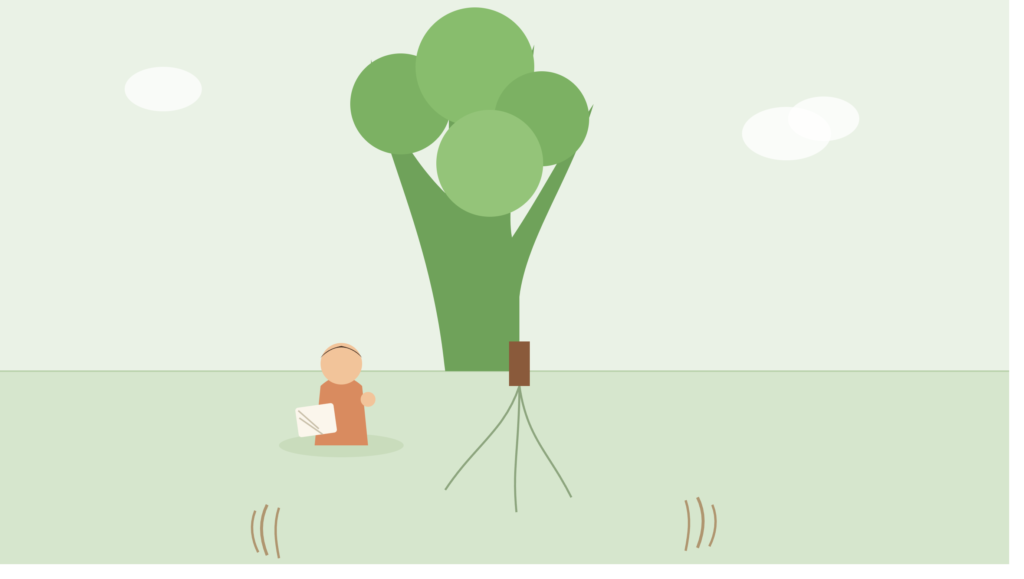
The idea of gratitude as something worth cultivating isn’t new. Nearly every major philosophical and religious tradition has some version of it. Stoic philosophers wrote about appreciating what you have rather than fixating on what you lack. Buddhist teachings connect gratitude to mindfulness and non-attachment. Many faith traditions build thanksgiving directly into daily prayer or ritual. Indigenous cultures around the world have long practiced formal expressions of gratitude toward land, ancestors, and community as a way of maintaining balance and reciprocity.
What changed in the last few decades is that gratitude moved from being primarily a spiritual or ethical concept into something psychologists started studying directly. Researchers in the positive psychology movement, which gained momentum in the late 1990s and early 2000s, began treating gratitude as a trainable skill rather than just a personality trait some people happen to have more of than others. That shift is a big part of why gratitude journals, gratitude jars, and other structured exercises became so common. They’re an attempt to translate an old idea into something you can schedule and track.
It’s worth being clear about one thing: gratitude practice is not the same as toxic positivity or pretending everything is fine. A well-designed gratitude practice doesn’t ask you to ignore difficulty or paper over real problems. It asks you to notice what’s also true alongside the hard stuff, which is usually that at least a few things, however small, are still going right.
How Gratitude Practice Works
The mechanics of a gratitude practice are less mysterious than they might sound. You’re essentially doing three things: choosing a trigger, doing a short exercise, and repeating it often enough that it becomes automatic.
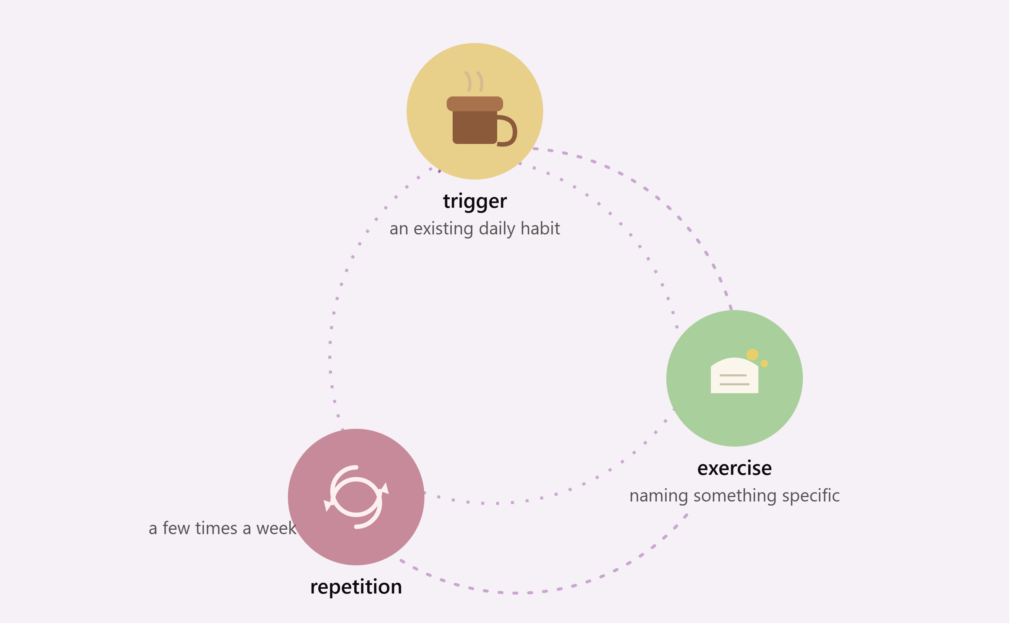
The trigger is whatever reminds you to do the practice. This matters more than people expect. Good intentions rarely survive without something concrete attaching them to your day. Common triggers include brushing your teeth, sitting down for the first coffee of the day, or the moment you get into bed at night. The trigger doesn’t need to be meaningful on its own. It just needs to be something you already do reliably.
The exercise is the actual act of noticing. This is where specificity does most of the heavy lifting. Naming something broad, like “I’m grateful for my family,” tends to produce a flat, generic feeling. Naming something specific, like “I’m grateful my sister called just to check in, even though she was clearly tired,” tends to produce a much stronger response. The brain seems to respond more to detailed, sensory, particular things than to abstract categories. This is part of why so many gratitude exercises push you toward specifics rather than general statements.
The repetition is what turns a one-off feel-good moment into an actual practice. Interestingly, more frequent isn’t automatically better here. Some research on gratitude journaling has found that people who wrote in a gratitude journal a few times a week reported greater increases in wellbeing than people who wrote every single day. One explanation is that daily repetition can start to feel routine or obligatory, and the exercise loses some of its emotional charge. This is useful to know if you’ve tried gratitude journaling before and abandoned it because it started to feel like homework. You may not need to do it daily to get real benefit.
There’s also a sensory version of this practice worth understanding, since it works a bit differently. Rather than listing things, you slow down and move through your senses one at a time, sight, smell, sound, touch, noticing something you appreciate in each. This version tends to work well when you’re feeling scattered or anxious, because it anchors your attention in your physical surroundings rather than in your thoughts. It’s less about generating a list and more about slowing down long enough to actually notice what’s already around you.
Benefits of Gratitude Practice
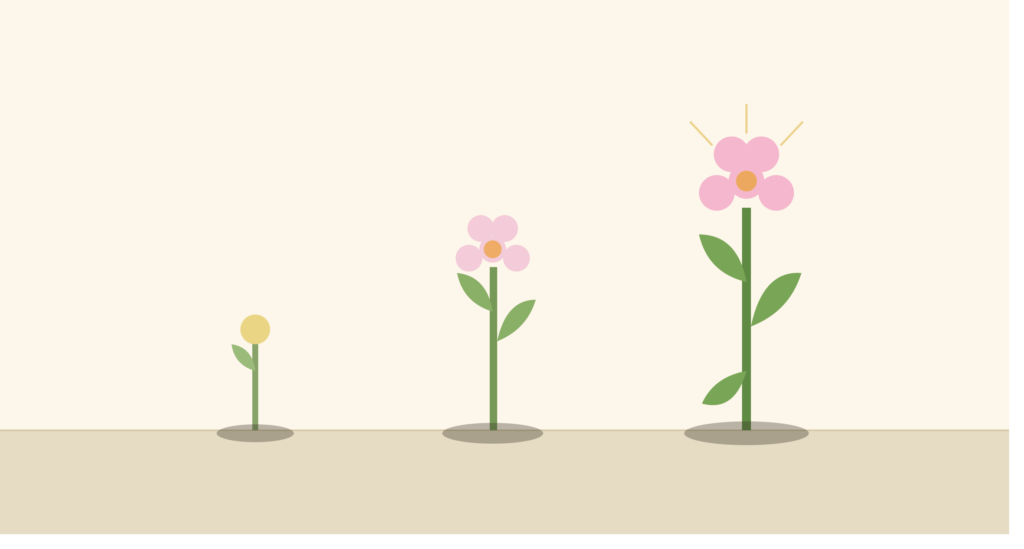
People who maintain a regular gratitude practice report a fairly consistent set of experiences: feeling more content, sleeping better, feeling less consumed by comparison or envy, and experiencing stronger connections with the people they thank directly. Many describe it as a shift in attention rather than a dramatic transformation, less like flipping a switch and more like slowly turning up a dimmer.
Some of this is backed by research, and it’s worth being honest about where the evidence is strong and where it’s thinner. Studies on gratitude journaling, including some of the earlier and more widely cited work in positive psychology, have found associations between regular gratitude practice and improvements in self-reported wellbeing, optimism, and satisfaction with life. Some studies have also found links to better sleep quality and lower stress, though the size of these effects varies across studies, and not every study finds the same results.
What’s less established, at least in a strict scientific sense, is the idea that gratitude practice can directly change physical health outcomes or rewire the brain in some permanent, measurable way. You’ll see strong claims like this floating around online. It’s more accurate to say that gratitude practice is associated with improvements in mood and outlook, and that those improvements can plausibly ripple outward into other areas of life, like sleep or relationships, without claiming it as a proven cure for anything.
Then there’s the anecdotal layer, which shouldn’t be dismissed just because it’s harder to measure. Many long-term practitioners describe gratitude practice as changing how they interpret difficult days, not by making hard things easier, but by making it harder to lose sight of the good things that are also present. Others describe it as improving specific relationships, particularly when the practice involves writing or speaking gratitude directly to another person rather than just journaling privately. These experiences are real and meaningful even though they’re harder to quantify than a study result.
The honest summary is this: gratitude practice has solid evidence behind it for improving self-reported mood and wellbeing, moderate and mixed evidence for things like sleep and stress, and a much larger body of personal testimony describing benefits that are harder to test in a lab but are still widely reported.
How to Get Started with Gratitude Practice
You don’t need any special materials to start, though a notebook helps. Here’s a simple way to build the habit from scratch.

Step 1: Pick your trigger.
Choose something you already do every day without fail. Brushing your teeth, making coffee, or getting into bed are all reliable options. Attach the practice to that moment rather than trying to remember it out of nowhere.
Step 2: Choose your format.
A few approaches to consider, depending on what fits your personality and schedule:
- The three-minute journal. Keep a small notebook and write down three things you’re grateful for, along with a sentence on why. Push yourself toward specifics. “I’m grateful for the warm mug of tea that helped me wake up this morning” carries more weight than “I’m grateful for food.”
- The gratitude walks. Take a walk without your phone and actively look for things to appreciate as you go, the light through the trees, a particular smell, a stranger’s kindness. This works well if sitting still to journal doesn’t suit you.
- The gratitude jar. Keep a jar somewhere visible. Write small notes of thanks on slips of paper throughout the week and drop them in. At the end of the month, read through them. This is especially good for people who like tangible, visual reminders of progress.
- The gratitude letter. Write a detailed letter to someone who has genuinely impacted your life. If you’re comfortable, read it to them in person. This tends to produce a stronger emotional effect than any other single exercise, partly because it involves another person directly.
- The sensory practice. Instead of writing, spend a few quiet minutes moving through your senses, noticing something you appreciate in what you see, smell, hear, and touch. This is a good option on days when journaling feels like too much effort.
Step 3: Be specific.
Whatever format you choose, resist the pull toward vague, sweeping statements. Specific details are what make the practice land emotionally.
Step 4: Don’t aim for daily perfection.
Two or three times a week, done with real attention, tends to work better long term than a daily habit done on autopilot. Consistency over time matters more than frequency.
Step 5: Reassess after a month.
Notice what’s working. If journaling feels stale, try the walk. If the walk feels rushed, try the jar. The format matters less than whether you actually keep doing it.
Common Misconceptions About Gratitude Practice

“It means ignoring your problems.” This is probably the most common misunderstanding, and it’s worth addressing directly. A gratitude practice doesn’t ask you to pretend hard things aren’t hard. It simply asks you to also notice what else is true. Both can coexist.
“You have to feel grateful for it to count.” Many people assume the exercise only works if it produces an immediate emotional response. In reality, the feeling often follows the practice rather than preceding it. Some days the exercise will feel flat, and that’s normal. The value comes from repetition over time, not from every single session producing a rush of warmth.
“It’s only for naturally positive people.” Gratitude practice is frequently framed as something for people who are already upbeat. In practice, it’s often more useful for people who tend toward anxiety, rumination, or a critical inner voice, precisely because it gives the mind somewhere else to go.
“Bigger gratitude is better gratitude.” There’s a common assumption that gratitude has to be about major life events, a new job, a wedding, recovering from an illness, to really count. Small, specific, everyday things (a good cup of coffee, a text from a friend, sunlight through a window) tend to be just as effective, if not more so, because they’re accessible every single day.
“It has to be religious or spiritual to be meaningful.” Gratitude shows up across religious and spiritual traditions, but the practice itself doesn’t require any particular belief system. Secular versions, grounded purely in psychology and habit-building, work perfectly well for people who approach it from a non-spiritual angle.
Gratitude Practice for Beginners: Tips and Best Practices
If you’re just starting out, a few things tend to make the difference between a habit that sticks and one that quietly disappears after a week.
Do start small.
One sentence, one moment, one specific detail is enough on a busy day. The goal is consistency, not depth, especially at the beginning.
Do keep your materials visible.
A journal buried in a drawer gets forgotten. A jar on the kitchen counter or a notebook by your bed stays in view and keeps reminding you.
Do mix formats occasionally.
If journaling starts to feel mechanical, switch to a walk or a sensory practice for a week. Variety can keep the habit from going stale.
Avoid turning it into a performance.
If you’re sharing your gratitude practice publicly, on social media or elsewhere, be mindful that the goal is genuine reflection, not curating an image. Private practice tends to build the habit more reliably.
Avoid forcing positivity on hard days.
On genuinely difficult days, it’s fine if what you write feels small or even a little strained. “Grateful the rain stopped for ten minutes” is a completely valid entry. The practice isn’t meant to override real difficulty.
Expect it to feel awkward at first.
Most new habits feel unnatural before they feel automatic. Give it a few weeks before deciding whether it’s working for you.
Expect uneven results.
Some weeks will feel more meaningful than others. That’s normal and doesn’t mean the practice has stopped working.
If exploring gratitude practice has opened questions about your own path, you may find value in Bahlon’s free daily transmissions, brief insights for people seeking clarity. You can subscribe here to start receiving them.
Related Readings:
Frequently Asked Questions About Gratitude Practice
How long does it take to see benefits from a gratitude practice?
Many people notice a subtle shift in mood within a few weeks of consistent practice, though this varies from person to person. The effect tends to build gradually rather than appearing suddenly.
Do I need to write things down, or can I just think them?
Writing tends to produce a stronger effect because it forces specificity and creates something you can revisit later, but thinking through gratitude mentally, especially during a walk or quiet moment, still has real value.
What if I can’t think of anything to be grateful for on a hard day?
Start extremely small. A comfortable chair, a working heater, a moment of quiet. The goal on hard days isn’t to find something big, just something true.
Is gratitude practice the same as positive thinking?
Not quite. Positive thinking often focuses on reframing outcomes optimistically. Gratitude practice is more about noticing what’s already present and good, which can coexist with acknowledging real difficulty.
How often should I actually do this?
Two to three times a week, done with genuine attention, tends to work as well or better than daily practice done on autopilot. Consistency over the long run matters more than frequency in any given week.