To do a psychic reading for a friend, start by creating a calm space, getting their clear permission, and choosing a method such as tarot cards or intuition to guide the session. Keep your impressions gentle and open to interpretation, and check in with your friend as you go. The goal is thoughtful guidance, not a rigid prediction.
Most people picture a psychic reading as something that happens across a table with a professional reader, but informal readings between friends are far older than any storefront. Sitting with someone you trust, turning a card or describing an impression, and listening for what resonates is a quiet and surprisingly intimate way to connect. Done with care, it can open conversations that ordinary small talk never reaches.
What a Psychic Reading for a Friend Really Involves
A psychic reading is an attempt to perceive information about a person’s situation, feelings, or possible path forward through means other than ordinary observation. Traditions describe this in different ways. Some speak of energy, some of spirit guides, and some of the reader’s own receptive intuition. Others treat the process as a structured form of reflection, with cards or symbols acting as prompts.
A psychic reading for a friend differs from a professional session in a few important ways. There is no fee, no formal setting, and usually no expectation of expert-level accuracy. What you have instead is familiarity. You already know something of your friend’s history, humor, and worries, which is both a gift and a responsibility. It helps you speak with compassion, but it also means you should be honest with yourself about what comes from intuition and what comes simply from knowing them.
Beginners often ask whether they need a special gift. Practitioners generally hold two views. One says intuitive ability is innate in some people and can be strengthened in anyone. The other says it is largely a skill of attention, built through practice. Either way, you do not need a title or a certificate to sit down with a friend and offer a reading. You do need sincerity, humility, and a willingness to listen more than you speak.
How a Psychic Reading Works: Methods and Mechanics
There is no single correct method. The approaches below are the ones most commonly used in casual readings between friends.
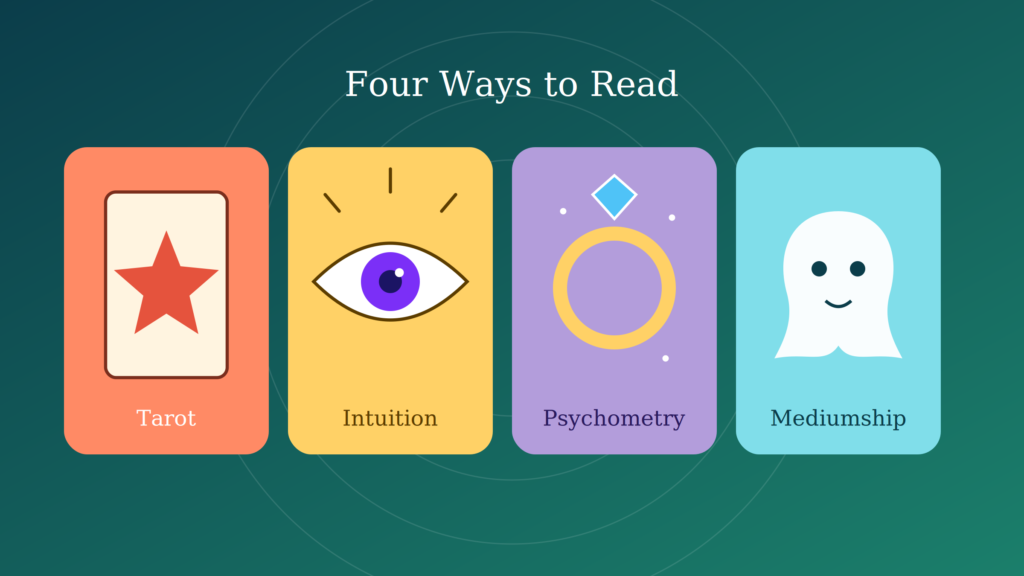
Tarot and oracle cards. Cards give a reading structure. Your friend shuffles while holding a question or an area of life in mind, and you lay out a few cards and interpret them together. A simple three-card spread representing past, present, and future, or situation, challenge, and advice, is a common starting point. Oracle decks tend to use looser imagery and written messages, which can feel more approachable for first-timers.
Intuitive impressions. Here you rely on what you sense rather than on a tool. Practitioners describe several channels. Clairsentience refers to feeling emotions or physical sensations that seem connected to the other person. Claircognizance describes a sudden sense of simply knowing something. Clairvoyance involves mental images, and clairaudience involves inner words or sounds. Many readers find one channel dominates, and noticing which one is yours is part of the learning.
Psychometry and object reading. Some readers hold an object belonging to the person, such as a ring or a keepsake, and describe impressions that arise. It is a gentle option for friends who feel shy about being the subject of attention.
Mediumship. Mediumship readings aim to receive messages from people who have died. This is a distinct practice with its own ethics and emotional weight, and it is best approached carefully. If your friend is grieving, they may be especially vulnerable to suggestion, so it is usually wiser to leave mediumship to experienced practitioners.
Whichever method you choose, the mechanics are similar. You set an intention, open yourself to impressions or card imagery, describe what you notice without forcing meaning onto it, and let your friend respond. The back-and-forth is where much of the value tends to emerge.
What Research and Tradition Say About Psychic Readings
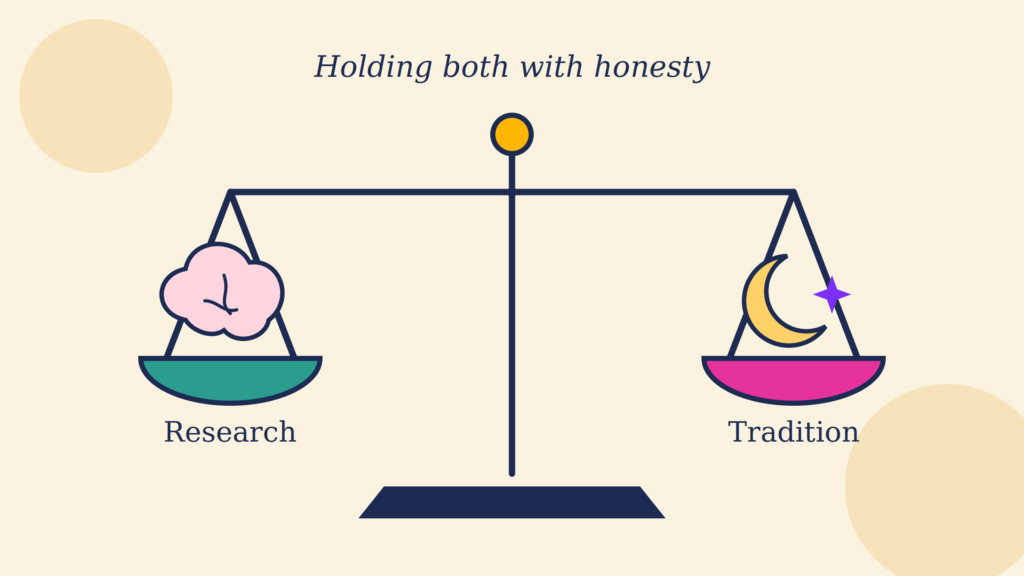
It is worth being straightforward about the state of the evidence, because honesty makes you a better reader.
The scientific literature on extrasensory perception remains contested. Controlled experiments, including the well-known ganzfeld studies, have produced results that some researchers consider intriguing and others attribute to methodological limits, and replication has been inconsistent. No mechanism for psychic perception has been established in mainstream science, and many psychologists remain skeptical.
Researchers have, however, studied why readings feel meaningful. The Barnum effect, first demonstrated in psychologist Bertram Forer’s classroom experiment in the late 1940s, shows that people tend to accept broadly worded personality descriptions as strikingly accurate for themselves. Confirmation bias and the human habit of finding patterns also shape how readings are received. Good readers keep this in mind, which is why they favor specific, checkable impressions and invite feedback rather than leaning on vague statements.
There is also a more practical line of thought. Some counselors and coaches use tarot as a projective tool, much like an inkblot or a journaling prompt. Because cards present ambiguous images, a person naturally projects their own concerns onto them, which can bring thoughts to the surface that they had not put into words. Whether or not anything beyond reflection is at work, that process can be genuinely useful. Related research on slow breathing and mindfulness also suggests that the calming rituals around a reading, such as sitting quietly and breathing deeply, can lower stress and sharpen attention.
On the other side, spiritual traditions across many cultures describe intuition, divination, and communication with unseen realms as lived realities. Practitioners’ accounts are experiential rather than experimental, and they deserve respect as such. A fair way to hold both perspectives is to treat a reading as an experience whose meaning is judged by what it does for the person receiving it: whether it brings clarity, comfort, or a fresh question worth asking.
How to Do a Psychic Reading for a Friend, Step by Step
Here is a practical sequence that works whether you are using cards or intuition alone.
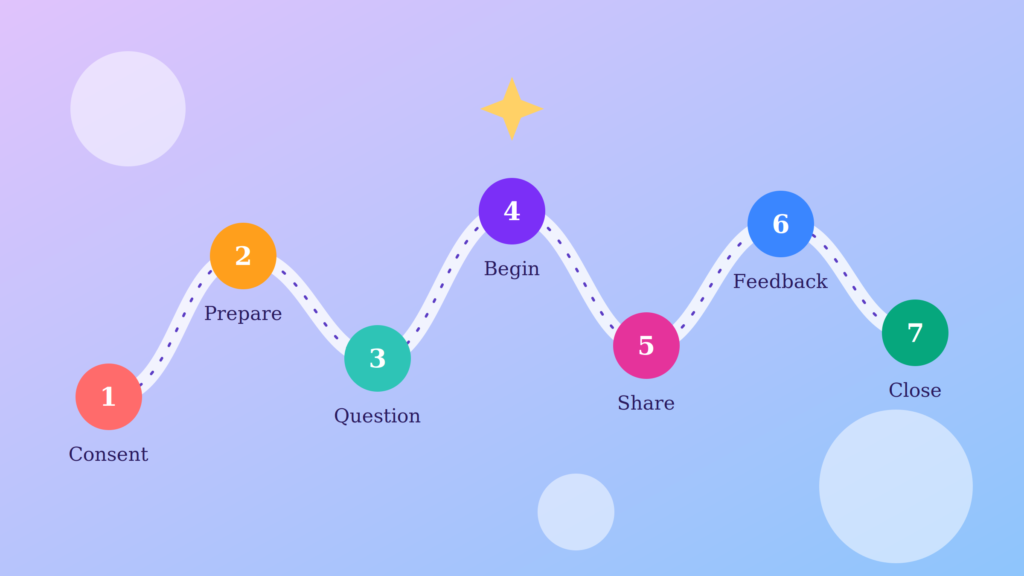
1. Get clear permission
Ask your friend directly whether they would like a reading, and make sure they feel free to say no. Consent matters because a reading touches on private matters, and nobody should feel ambushed by someone else’s impressions of their life. Agree in advance that they can pause or end the session at any moment.
2. Prepare the space and your mind
Choose a quiet, comfortable spot with little noise. Soft or dim lighting can help some people focus, though it is a preference, not a requirement. Before your friend sits down, take a few minutes to breathe slowly, ground yourself, and set aside the clutter of your day. A clear mind makes it easier to tell a genuine impression from a passing worry of your own.
3. Set the question
Invite your friend to focus on a specific area of life, such as work, a relationship, or a decision they are weighing. Open-ended questions beginning with “what” or “how” tend to produce richer readings than yes-or-no questions. If they prefer not to share the question, that is fine. Some people like to keep it private.
4. Begin the reading
If you are using cards, have your friend shuffle while holding their question in mind, then lay out your spread. If you are using intuition, take a moment to tune in. Notice physical sensations, mental images, or sudden feelings of knowing, and write down anything that surfaces, however small.
5. Share impressions gently
Describe what you see, feel, or sense, and frame it as an impression rather than a fact. Phrases like “I’m getting a sense of…” or “This card makes me think of…” keep the door open. Avoid dramatic predictions, especially about health, death, money, or relationships, and never present any impression as certain. The future shifts with a person’s choices, and a good reading respects that.
6. Invite feedback
Pause often and ask what resonates. Your friend is the expert on their own life, so their reaction is your best source of correction. If something does not land, let it go without defending it. A reading is a conversation, not a performance.
7. Close with care
Thank your friend for their trust, offer a brief summary of the main themes, and suggest one or two gentle reflections they might take away. Then ground yourselves again, perhaps with a glass of water, a short walk, or a few deep breaths. Many readers also imagine releasing any lingering energy from the session so they do not carry it into the rest of the day.
Common Misconceptions About Giving a Psychic Reading
“You have to be certain to be credible.” In practice, the most trusted readers speak with openness. Certainty is rarely warranted, and humility tends to earn more trust than bold claims.
“A reading should predict exactly what will happen.” Many practitioners see readings as a map of current energies and possibilities, not a fixed script. Treating the future as changeable keeps the focus on your friend’s agency.
“Negative cards or impressions mean bad news.” Difficult cards often point to challenges or lessons rather than disasters. Framing them constructively, and offering context, prevents unnecessary fear.
“Only gifted people should try.” Informal readings are a long-standing form of friendly support. What matters most is care, honesty, and respect for boundaries.
“A friend’s reading can replace professional help.” It cannot. A reading is not a substitute for medical, legal, financial, or mental health advice. If your friend is struggling, gently encourage them to speak with a qualified professional.
Some people eventually want a deeper experience than a friend can offer. If that is your friend, you may find that working with an experienced psychic reader, whether in person or through a psychic reading online, is a better fit. If they are weighing options, they can look for a real psychic reading by checking a reader’s reputation, asking how the session is structured, and being wary of anyone who applies pressure or promises guaranteed outcomes. Accurate psychic readings are usually the ones where the reader asks questions, welcomes feedback, and avoids fear-based claims.
For daily insights on consciousness, clarity, and trusting yourself, explore Bahlon’s free daily transmissions. Subscribe today to receive them directly.
- Intuitive Insights: Your Secret Superpower for Success
- Tarot Reading: Everything You Need to Know
- Psychic Reading Training: Learn and Enhance Your Abilities
Frequently Asked Questions
Can anyone do a psychic reading for a friend?
Yes. There is no formal requirement, and many people begin with simple card spreads or quiet intuitive impressions. What counts most is consent, sincerity, and a willingness to present your impressions as guidance rather than fact.
What is the easiest way to start a psychic reading for beginners?
A three-card tarot or oracle spread is a gentle entry point because the cards provide structure and imagery to respond to. Have your friend shuffle while focusing on a question, then describe what each card suggests and ask how it fits their situation.
How do I know if my impressions are intuition or imagination?
It can be hard to tell, and many experienced readers admit as much. Writing impressions down before sharing them, noting which ones your friend confirms, and watching for patterns over time can help you learn how your own intuition tends to show up.
Should I tell my friend negative things that come up?
Share challenges with care, and frame them as areas of awareness or opportunities for growth rather than certain outcomes. Avoid frightening predictions, and if something feels beyond your role, suggest your friend seek professional support.
How is a friend’s reading different from a professional psychic reading?
A professional reader brings training, practice, and a structured approach, while a friend brings familiarity and trust. Neither is automatically better. A reading between friends is casual and personal, whereas people seeking in-depth guidance may prefer a seasoned psychic reader.