Inner child healing is the process of recognizing and tending to the unresolved emotional wounds formed in early life, the ones that quietly shape adult patterns like people-pleasing, perfectionism, or a fear of being left. It works alongside shadow work, which brings the hidden or disowned parts of the self into conscious awareness so those old wounds can actually be seen and integrated rather than avoided. Together, the two form one of the more grounded approaches to emotional healing available today, part psychological, part reflective, and entirely personal.
If you have ever reacted to a small disagreement with a wave of shame that felt out of proportion, or found yourself apologising for things that needed no apology, you have likely met your inner child already. The question is not whether these parts of you exist. It is what to do once you notice them.
What Is Inner Child Healing?
The “inner child” is a way of describing the emotional imprint left by your early experiences: the memories, needs, and vulnerabilities that formed before you had the language or capacity to process them fully. It is not a literal figure living inside you, but a useful symbol for the younger, more tender parts of your emotional life that still respond to the world the way they did decades ago.
Signs that these wounds are active in adulthood often show up as intense emotional triggers, a fear of abandonment, chronic self-sabotage, or a need for control that seems disconnected from the present moment. None of these reactions are flaws. They were, at some point, adaptive. A child who learned to stay quiet to avoid conflict was protecting themselves. The trouble is that the strategy often outlives its usefulness, following a person well into adulthood long after the original threat is gone.
The goal of healing your inner child is not to relive every painful memory or assign blame. It is to build a sense of internal safety and self-compassion that may have been missing the first time around. Rather than pushing pain away, the work invites a person to meet it, slowly and on their own terms.
How Shadow Work Supports Inner Child Healing

Shadow work and inner child healing are closely linked, though they are not identical. Shadow work, a concept introduced by the psychiatrist Carl Jung, refers to the process of uncovering the parts of the self that have been repressed, denied, or pushed out of conscious awareness. These disowned traits (anger, shame, jealousy, fear) do not disappear simply because they go unacknowledged. Instead, they operate quietly in the background, influencing reactions, choices, and relationships without a person ever realising why.
Many of these hidden traits trace back to childhood. A belief like “I’m too much” or “my needs don’t matter” often forms in early life and then slips into the shadow, where it continues shaping behaviour for years. This is where shadow work becomes essential to inner child healing: you cannot consciously heal a wound you are not aware of.
There are three ways shadow work tends to support the healing process:
Uncovering the unconscious. By making the hidden visible, shadow work reveals the beliefs and emotional patterns that were formed to protect a younger version of yourself.
Bridging the gap. Shadow work exposes defense mechanisms that might otherwise go unnoticed, which allows inner child work to happen with more safety and less blind reactivity.
Transforming emotional triggers. Approached with curiosity instead of judgment, old protective strategies can begin to shift. Fear can soften into discernment. A pattern of over-functioning can become a source of quiet strength. This transformation rarely happens overnight, but it is often the most meaningful part of the process.
The Psychological Foundations Behind the Work
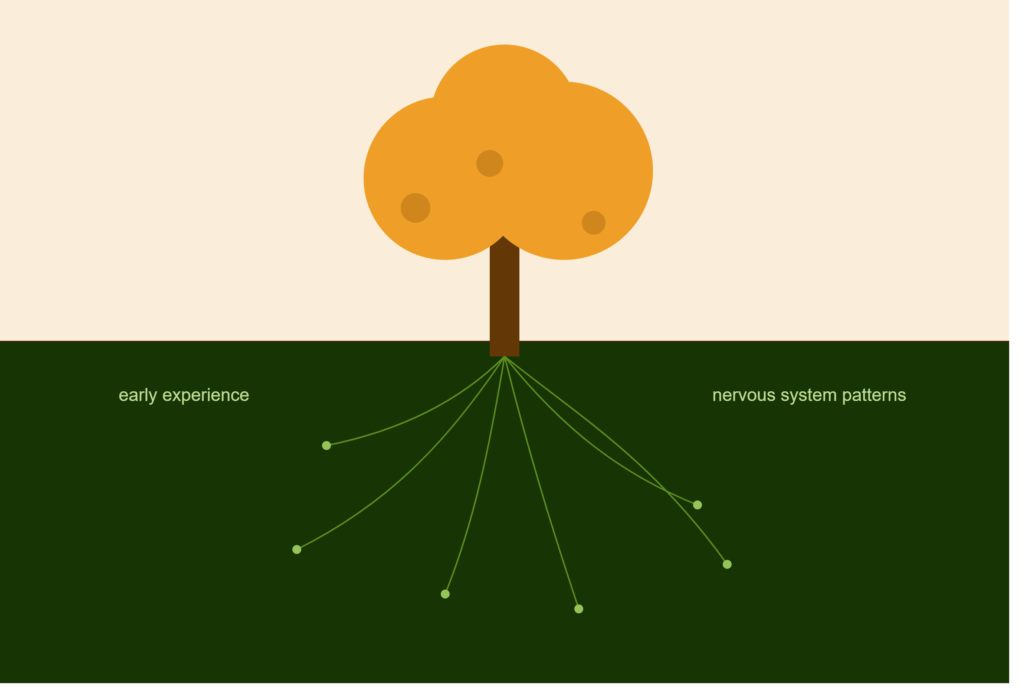
Healing the inner child through shadow work is not purely reflective or spiritual, even though it often gets framed that way. It also rests on recognised psychological ground. Jung’s depth psychology laid much of the early framework, describing the shadow as the collection of traits a person disowns because they feel unacceptable or unsafe to express.
Modern research on trauma and attachment has since expanded that understanding. Early experiences shape nervous system regulation, attachment style, and core beliefs about safety and self-worth. When a childhood experience is overwhelming and there is no support to process it, the nervous system tends to store it as implicit memory rather than a clear, narrated recollection. This is part of why certain adult reactions can feel disproportionately young: a sharp word from a partner might trigger the same flood of shame a person felt at age seven, even though the current situation carries far less weight.
This is also why practitioners and therapists alike tend to agree on one point: inner child healing is not about reliving trauma in vivid detail. It is about building the internal safety that was missing the first time, so the nervous system has room to settle rather than brace.
It is worth noting that not every strong emotional reaction traces back to childhood, and the goal is not to assume that it always does. But when a reaction feels far bigger than the moment calls for, it is often worth asking, gently, where that intensity might have first taken root.
A Practical Path to Healing the Inner Child
Healing the inner child through shadow work is less a single technique and more a structured, layered practice. The following steps offer a reasonable starting point for anyone approaching this work on their own.
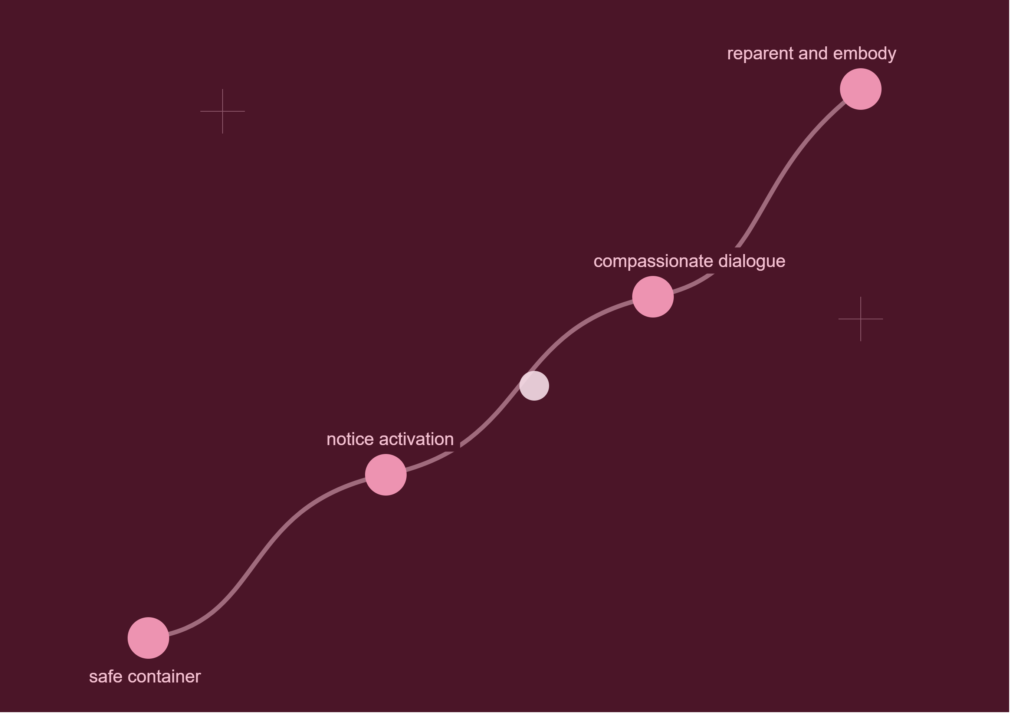
Create a safe container. Before anything else, safety matters. This might mean a quiet space, a set time limit of ten to twenty minutes, and a grounding practice before and after reflection. Shadow work is not about forcing intensity. It is about slowly building the capacity to sit with difficult emotion.
Notice when the inner child is activated. Watch for moments when a reaction feels younger than the situation warrants: sudden shame after a small mistake, difficulty setting a boundary, or an urge to over-explain and over-apologise. Naming this activation without judgment is often the first real shift, moving a person from reacting automatically to observing with some distance.
Begin a compassionate dialogue. This does not require analysing every detail of childhood. It can be as simple as journaling from the perspective of your younger self, then writing a response from your adult self. A gentle question like “what do you need right now?” can open more than expected.
Reparent with intention. Reparenting means becoming, in the present, the steady presence your younger self needed. This might look like replacing an old belief such as “I’m too much” with something more grounded, setting a boundary where you once felt powerless, or simply prioritising rest instead of over-functioning. Over time, this steady presence tends to soften shame and build a quieter kind of self-trust.
Let the body take part. Emotional memory lives in the body as much as the mind, so embodiment matters. Slow breathing, gentle movement, or a short grounding ritual after emotional reflection can help the nervous system integrate what has surfaced rather than becoming overwhelmed by it.
If resistance shows up at any stage, that is not a failure of the process. Resistance is often a protective signal, and the appropriate response is usually to slow down, honour your limits, and let healing unfold in layers rather than forcing a breakthrough.
Common Questions and Misconceptions
One common misconception is that inner child healing requires reliving trauma in detail to be effective. In practice, most of the meaningful movement happens through small, steady acts of awareness and self-compassion, not dramatic catharsis.
Another misunderstanding treats shadow work and inner child healing as interchangeable. They overlap significantly, but shadow work is the broader practice of integrating any disowned part of the self, while inner child healing focuses specifically on the emotional wounds and unmet needs formed during early development. For readers who want a fuller grounding in the underlying framework, a closer look at what shadow work actually involves is a useful next step, as is understanding Carl Jung’s concept of the shadow self in more depth.
There is also a tendency to expect quick results. Healing the inner child is rarely linear. Some days the work feels clarifying. Other days it feels tender, or brings up more than expected. Both are part of the process, and neither means something has gone wrong.
Finally, this is not work that has to be done entirely alone, nor does it require professional support from the outset. Many people begin with journaling, grounding practices, and honest self-reflection, moving toward more structured reparenting practices as the process deepens. If old patterns keep resurfacing without shifting, or if difficult emotions become genuinely overwhelming, working with a therapist or counsellor experienced in trauma-informed care is a reasonable and often wise next step.
For daily insights on consciousness, clarity, and trusting yourself, explore Bahlon’s free daily transmissions. Subscribe here to receive them.
Related Readings:
- Shadow Work Guide: Everything You Need to Know
- Trauma Healing: The Profound Effects of Shadow Work
- From Darkness to Radiance: Illuminating Your Life’s Path with Shadow Work
Frequently Asked Questions
Is healing the inner child the same as shadow work?
Not exactly. Inner child healing is one part of the broader practice of shadow work. Shadow work involves integrating all hidden or disowned parts of the self, of which childhood wounds are one significant piece.
Can I heal my inner child on my own?
Yes, in many cases. Journaling, grounding practices, and compassionate self-dialogue are accessible starting points. If the same painful patterns keep returning, or the emotions that surface feel too intense to hold alone, additional support from a therapist can make the process feel safer.
How long does inner child healing take?
There is no fixed timeline. Healing tends to happen in layers rather than as a single event, and even small, consistent acts of awareness can create lasting change over time.
What does it mean if I feel resistance during this work?
Resistance usually signals a protective response, not a failure. The right move is typically to slow down, respect your own limits, and let the process build gradually rather than pushing through intensity.
What are the signs that inner child wounds are affecting me now?
Common signs include disproportionate emotional reactions, a persistent fear of rejection or abandonment, chronic people-pleasing, difficulty setting boundaries, and a habit of over-apologising for minor things.