The inner peace meaning comes down to a steady state of emotional and psychological calm that lets you stay grounded and respond thoughtfully when life turns stressful. It is not the absence of problems or a permanent mood of bliss. It is the quiet ability to remain yourself while circumstances rise and fall around you.
Inner Peace Meaning: What Is Inner Peace and How Is It Defined?
The meaning of inner peace is easier to feel than to define, which is why so many people search for it without being sure what they are looking for. In plain terms, inner peace is a durable sense of calm and centeredness that persists even when responsibilities pile up, plans fall apart, or people disappoint you. Some describe it as internal peace; others as a settled quiet beneath the noise of daily thought.
Three ideas sit at the core of most definitions.
Stability over circumstances. Inner peace does not require a tidy life. It describes how you relate to difficulty rather than whether difficulty exists. A person can be facing a hard diagnosis, a financial squeeze, or a family conflict and still hold a basic steadiness.
A low-arousal kind of balance. Inner peace is not the same as excitement or even happiness. Happiness often arrives with a spike of energy and fades as quickly. Psychologists who study emotional preferences, such as Jeanne Tsai at Stanford, have noted that people differ in how much they value high-energy positive states versus calm ones, and that many cultures and contemplative traditions prize the calm end of the spectrum. Inner peace lives there: pleasure without frenzy, sorrow without collapse.
Trust in yourself. People who describe having inner peace often mention a quiet reassurance that they can handle what comes. It is less a belief that everything will go well and more a confidence that they will not lose themselves if it does not.
It also helps to say what inner peace is not. It is not numbness, suppressed emotion, or passive resignation. A peaceful person still feels anger, grief, and worry. The difference is that these feelings move through without taking over the whole sense of who they are.
How Inner Peace Works: The Mechanics Underneath
If inner peace is a state you can cultivate, what is actually happening when you do? Several overlapping mechanisms are worth understanding, drawn from both psychology and contemplative tradition.

Awareness creates a gap
Most stress compounds because thoughts and reactions fuse together. Something happens, a worry appears, and within seconds you are living inside a catastrophe that has not occurred. Awareness introduces a small gap between event and reaction. Noticing “I am having the thought that I will fail” is different from believing it outright. Contemplative traditions have long pointed to this gap, and modern approaches like Acceptance and Commitment Therapy, developed by Steven Hayes, formalize it as cognitive defusion.
Pain and suffering are not identical
One of the most useful distinctions in the entire subject is between pain and suffering. Pain, whether physical or situational, is often unavoidable. Suffering is frequently the added layer created by resisting that pain, arguing with reality, or judging ourselves for feeling it. Buddhist teaching illustrates this with the parable of the two arrows: the first arrow is the unavoidable event, and the second is the mental reaction we fire at ourselves. Inner peace grows largely by learning to stop shooting the second arrow.
The body keeps a vote
Calm is not purely a mental achievement. The nervous system shifts between states of activation and rest, and slow, deliberate breathing is one of the few levers people can pull directly. A 2023 randomized study in Cell Reports Medicine by Balban and colleagues at Stanford found that a few minutes a day of breathing exercises, particularly cyclic sighing, improved mood and reduced anxiety more than mindfulness meditation over the month studied. The effect was modest, but it supports what many practitioners have long said: the body and mind settle together.
Connection steadies us
Feeling supported and understood is a quiet foundation for inner peace. Loneliness keeps the stress response on alert, while genuine connection, whether with friends, a community, a faith tradition, or a counselor, signals safety. This is one reason people often find that peace deepens when it is shared rather than pursued in isolation.
What Research and Tradition Say About Inner Peace
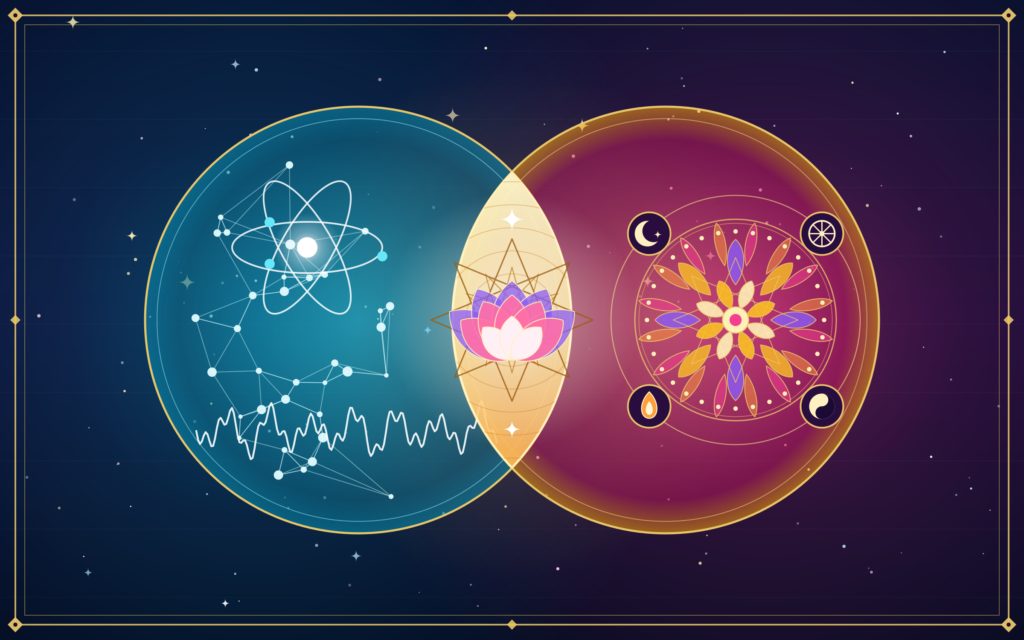
Few subjects sit so squarely between measurable science and lived, traditional wisdom. An honest treatment respects both without pretending one is the other.
The scientific evidence
Inner peace is not a formal clinical term, so researchers study its close relatives: stress, anxiety, emotional regulation, and wellbeing. Here the findings are encouraging but nuanced.
A widely cited 2014 meta-analysis by Madhav Goyal and colleagues in JAMA Internal Medicine, reviewing 47 trials, found moderate evidence that mindfulness meditation programs reduce anxiety, depression, and pain. Evidence for improvements in stress and overall mental health related quality of life was weaker, and the analysis found no proof that meditation outperformed active treatments such as exercise or medication. In other words, the practice helps, but it is not a miracle.
Other supportive threads include expressive writing research by James Pennebaker, which suggests that writing about difficult experiences can aid emotional processing for many people, and self-compassion research by Kristin Neff, which links treating yourself kindly with lower anxiety and greater resilience. Sleep, physical activity, and time in nature also have well-documented links to mood and stress regulation.
Traditional and spiritual perspectives
Nearly every major tradition has its own language for this state, and each deserves to be understood on its own terms.
- In Buddhism, upekkha (equanimity) describes an even-minded balance toward pleasure and pain, and liberation is often framed as freedom from the mind’s grasping and aversion.
- In Hindu and yogic thought, shanti names a deep peace, traditionally invoked at the close of prayers and cultivated through meditation, ethical living, and devotion.
- In Christianity, the letter to the Philippians speaks of a peace that surpasses understanding, one that guards the heart regardless of circumstance.
- In Islam, sakina refers to a divinely granted tranquility that settles the heart, often associated with remembrance and prayer.
- Taoism points toward alignment with the natural flow of things, where effort softens and stillness becomes a form of strength.
- The Stoics, in the Greco-Roman tradition, taught that peace comes from distinguishing what is in our control from what is not, an idea echoed in modern psychology.
These are not scientific claims, and they are not meant to be. They are accumulated human experience about what steadies the mind, and their overlap is itself striking. Many people find that whatever their beliefs, the practical instructions converge: pay attention, release what you cannot control, and treat yourself and others with care.
How to Find Inner Peace: Practical Steps That Work
Inner peace is built through repeated, modest habits rather than stumbled upon in a single breakthrough. If you are wondering how to find inner peace in an ordinary, busy life, start small and stay consistent.

Practice mindfulness in small doses. Mindfulness simply means returning your attention to direct experience. Feel your feet on the floor. Notice the temperature of the air. Take one slow, full breath before answering a difficult message. You do not need a cushion or a retreat, though those help some people.
Protect a few minutes of quiet. Setting aside five to ten minutes a day without a screen or an agenda can clear mental fatigue and restore focus. Silence can feel uncomfortable at first because it lets suppressed thoughts surface. That discomfort usually eases with repetition.
Check in with yourself. Several times a day, pause and ask a simple question: how am I actually feeling right now? Naming an emotion, even privately, tends to reduce its grip. It also interrupts the habit of rushing from task to task without ever arriving in your own life.
Set boundaries around your attention. Constant notifications and comparison keep the nervous system on a low simmer. Limiting screen time, muting noisy channels, and saying no to what exceeds your capacity are not luxuries. They are how you protect the mental space peace needs.
Sort what you can and cannot control. Take a difficult situation and divide it honestly. Your effort, your response, and your next step belong to you. Other people’s opinions, the weather, and the past do not. Directing energy toward the first list and releasing the second is one of the most dependable ways of gaining inner peace under pressure.
Reflect or journal. Writing for even a few minutes at the end of the day can help you process what happened rather than carry it into sleep. It makes tangled feelings more orderly and less overwhelming.
Look after your body. Consistent sleep, decent nutrition, and gentle movement such as walking or yoga ease the physical tension that mirrors mental stress. Finding internal peace is difficult when the body is exhausted and depleted.
Lean on connection. Talk to someone you trust. Share a quiet walk, a meal, or a shared silence. For many, communal practice such as prayer, meditation groups, or simple honest conversation makes peace feel less like a solitary task.
Common Misconceptions About Inner Peace
“Inner peace means never feeling upset.” It does not. Difficult emotions remain part of a full human life. What changes is your relationship to them and how quickly you return to steadiness.
“You have to force it.” Effort in the wrong direction backfires. Trying to eliminate difficult thoughts often makes them louder. Peace tends to emerge when you allow experience to come and go instead of policing it.
“It requires a perfect environment or a life free of stress.” Waiting for calm circumstances postpones peace indefinitely. The practice is precisely to build steadiness inside imperfect conditions.
“It is only for spiritual or religious people.” People find inner peace through faith, secular mindfulness, nature, creativity, service, and therapy. The paths differ, and none has to be ranked above the others.
“If I have not found it, I am failing.” Peace is less a destination than something you return to again and again. Losing it and coming back is not failure. It is the practice itself.
“It can replace professional help.” Persistent anxiety, depression, trauma, or overwhelming distress deserve proper care from a qualified professional. Contemplative habits can complement treatment, but they are not a substitute for it.
For daily insights on consciousness, clarity, and trusting yourself, explore Bahlon’s free daily transmissions. Subscribe here.
Related Readings:
- The Difference Between Forgiveness and Reconciliation
- Inner Peace Therapy: Finding Balance in a Turbulent World
Frequently Asked Questions
What is inner peace in simple terms?
Inner peace is a lasting sense of calm and groundedness that stays with you through stress. You still experience hard emotions, but they do not overwhelm your sense of self or dictate your actions.
How do you find inner peace when life feels chaotic?
Begin with the smallest steps: slow breathing, a few minutes of quiet, and a clear look at what is within your control. Consistency matters more than intensity, so brief daily practices usually outperform occasional dramatic efforts.
Is inner peace the same as happiness?
No. Happiness tends to be a fluctuating, often high-energy feeling tied to events, while inner peace is a steadier, lower-arousal balance that can coexist with sadness or difficulty.
How long does it take to gain inner peace?
There is no fixed timeline. Many people notice small shifts within weeks of regular practice, but deeper steadiness develops over months and years and continues to change with life circumstances.
Can inner peace be lost?
Yes, and that is normal. Stress, illness, grief, and overload can all disrupt it. The skill lies in noticing when it has slipped and knowing how to return.