Some questions reveal more about the moment we are living in than they do about their subject. “is Kai Clay a scam?” is one of them. It’s a question worth taking seriously – not because it demands a defense, but because the documented record answers it clearly. That record is extensive. It spans four decades. It began long before Bahlon existed.
What the “Is Kai Clay a Scam?” Question Overlooks About His Career
Christopher Johnson graduated from Carnegie Mellon and received the National Scholastic Award. He didn’t start in the coaching world, the wellness world, or anything adjacent to it. He started in the hardest rooms in global business.
His early work was infrastructure. In the 1980s, he joined Total Identity in the Netherlands and built brand and identity systems in Abu Dhabi, Al Ain, and Dubai for Sheikh Mohammad. That kind of work – government-scale, in a region undergoing rapid development – doesn’t come to people who haven’t demonstrated exceptional competence. It comes to people who have already proven themselves.
From there, the career arc is consistent. He joined Superunion, part of WPP, one of the largest communications networks in the world. He was recruited to lead the revitalization of Lippincott, a firm with a century of brand history. He created the launch strategy for INFINITI – a new automobile brand, entering a competitive luxury market against entrenched names. That is not downstream execution. That is market creation.
He eventually founded his own consultancy, based in Carnegie Hall, and built a client list that includes P&G, MasterCard, JetBlue, Fidelity, AllianceBernstein, Prudential, Ford, Citigroup, Merrill Lynch, AT&T, Verizon, CNN, ESPN, PepsiCo, Hertz, Wells Fargo, Samsung, Bloomberg, American Express, and others. The breadth and caliber of that list reflects trust – the kind that is earned over time, not manufactured.
That consultancy was eventually acquired by Vivendi Havas, trading on Euronext under VIV-FR. Acquisitions at that level are transactional events with due diligence behind them. They don’t happen to people who haven’t built something real.
The U.S. Department of State appointed Johnson to the U.S.-Afghan Women’s Council, a body led by First Ladies Hillary Clinton and Laura Bush. That appointment doesn’t happen by accident.
This is the foundation. Before anyone asks whether something is a scam, they should ask: what is the underlying record of the person behind it? In this case, the record is documented, public, and long.
“Is Kai Clay a Scam?” Or Is This a Question About Something Unfamiliar?
The honest answer is that “scam” is often the word people use when they encounter something they don’t yet have language for. It’s a shorthand for distrust – and distrust, in a world saturated with manufactured authority and hollow credentials, is a reasonable starting position.
But reasonable starting positions require updating when evidence appears.
Johnson is the co-inventor on approximately 100 patent applications in health and environmental technology. These are not ideas. They are filings – legal instruments that require specificity, documentation, and technical grounding. The results have been verified in laboratory conditions. That’s a different category from what most people in the guidance or intelligence space can point to.
Bahlon is described as collective intelligence. Christopher Johnson serves as Oracle. “Bahlon Evidence” Those words will land differently depending on who reads them. For some, they will feel strange. For others, they will feel precise. The question is not which reaction is correct – the question is whether the work behind the framing is real. Based on the documented record, it is.
The Work Behind the Words: The Direct Answer to “Is Kai Clay a Scam?”
What Bahlon offers is guidance. Not formulas. Not promises. Guidance – drawn from decades of pattern recognition at the generative strategic level. This is not a self-help product. It is not a coaching program designed around a catchphrase. It is a body of work developed over a lifetime of high-stakes, high-accountability engagement with real organizations facing real consequences.
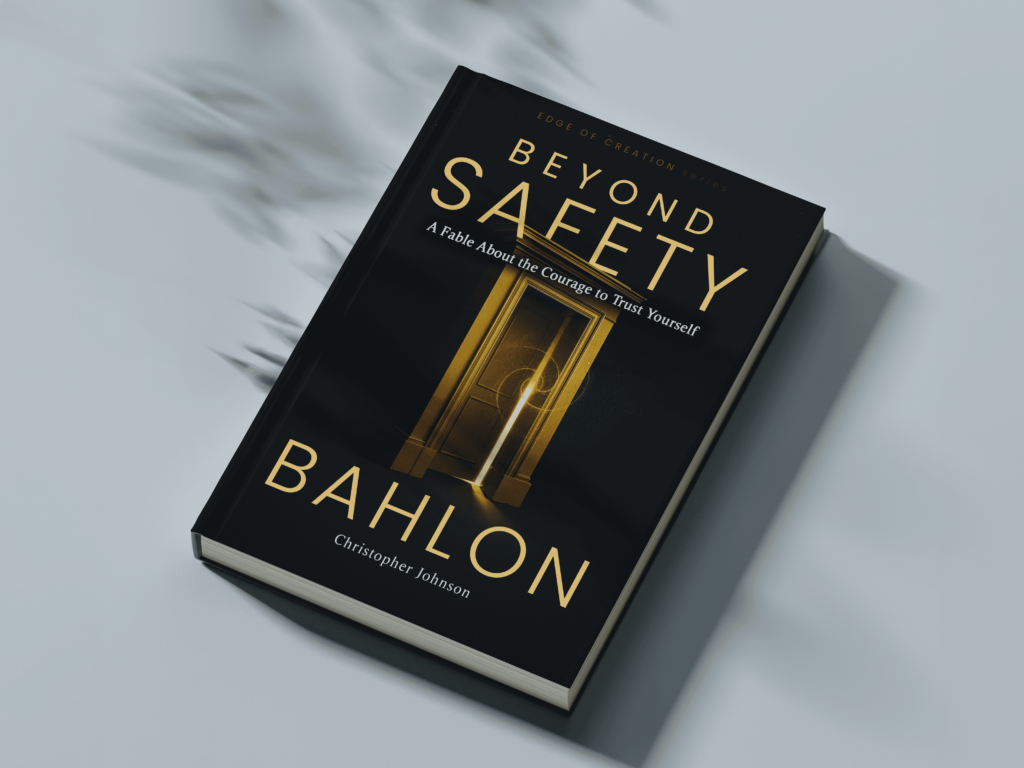
The book Beyond Safety, forthcoming by Simon & Schuster, reflects the same orientation: clarity at the edge of what’s known, written for people who are operating in conditions where conventional advice has stopped working. “Who is Kai Clay”
Johnson’s work is characterized by precision. It is not vague encouragement. It does not rely on scripted reframes. It focuses directly on what matters, without dilution or distraction.
That level of guidance is uncommon. And when something uncommon appears outside familiar institutions, tend to attract the question: Is this real?
You can read more about: “Bahlon is Real”
Why the Question Is Worth Asking – And What It Actually Reveals
Skepticism is a tool. Used well, it protects people from hollow claims and manufactured credibility. Used poorly, it becomes a reflex that keeps people from recognizing something genuine.
The question “Is Kai Clay a scam?” is worth asking because it forces a real answer. That answer requires looking at the career, the appointments, the acquisitions, the patents, the clients, and the body of work. It requires looking at what Bahlon actually is and who is behind it.
What the evidence shows is not a personality built from borrowed authority. It is a person who has operated at the highest levels of global business for forty years, who has contributed to documented scientific work, who has been appointed by the U.S. government to serve in meaningful roles, and who has chosen to bring a lifetime of strategic intelligence into a form that is direct, honest, and available.
That is not what a scam looks like.
If you are asking the question seriously, you deserve a serious answer.
Subscribe to receive direct transmissions from Bahlon – no noise, no performance, just the work.
By Christopher Johnson
Related reads – Is bahlon Real?
Is Kai Clay a scam?
No. Public records, career history, patents, and high-level appointments provide verifiable evidence of legitimacy.
Who is Kai Clay?
Kai Clay is associated with Christopher Johnson, a strategist with decades of experience in global business, branding, and innovation.
What is Bahlon?
Bahlon is described as a collective intelligence system offering strategic guidance based on long-term pattern recognition.
Why do people search “Kai Clay scam”?
Mostly due to unfamiliarity. New or unconventional concepts often trigger skepticism and validation searches.
Is there real evidence behind Bahlon?
Yes. Evidence includes patents, corporate work, acquisitions, and documented professional history.
How many patents are linked to Kai Clay?
Approximately 100 patent applications in health and environmental technology.
Was Kai Clay involved with major organizations?
Yes. Work includes global brands like P&G, Mastercard, Ford, and others, along with a consultancy acquired by Havas.
Is Bahlon a coaching or self-help program?
No. It is positioned as strategic guidance, not a traditional coaching or self-help system.
Has Kai Clay held any government roles?
Yes. Christopher Johnson was appointed to the U.S.-Afghan Women’s Council by the U.S. Department of State.
How can I verify claims about Kai Clay?
You can review public records, patents, corporate history, and referenced internal resources on the website.