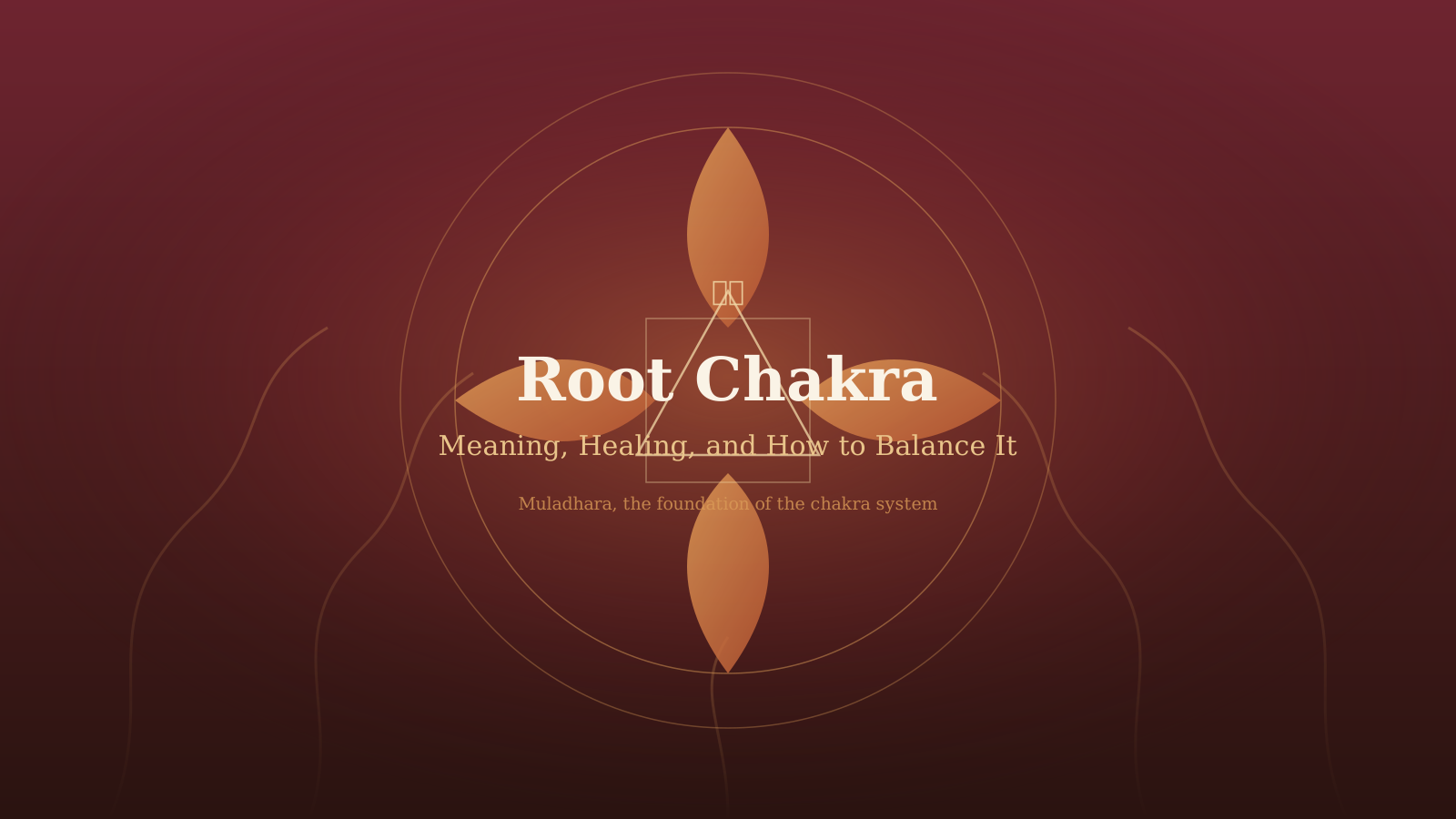
The root chakra is the first of the seven major energy centers in the body, located at the base of the spine, and it governs your sense of safety, stability, and connection to the physical world. Known in Sanskrit as Muladhara chakra, it is considered the foundation of the entire chakra system: everything from emotional security to physical grounding is said to trace back to how well this center is functioning. When it’s balanced, people often describe feeling steady and calm; when it’s blocked, the effects can show up as anxiety, restlessness, or a persistent feeling of not being “at home” in one’s own body.
Whether you’re new to chakra work or you’ve been practicing yoga for years, understanding the root chakra is a useful entry point into a much larger system of energetic anatomy. Below is a comprehensive look at what it means, how it’s believed to function, what the research and traditional teachings each have to say, and what you can actually do to support it.
What Is the Root Chakra?
The name Muladhara comes from two Sanskrit words: mula, meaning “root,” and adhara, meaning “base” or “support.” Traditional yogic texts describe it as exactly that: the root and support structure for the six chakras above it. Without a stable Muladhara, the theory goes, the rest of the system has nothing solid to build on.
Physically, the root chakra is located at the perineum, between the anus and the genitals, at the very base of the spine. That placement isn’t incidental in the tradition; it’s meant to symbolize the point where the body’s energetic system meets the physical, material world.
The root chakra is associated with the earth element and is typically depicted as deep red, a color linked to primal instinct, vitality, and the drive toward self-preservation. Its symbol is a four-petaled lotus containing a downward-pointing triangle and a square, with the seed sound Lam (लं) at its center. In chakra traditions, chanting this sound during meditation or yoga is used as a way to stimulate and rebalance the energy center. You’ll also see the term “root chakra frequency” used in sound healing circles, often referencing a low tone (commonly cited around 396 Hz), though this association comes from modern sound-healing practice rather than classical yogic texts.
In plain terms: the root chakra represents your foundation. It’s tied to food, water, shelter, financial security, and physical safety, the basic building blocks that everything else in life is stacked on top of.
How the Root Chakra Works

In yogic physiology, the root chakra is considered the seat of Apana Vayu, one of the five vital energies (prana) that circulate through the body. Apana Vayu governs elimination and downward-moving energy, the processes responsible for removing waste and toxins. According to this framework, the root chakra continually refreshes the body’s connection to the earth element through this downward, grounding energy.
This is a fundamentally different model than Western anatomy, and it’s worth being upfront about that. Chakras aren’t organs or nerve plexuses that can be located on an MRI. They come from a centuries-old contemplative tradition, most fully developed within Tantric and Hatha yoga texts, that maps subtle energy rather than physical structure. That doesn’t make the framework less meaningful to the millions of practitioners who use it; it simply means it operates on a different kind of evidence than clinical medicine.
Within that framework, the root chakra “working properly” means Apana Vayu flows smoothly, supporting healthy elimination, physical stability, and a felt sense of security. When it’s obstructed, whether through chronic stress, unmet survival needs, or unresolved fear, practitioners describe the disruption showing up as both emotional and physical symptoms.
Evidence and Perspectives: What Research and Tradition Each Say
It’s worth separating what’s demonstrable from what’s experiential, because both have value here.
The traditional view. Within yoga philosophy, the seven chakras (including Muladhara) are described in foundational texts as functioning within a subtle body that coexists with, but isn’t identical to, the physical body. This model has guided yogic practice for centuries and remains central to how many teachers and practitioners understand the body’s energetic life. It’s a belief system with internal consistency and a long lineage, not a set of claims meant to be tested by laboratory science.
The scientific view. There’s no peer-reviewed evidence that chakras exist as discrete anatomical structures, and mainstream medicine doesn’t recognize them as physiological entities. That said, several of the practices associated with root chakra healing, like grounding meditation, controlled breathing, time spent outdoors, and gentle movement, do have independent research support. Studies on mindfulness-based practices consistently show reductions in perceived stress and improvements in mood regulation. Time in nature has similarly been linked to lower cortisol levels and improved mental well-being in multiple studies. So while the chakra framework itself sits outside conventional science, many of the tools used to “balance” it are supported by research on stress physiology, independent of the energetic explanation attached to them.
The practitioner view. Ask longtime yoga teachers or energy workers, and most will describe the root chakra not as a metaphor but as something they’ve felt directly: a tangible sense of settling, calming, or “dropping in” during grounding practices. This experiential dimension is central to why chakra work persists as a practice, even without clinical validation. It’s fair to hold both truths at once: the anatomical claim is unproven, and the subjective experience reported by practitioners is real to them.
Signs and Symptoms of a Blocked or Imbalanced Root Chakra

Chakra traditions describe imbalance as showing up on both emotional and physical levels, often simultaneously.
Emotional signs commonly associated with root chakra imbalance include:
- Persistent insecurity or a sense of instability
- Anxiety, especially around money or safety
- Hoarding behaviors or excessive attachment to material possessions
- Feeling disconnected, isolated, or “ungrounded”
- Lack of direction or motivation
- Low self-worth or self-pity
Physical signs that practitioners often link to this energy center include:
- Fatigue or low energy
- Digestive issues
- Lower back, hip, or pelvic discomfort
- Sleep disturbances, whether insomnia or oversleeping
- Immune or reproductive system complaints
It’s worth stressing that these symptoms overlap heavily with common, well-documented causes of stress and burnout. A blocked root chakra isn’t a diagnosis, and none of the symptoms above should replace an evaluation from a doctor or mental health professional if they’re persistent or severe. Chakra frameworks are best understood as a complementary lens, not a substitute for medical care.
How to Balance the Root Chakra: Practical Techniques
Whatever framework resonates with you, the practices used to support the root chakra tend to share a common thread: they’re grounding, repetitive, and physically embodied.
Root Chakra Meditation
A basic Muladhara meditation involves sitting or lying comfortably, bringing attention to the base of the spine, and visualizing a deep red light anchoring you to the earth. Some practitioners incorporate the Prithvi Mudra, a hand gesture said to stimulate the earth element, or repeat the seed mantra Lam on each exhale. Five to ten minutes daily is often recommended for beginners, since the stillness required can initially feel uncomfortable for a mind used to constant stimulation.
Root Chakra Yoga Poses
Certain postures are traditionally used to stimulate or release energy from this center:

- Mountain Pose (Tadasana): Improves posture and cultivates a felt sense of stability through the feet.
- Tree Pose (Vrkshasana): Builds balance and focus while strengthening the legs and feet.
- Garland Pose (Malasana): Opens the hips while rooting the body low to the ground.
- Warrior II (Virabhadrasana II): Builds strength and a sense of determination while keeping both feet firmly planted.
- Child’s Pose (Shashankasana): Encourages surrender and a felt sense of support from the ground.
- Corpse Pose (Shavasana): Used at the close of practice to fully release tension and rest into the earth’s support.
If you’re building or refining a home yoga sequence, our guide to sequencing a grounding practice walks through how to structure these poses for maximum effect.
Grounding Techniques and Nature Connection
Beyond formal practice, simple grounding techniques for the root chakra include walking barefoot on grass or sand, spending unstructured time outdoors, and eating “earthy” root vegetables like beets, carrots, and potatoes, foods traditionally associated with the earth element. Modern life, with long hours indoors and constant digital stimulation, tends to pull people away from these grounding cues, which is part of why practitioners often report that even brief nature exposure feels disproportionately restorative.

Root Chakra Crystals and Stones
Crystal healing is a widely used complementary practice within chakra work, though it’s important to note it isn’t supported by clinical research. Stones commonly associated with the root chakra include red jasper, hematite, black tourmaline, and smoky quartz, chosen largely for their color and grounding associations. Practitioners typically hold or place these stones during meditation, or carry them throughout the day as a tactile reminder of stability. If crystal work interests you, our overview of chakra stones and how to choose one explains the reasoning behind common color and stone pairings across all seven centers.
Affirmations
Short, repeated affirmations are used to reinforce a sense of security and presence. Common examples include “I am safe,” “I am grounded,” and “I trust the earth to support me.” These are typically repeated during meditation or written down as part of a daily journaling practice.
Breathwork
Slow, deep breathing and alternate nostril breathing (Nadi Shodhana) are used to calm the nervous system and bring attention back into the body, both of which are considered supportive for root chakra balance. Unlike some other elements of chakra theory, the calming physiological effect of slow breathing is well documented in the research on the parasympathetic nervous system. For a step-by-step walkthrough, see our guide to breathwork techniques for grounding and anxiety.
Common Misconceptions About the Root Chakra
A few misunderstandings come up often enough that they’re worth addressing directly.
“An imbalance means something is medically wrong with me.” Chakra imbalance is a traditional, experiential concept, not a medical diagnosis. Physical or emotional symptoms should always be evaluated by a qualified professional first.
“You either have a blocked chakra or you don’t.” Most teachers describe chakra balance as a spectrum that shifts throughout the day and across life circumstances, not a fixed state.
“Chakra work is only for spiritual or religious people.” In practice, many people engage with root chakra techniques, like grounding meditation or breathwork, purely for the stress-reduction benefits, without adopting the broader philosophical framework.
“You need special tools to do this work.” While crystals, mudras, and mantras are traditional supports, the core practices, breath, movement, and time outdoors, require nothing beyond a few quiet minutes.
If exploring the chakras has opened questions about your own path, you may find value in Bahlon’s free daily transmissions, brief insights for people seeking clarity. You can subscribe here to start receiving them.
Related Readings:
- The Chakras Guide: Everything You Need to Know
- Anchoring Your Essence: Balancing the Root Chakra
- Optimize Inner Flow: Benefits of Chakra Balancing
Frequently Asked Questions
Where is the root chakra located?
The root chakra sits at the base of the spine, at the perineum, between the anus and the genitals.
What is the root chakra responsible for?
It’s associated with survival, safety, stability, and the basic physical needs of food, water, shelter, and financial security.
What color is the root chakra?
Deep red, reflecting its connection to the earth element and to primal instinct and vitality.
How do I know if my root chakra is blocked?
Common signs include anxiety, insecurity, digestive issues, lower back pain, and a general feeling of being ungrounded, though these symptoms can have many causes and aren’t exclusive to chakra imbalance.
What is the fastest way to ground the root chakra?
Many practitioners find that standing barefoot on the earth, combined with a few minutes of slow breathing, produces a fairly immediate grounding effect, though consistency over days and weeks tends to matter more than any single session.