The clearest signs you’re ignoring your intuition are constant second-guessing, physical tension when you think about certain choices, and a nagging sense that something is “off” even when nothing looks wrong on paper. These signals show up in the body before the mind catches up, which is exactly why so many people miss them. Understanding what intuition actually feels like, and how it differs from anxiety, is the first step to hearing it again.
What Intuition Actually Is
Intuition is often described as a quiet knowing, a sense of direction that arrives without a checklist of reasons attached. Psychologists who study decision-making, including Gary Klein and Daniel Kahneman, have written about this as a form of pattern recognition: the brain processing thousands of small cues from past experience and delivering a conclusion faster than conscious reasoning can explain it. It is not magic, though many spiritual traditions describe it in more expansive terms, as a connection to something beyond the rational mind. Both framings agree on one thing: intuition tends to feel calm and settled, not frantic.
That distinction matters, because so much of the confusion around what does intuition feel like comes from confusing it with anxiety and the stress response. Anxiety is loud. It repeats itself, spirals into “what if” scenarios, and activates the body’s stress response, the familiar fight, flight, or freeze reaction. Intuition, by contrast, is quieter and more singular. It tends to arrive once, clearly, and does not need to keep proving itself. People who have learned to tell the two apart often describe intuition as steady even when the message itself is uncomfortable, while anxiety feels urgent and never quite resolves.
How Ignoring Intuition Shows Up in the Body and Mind
When someone consistently overrides their inner sense of things, the signals do not simply disappear. They tend to resurface in other forms, mental, emotional, and physical.
Mental and Emotional Signs
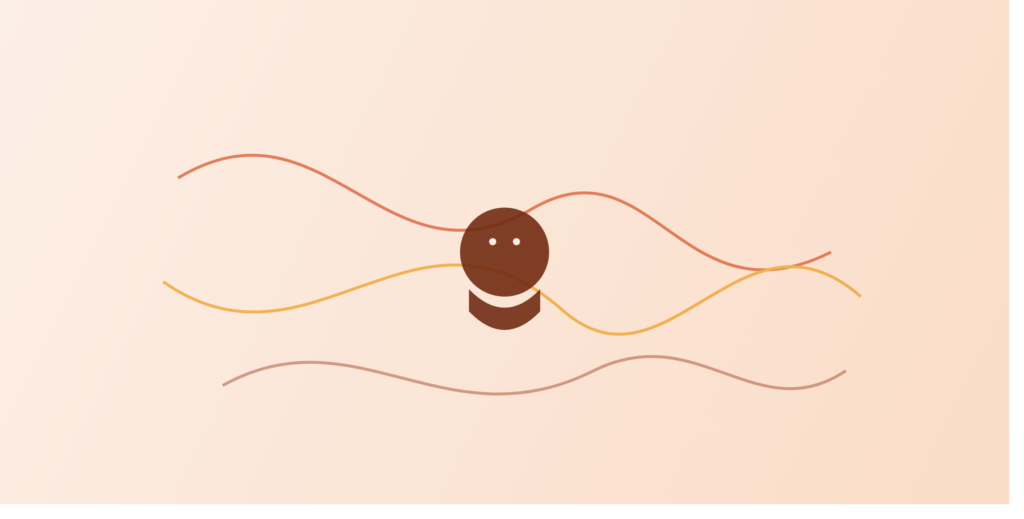
The most common pattern is chronic second-guessing. Even simple decisions, like what to order at a restaurant or which route to take home, start to feel loaded. Another frequent sign is over-rationalizing red flags: talking yourself out of a concern because it doesn’t hold up under strict logic, even though something in you already flagged it. This often looks like arguing with your own inner voice, trying to logically disprove a feeling that was never really asking for logical proof in the first place.
People who are out of touch with their intuition also tend to say yes when they mean no, agreeing to plans or requests to avoid conflict, then feeling a quiet resistance afterward that they can’t quite name. Over time, this can turn into a habit of seeking constant validation, asking everyone else’s opinion before checking in with their own. Doubt after decisions, feeling unsure even after the choice is made and made well, is another marker of this same pattern.
Physical and Energetic Signals
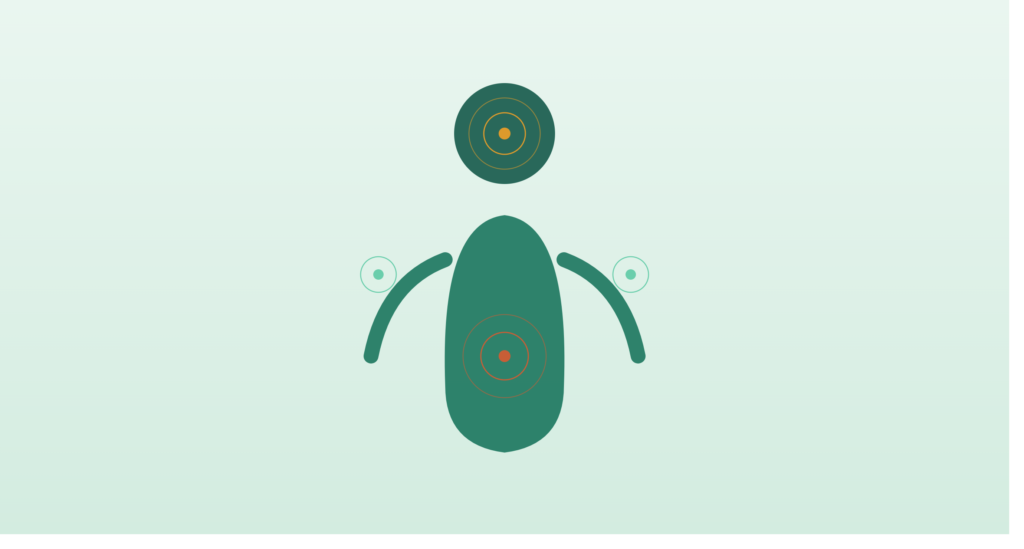
The physical signs of intuition being ignored are often easier to notice than the mental ones, once you know what to look for. Unexplained fatigue, tight shoulders, tension headaches, and a knotted stomach can all show up around decisions that go against a person’s inner sense of things. Gut discomfort in particular has a documented biological basis: the gut contains its own extensive network of neurons, sometimes called the enteric nervous system, which communicates directly with the brain. This is part of why intuition is so often described as a “gut feeling,” and why suppressed emotional signals can show up as digestive issues or a tightening stomach.
Restless sleep is another common thread. Many people report lying awake running through a decision their body has clearly already made, unable to settle because the mind is still trying to override it.
Behavioral Patterns
On a day-to-day level, ignoring intuition often looks like living according to expectations rather than instinct, making choices based on what one “should” do rather than what feels true. It can also look like pretending everything is fine while quietly feeling otherwise, avoidance and procrastination around decisions that already have a clear answer, or simply moving through life on autopilot, with a persistent sense that something is unfinished or missing. Left unaddressed, these patterns tend to repeat: the same kind of relationship, the same kind of job situation, the same warning signs ignored a second or third time.
What Intuition Feels Like Versus What Fear Feels Like
Because so many people ask can intuition be wrong, it’s worth separating intuition from fear-based thinking more precisely. Fear and anxiety are protective mechanisms, useful in genuinely dangerous situations, but prone to false alarms when they are triggered by uncertainty rather than actual threat. Anxiety tends to be repetitive and future-focused, cycling through worst-case scenarios. Intuition tends to be present-focused and singular, a clear sense about this specific choice, delivered once, without needing to be revisited on a loop.

That said, intuition is not infallible in the way some popular quotes suggest. It can be shaped by past trauma, bias, or incomplete information, which is one reason researchers are cautious about treating gut feelings as always reliable. The most balanced view, shared by both cognitive scientists and experienced practitioners of intuitive or contemplative traditions, is that intuition is a valuable data point, not an infallible oracle. Signs your intuition is right typically include a felt sense of clarity that holds up over time, rather than one that was simply the loudest voice in the room that day.
How to Reconnect With Your Intuition
Reconnecting with intuition after a long period of ignoring it is less about a single breakthrough and more about rebuilding a habit of listening.
Meditation is the most widely supported starting point. Sitting quietly and following the breath, without trying to force any particular outcome, gives the nervous system a chance to settle enough that quieter internal signals become noticeable again. Even ten minutes a day has been associated in research with reduced stress reactivity, which in turn makes it easier to distinguish a calm intuitive sense from an anxious spike.
Listening to the body is the second practice worth building. This means paying attention to how a decision physically feels, a sense of ease and openness versus a sense of contraction or dread, and treating that information as relevant rather than dismissing it as irrational. Attending to basic needs like rest, hydration, and movement also matters here, since a depleted or overstimulated nervous system makes it much harder to hear anything subtle.
Practicing with small decisions rounds out the approach. Using intuition for low-stakes choices, what to eat, which task to tackle first, whether to leave a gathering early, builds the same trust that later makes it possible to hear intuition clearly in higher-stakes moments. Each time an intuitive nudge is followed and turns out to be useful, the inner voice becomes a little easier to recognize the next time.
Common Misconceptions Worth Addressing
One persistent misconception is that intuition should feel dramatic or unmistakable. In practice, it is usually subtle, closer to a quiet nudge than a lightning bolt. Another is the idea that ignoring a gut feeling once means it will simply vanish; more often, unresolved intuitive signals resurface in the patterns described above, whether that’s chronic fatigue, repeated conflict, or a persistent sense of dissatisfaction. There is also a common question around what it means when my intuition scares me sometimes: fear can accompany a true intuitive read, particularly when it points toward a difficult change, so fear alone does not disqualify a feeling from being intuition. What tends to distinguish it is whether the fear settles into clarity or keeps spinning.
Finally, some people assume the opposite of intuition is simply logic. A more accurate opposite is disconnection, the state of operating entirely on autopilot or external expectation, without checking in with either the rational mind or the inner sense of things at all.
For daily insights on consciousness, clarity, and trusting yourself, explore Bahlon’s free daily transmissions.
Related Readings:
Frequently Asked Questions
What does intuition feel like compared to anxiety?
Intuition tends to feel calm, clear, and settled, arriving once without needing to repeat itself. Anxiety feels urgent, repetitive, and is often filled with “what if” thinking tied to the body’s stress response.
What are common signs you’re ignoring your intuition in a relationship?
Making constant excuses for uncomfortable behavior, feeling tension in your body around a specific person, avoiding honest conversations, and a recurring sense that something is being overlooked are frequent signs in relational contexts specifically.
Can intuition be wrong?
Yes. Intuition draws on past experience and pattern recognition, which means it can be shaped by bias, fear, or incomplete information. It is best treated as valuable input rather than an infallible answer.
What is a bad gut feeling, and should it always be trusted?
A bad gut feeling is typically a sense of unease or resistance tied to a specific situation or decision. It is worth paying attention to, though it helps to notice whether the feeling is calm and clear or anxious and looping before acting on it.
What is the opposite of intuition?
Rather than pure logic, the more accurate opposite is disconnection: living on autopilot, ignoring internal signals, and making choices based entirely on outside expectations rather than an inner sense of what feels true.