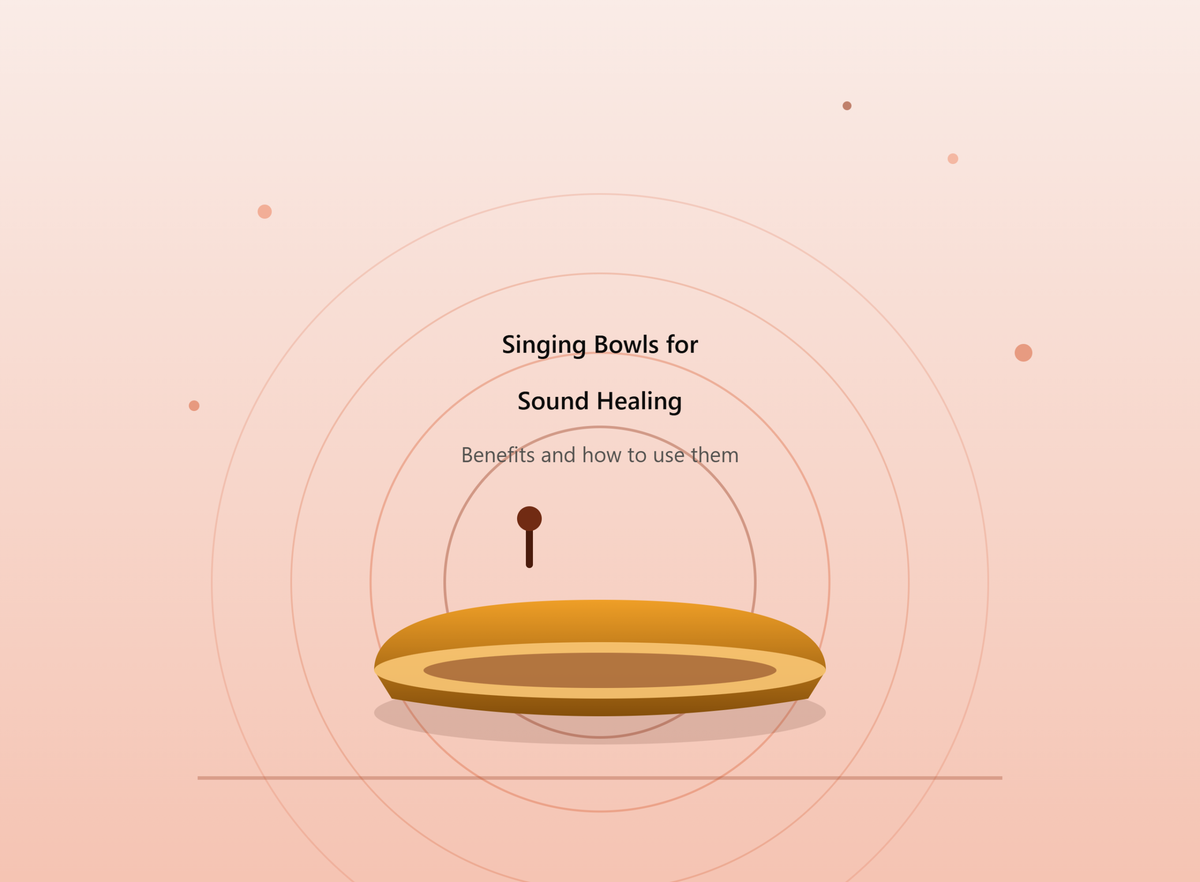
Singing bowls for sound healing use sustained tones and harmonic vibrations to guide the body into a state of deep relaxation, and while the practice is thousands of years old, modern interest in it has never been higher. People turn to these resonant metal or crystal vessels to quiet a busy mind, ease physical tension, and create a ritual moment of stillness in an otherwise noisy day. Whether the benefits come from measurable physiological shifts, a placebo-adjacent relaxation response, or something less easily quantified, the practice has earned a devoted following among meditators, therapists, and the simply curious.
This piece walks through what singing bowls actually are, how the sound and vibration they produce interacts with the body, what research says (and doesn’t say) about their effects, and how to actually use one if you decide to bring this practice into your own life.
What Are Singing Bowls?
A singing bowl is a type of idiophone, meaning it produces sound through its own vibration rather than through strings or a membrane. Run a mallet around the rim or strike it gently, and the bowl “sings,” producing a sustained tone that can linger in a room for a surprisingly long time.
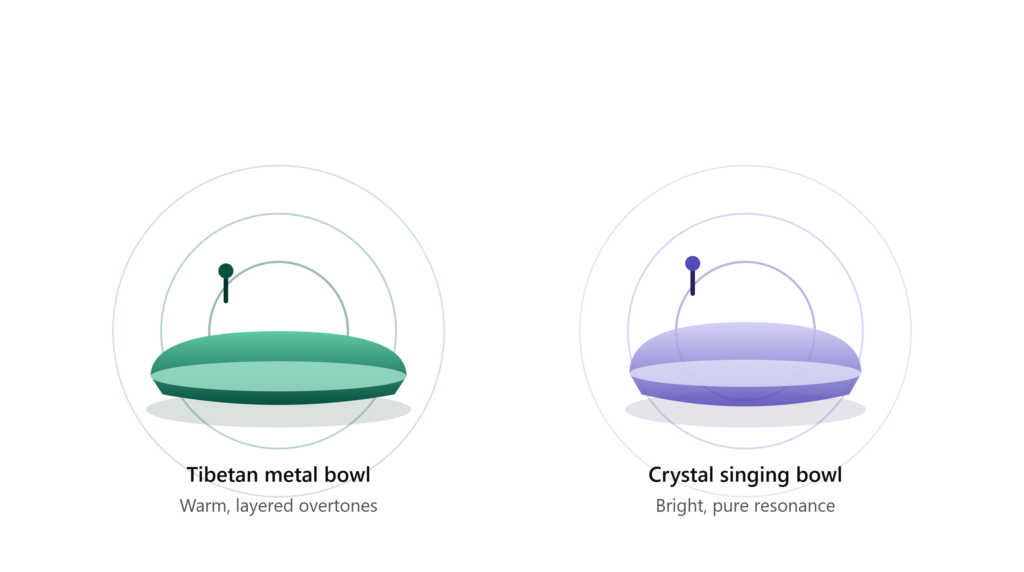
There are two dominant categories on the market today. Tibetan singing bowls, sometimes called Himalayan bowls, are typically hand-hammered or cast from a blend of metals. Their sound is warm, layered, and full of complex overtones, which is part of why a Tibetan singing bowl set is often the entry point for people new to sound work. Crystal singing bowls, by contrast, are made from compressed quartz and produce a purer, more piercing tone, closer to the sound of a wet finger circling a wine glass.
Beyond bowls, the broader field of sound healing (also called sound therapy) draws on tuning forks, gongs, drums, flutes, and the human voice, all used with the same underlying premise: that sound vibration can influence physical, emotional, and even spiritual states. A typical session, whether centered on a single meditation bowl or a full arrangement of crystal sound bowls, invites the listener to simply lie down or sit and let the vibrations move through them.
How Singing Bowls for Sound Healing Actually Work
The mechanics behind singing bowls for sound healing come down to two overlapping ideas: how vibration moves through the body, and how sound may influence brainwave activity.
The body as a resonating chamber. Because the human body is largely water, and water conducts vibration efficiently, physical sound waves from a bowl placed nearby or directly on the body can be felt as much as heard. This is part of why sound massage, where bowls are placed on or around a reclining person, is described by many practitioners as a distinctly different experience from simply listening to a recording.
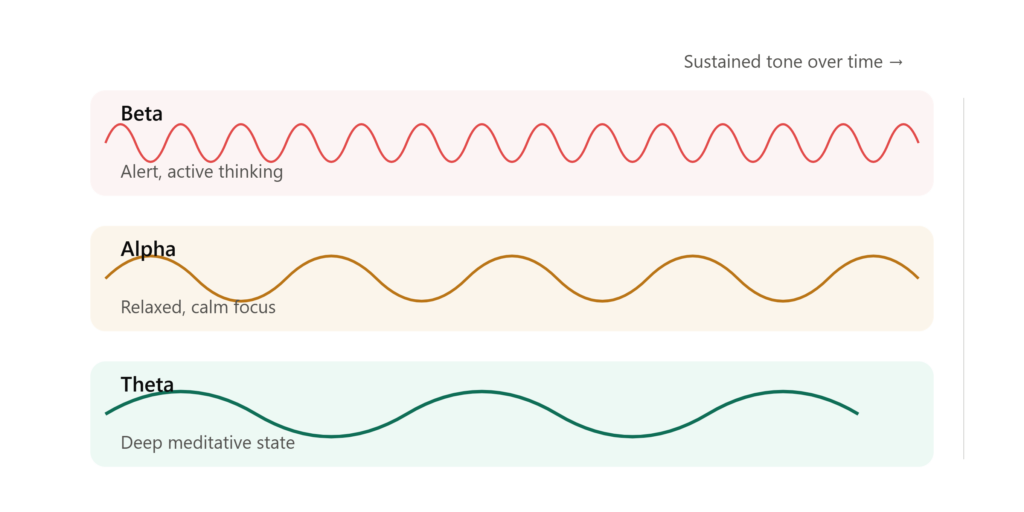
Brainwave entrainment. One of the more studied ideas in this space is that rhythmic auditory stimulation can nudge brainwave patterns from an alert Beta state toward the slower Alpha and Theta rhythms associated with relaxation and light meditative states. This concept, often called brainwave entrainment, is one of the more frequently cited explanations for why a sound bowl session can feel so quickly calming.
Nervous system regulation. Slow, sustained tones are also associated with activating the parasympathetic nervous system, the body’s “rest and digest” mode. In theory, and in some studies, this shows up as a slower heart rate, reduced blood pressure, and lower cortisol, the hormone most associated with the stress response.
None of these mechanisms are fully settled science, and researchers are candid that more rigorous, larger-scale studies are still needed. But the physiological plausibility, combined with a large body of anecdotal and practitioner reporting, is part of why sound therapy has moved from niche wellness circles into more mainstream conversations about stress management.
What the Evidence Actually Shows
It’s worth separating what has been studied from what is simply widely believed, because both matter, just differently.
On the research side, sound bath studies (sessions using bowls, gongs, and related instruments) have reported improvements in mood, reductions in self-reported anxiety and tension, and some decrease in perceived pain following a session. Separate research into music and therapeutic sound more broadly, not limited to singing bowls specifically, has linked calming audio to lower cortisol levels, improved sleep onset and quality, and modest reductions in pain perception in some clinical settings. Sound-based approaches have also been explored as a complementary support for symptoms of depression, though this remains an early and evolving area of study.
Research specifically on Tibetan singing bowls has echoed these broader sound therapy findings, including participants showing measurably lower blood pressure and reduced stress markers after sessions. That said, the quality and size of these studies vary considerably, and scientists studying sound therapy are generally careful to note that correlation with relaxation doesn’t yet prove a specific, isolated mechanism unique to singing bowls as opposed to calming sound in general.
On the traditional and experiential side, the picture looks different. Practitioners of Tibetan sound meditation, reiki, and various energy healing traditions describe singing bowls as tools that interact with subtle energy, sometimes referred to in terms of chakras, the energy centers traditionally mapped along the body. This includes practices aimed at particular centers, such as the sacral chakra, which is traditionally associated with creativity, emotion, and a sense of flow. These frameworks are longstanding, deeply held, and meaningful to millions of practitioners, even though they sit outside the scope of what conventional biomedical research is designed to measure. Presenting this fairly means acknowledging both: the clinical research is real but limited, and the traditional framework is real to those who practice within it, even if it isn’t something a lab study is built to confirm or deny.
Types of Singing Bowls and How They Differ
Choosing between a Tibetan metal bowl and a crystal singing bowl often comes down to the kind of sound and experience someone is drawn to.
| Feature | Tibetan / Himalayan Metal Bowls | Crystal Singing Bowls |
|---|---|---|
| Material | Hand-hammered or cast multi-metal alloy | Pure crushed quartz composite |
| Sound | Warm, grounding, rich with overtones | Bright, pure, intensely resonant |
| Commonly used for | Grounding, mindfulness, direct body placement | Chakra work, sound baths, energy clearing |
| Durability | Sturdy and travel-friendly | Fragile, needs a protective case |
Many sound practitioners use both types in the same session, since the grounded warmth of a metal bowl and the piercing clarity of a crystal bowl create contrast rather than competition. If you’re shopping and see listings for singing bowls for sale or a Tibetan singing bowl set, it’s worth listening to sound samples first, since tone quality varies enormously even within the same size and material category.
How to Use a Singing Bowl
Playing a singing bowl is simple in concept but does take a bit of practice to get a clean, sustained tone rather than a chattering or scraping sound.
Set up your bowl. Place it on a flat cushion on a stable surface, or rest it on the open, flat palm of your non-dominant hand. Avoid gripping the sides, since tension in your fingers will dampen the vibration before it has a chance to build.
Hold the mallet properly. Grip the striker in your dominant hand the way you’d hold a pencil, relaxed but controlled enough to apply even pressure.
Choose your technique.
- Striking: Tap the outer rim gently at roughly a 45-degree angle, letting each tone ring out fully before striking again.
- Rimming: Strike once to start the vibration, then press the mallet against the outer rim and move it slowly in a clockwise circle at a steady 45-degree angle. Consistent, moderate pressure is what sustains the note, sometimes described as making the bowl “sing.”
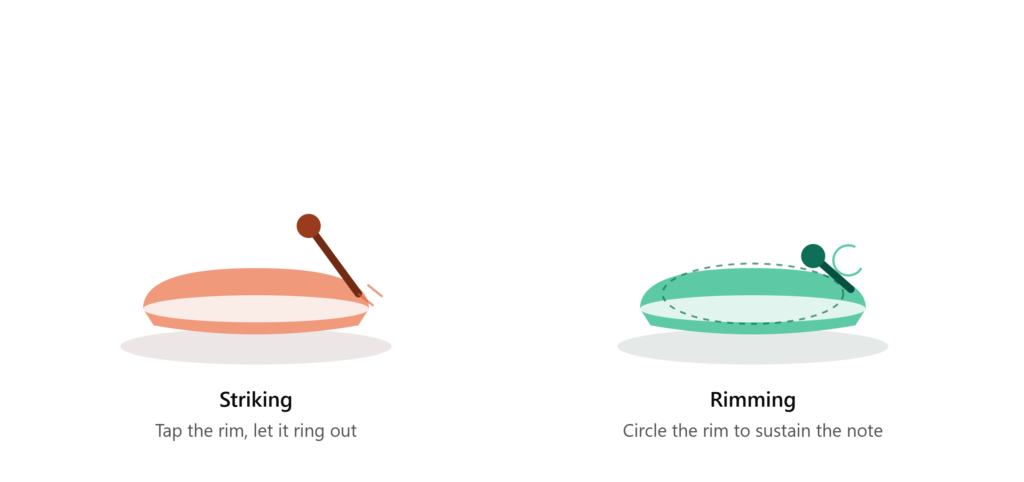
If you’re getting a rattling or scraping sound, you’re likely moving too fast or not pressing firmly enough. Slowing the circular motion almost always resolves it.
Match your mallet to your bowl. Suede or wooden strikers tend to bring out richer tones in metal bowls, while silicone or rubber-tipped mallets work best on crystal bowls and help avoid unwanted scraping. If you’re playing several bowls together, choosing ones tuned to complementary musical intervals, such as a root note, its fifth, and its octave, keeps the combined sound harmonious rather than dissonant.
Ways to Bring Singing Bowls Into a Regular Practice
There isn’t one correct way to use a sound bowl; the right approach depends on what you’re looking for.
- Sound meditation. Sit or lie comfortably, choose a bowl, and simply focus your attention on the tone and its fade. Consistency matters more than duration here; a few minutes daily tends to build a deeper effect than an occasional long session.
- Sound baths and sound massage. These typically involve a practitioner playing bowls near or directly on your body while you lie down, combining the auditory and physical vibration experience. This isn’t something you can fully replicate solo, since it relies on another person managing the instruments while you relax.
- Energy healing, chakra work, and reiki. Some practitioners incorporate bowls into chakra balancing, using specific tones associated with different energy centers, or into reiki sessions as a complement to hands-on energy work.
- Crystal charging. In lithotherapy and crystal healing traditions, some people also use singing bowls to “recharge” stones and crystals, based on the belief that sound vibration restores or amplifies their energetic properties.
It’s generally recommended to try one approach at a time rather than combining everything at once, so you can actually notice what resonates (literally and figuratively) with you.
Safety, Limitations, and Common Misconceptions
Sound therapy is considered low-risk for most people, but it isn’t entirely without caveats. Those with severe hearing impairments, epilepsy, or other neurological conditions should check with a healthcare provider before participating, since sustained tones and vibration could theoretically be a trigger in specific cases. If you ever feel discomfort, dizziness, or distress during a session, the guidance is straightforward: stop immediately.
It’s also important to be clear-eyed about what singing bowls can and can’t do. They are not a substitute for medical or psychiatric treatment, and no reputable sound therapist would frame them that way. They function best as a complementary practice, something that supports relaxation and stress management alongside, not instead of, appropriate medical care. Responses to sound therapy also vary widely from person to person; what feels profoundly calming to one listener might feel unremarkable to another, and that’s a normal, expected part of a practice this individualized.
For daily insights on consciousness, clarity, and trusting yourself, explore Bahlon’s free daily transmissions. Subscribe here to receive them straight to your inbox.
Related Readings:
- What Is Energy Healing? Types and Benefits
- Sound Healing Practices: Ears to Wellness
- Crystal Healing: An Introduction to Energy Balancing
Frequently Asked Questions
Do singing bowls actually do anything scientifically, or is it just relaxation?
Some studies on sound baths and Tibetan singing bowls have found measurable effects like lower blood pressure, reduced cortisol, and improved mood, though sample sizes are often small and more research is needed. The relaxation response itself, whatever its precise mechanism, appears to be real and reproducible for many people.
What’s the difference between a Tibetan bowl and a crystal bowl?
Tibetan bowls are metal alloy instruments with warm, layered tones, often used for grounding and mindfulness. Crystal bowls are made from quartz and produce a brighter, more piercing sound, frequently used in chakra work and sound baths.
Can I do a sound bath by myself?
Solo sound meditation with your own bowl is absolutely possible and is how many people start. A full sound massage, where bowls are placed on your body while someone else plays them, generally requires another person, since you can’t manage the instruments while lying still.
How often should I practice singing bowl meditation?
Short, consistent sessions tend to be more effective than infrequent long ones. Many practitioners suggest a few minutes daily, treating it as a small ritual rather than a demanding commitment.
Is chakra work with singing bowls backed by science?
Chakra-based practices, including work with specific centers like the sacral chakra, come from long-standing spiritual and energetic traditions rather than clinical research. They hold deep meaning for many practitioners, even though they fall outside what conventional science currently measures, and that distinction is worth respecting rather than dismissing.