What does it mean when you have deja vu? It is a brief, false sense of familiarity, the feeling that a moment you are living for the first time has somehow happened before, even though you know it hasn’t. Researchers generally link it to the way the brain handles memory and recognition, and occasional episodes are considered a normal part of human experience. Many people also bring a spiritual or intuitive lens to it, which we will explore fairly alongside the science.
What Does It Mean When You Have Deja Vu?
The French phrase déjà vu translates to “already seen.” It describes the sensation that you are re-living something, whether it is a conversation, a street corner, or a particular quality of light in a room. The defining feature is that you remain aware the feeling does not match reality. You are not confused about the facts. You simply feel, with strange conviction, that you have been here before.
That awareness is what separates a true deja vu experience from a genuine memory. If you had actually visited a place, you would be able to recall details of the visit. With deja vu, the familiarity arrives without any supporting recollection, which is why it can feel both startling and oddly pleasant.
The idea is far older than the term. St. Augustine is reported to have described a similar sensation around 400 AD, which he called “false memoriae.” The phrase itself was introduced in 1890 by the French philosopher Émile Boirac, and the neurologist F. L. Arnaud later brought it to the scientific community. Early clinicians were especially interested because of a possible connection to epilepsy, but the modern view has widened to include perception and memory in healthy brains.
If you have ever searched for the deja vu meaning in English, the simplest answer is this: it is a momentary feeling of having already lived the present moment, paired with the knowledge that you haven’t.
How Common Is Deja Vu, and Who Tends to Experience It?
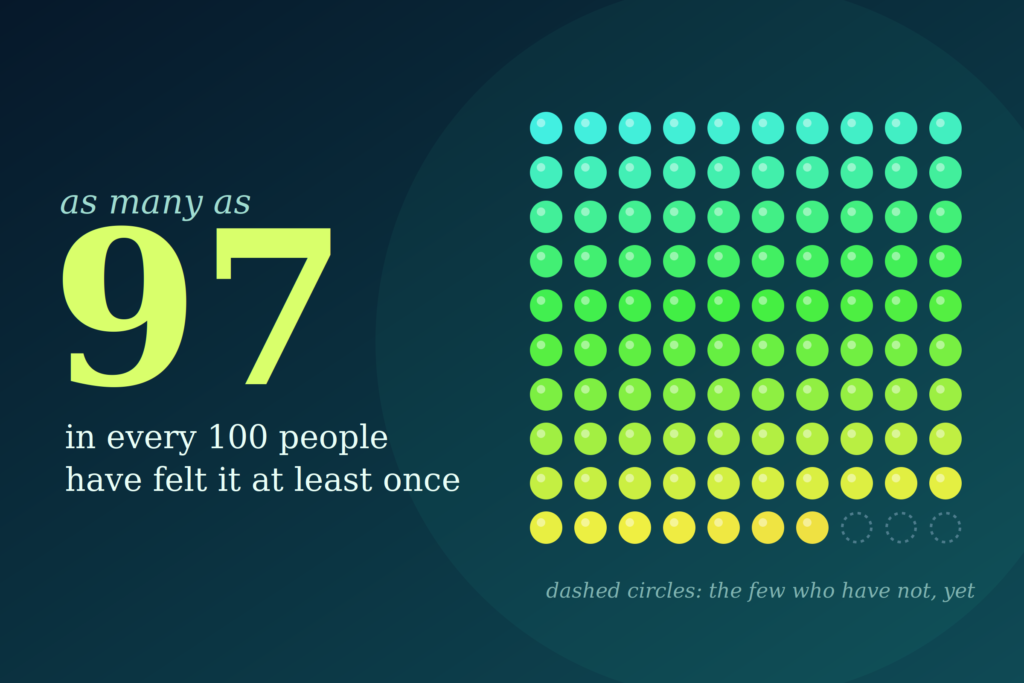
Deja vu is among the most widely shared human experiences. Some estimates suggest that as many as 97 percent of people have felt it at least once, and roughly 60 to 70 percent report experiencing it with some regularity. Figures vary between studies, depending on how the question is asked, but the overall picture is consistent. If you have felt it, you are in very large company.
Research has also pointed to some patterns among people who report it more often. These include:
- Being between roughly 15 and 25 years old
- Higher levels of education and income
- Frequent travel
- Remembering dreams
- Identifying as politically liberal
These are correlations, not explanations. They may simply reflect that people who travel often or who pay close attention to their inner lives are more likely to notice, and report, these fleeting sensations.
What Causes Deja Vu? How the Brain May Produce the Feeling
If you have ever wondered why you get deja vu, the honest answer is that scientists do not agree on a single cause. Deja vu lasts only seconds and is nearly impossible to trigger on demand, which makes it hard to study in a laboratory. Several leading explanations exist, and they are not mutually exclusive.
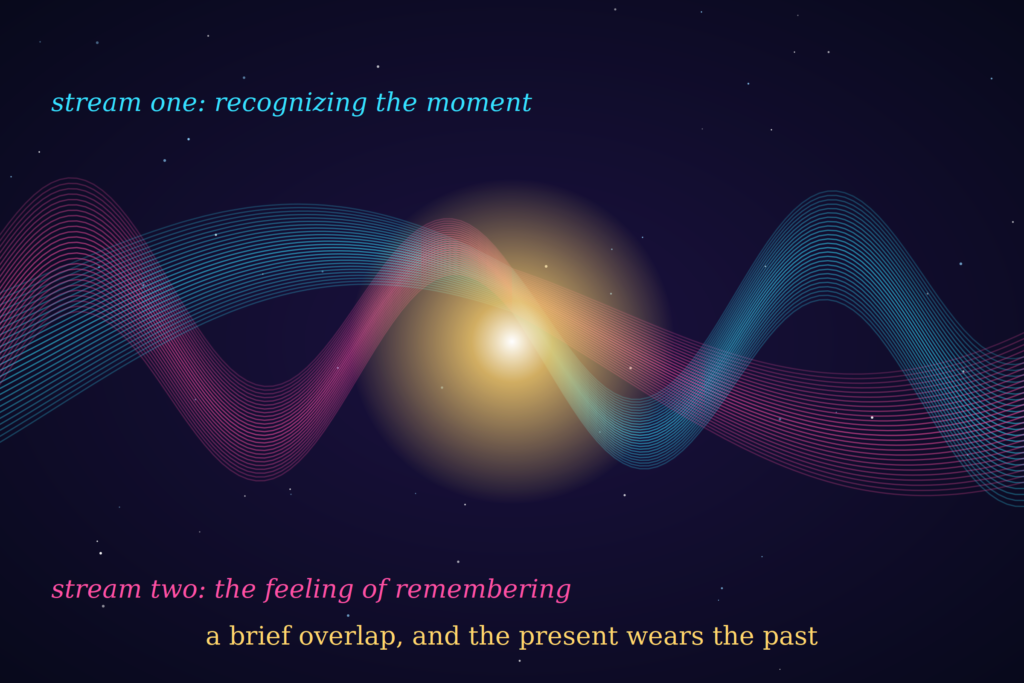
A timing mismatch in memory. One widely discussed idea is that two streams of mental processing briefly overlap or fall out of sync. One stream registers what you are experiencing now. Another produces a feeling of remembering. When they collide, the present moment arrives wearing the sensation of the past. Researchers have pointed to the medial temporal lobe and the hippocampus, regions central to memory, as places where this kind of brief misfire might occur.
Split perception. Another explanation involves seeing something twice in quick succession. Imagine you glance at a scene while distracted, or your view is momentarily blocked. A fraction of a second later you take it in properly. Because the first glimpse never fully reached your awareness, the second feels oddly familiar, as though you have seen it before.
Familiar patterns in new places. Cognitive psychologist Anne Cleary and colleagues have explored the idea that deja vu can arise when a new scene shares an underlying layout with something you have seen but cannot consciously recall. In experiments, people were more likely to report deja vu in a scene whose spatial arrangement matched one they had seen earlier, even when they could not name the source. In this view, the feeling is a signal that your brain detected a resemblance without retrieving the memory.
Neurochemistry. One hypothesis suggests that too much dopamine may contribute. A reported case described a man who experienced several episodes of deja vu per hour after taking flu medications that act on the dopamine system. The episodes stopped when he discontinued them. A single case is not proof, but it has encouraged researchers to look more closely at the chemistry involved.
Everyday states. Stress, fatigue, and sleep deprivation are commonly associated with more frequent deja vu, likely because they affect how memory and attention function. Anxiety has also been linked to more frequent episodes. If you notice deja vu clustering around busy or exhausting weeks, that pattern is worth paying attention to.
One study also found that people who experience deja vu regularly tended to show less grey matter in certain brain areas than those who rarely do. This does not mean frequent deja vu is harmful. It points to the fact that the experience is tied to real, measurable differences in how brains work, even among healthy people.
Deja Vu and Epilepsy: When It Is More Than a Passing Feeling
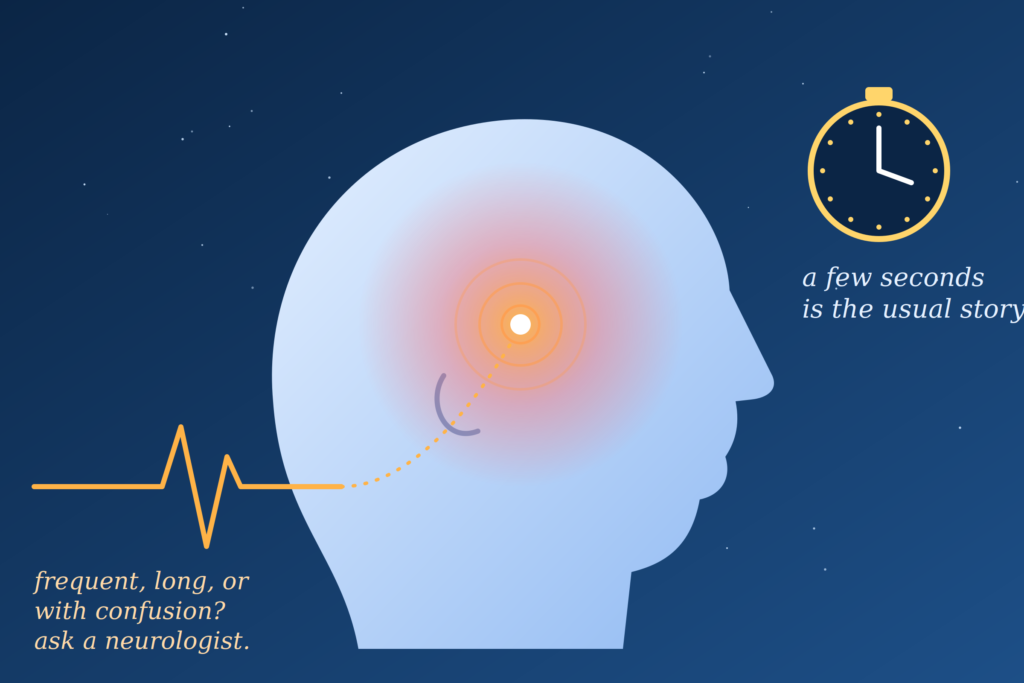
Epilepsy is the neurological condition most often associated with deja vu. It can affect the temporal lobe, which plays a role in interpreting vision and memory. In people with temporal lobe seizures, deja vu can be part of a short seizure often described as a focal onset aware seizure, formerly called a simple partial seizure. This is a big reason doctors took an early interest in the experience.
Researchers have observed changes in memory-related brain circuitry in people with epilepsy who have deja vu. In healthy people who have it, changes have been observed in emotional circuitry instead. The feeling may seem the same from the inside, but the underlying processes may differ. Other conditions that have been reported alongside more frequent deja vu include anxiety, schizophrenia, and vascular dementia.
It is important to keep this in proportion. Because nearly everyone experiences deja vu, the vast majority of episodes have nothing to do with a medical condition. The connection matters mainly when the pattern changes.
Spiritual and Metaphysical Views of Deja Vu
Science offers one lens on this experience. Many traditions and many individuals offer others, and those accounts deserve to be presented honestly rather than waved away.
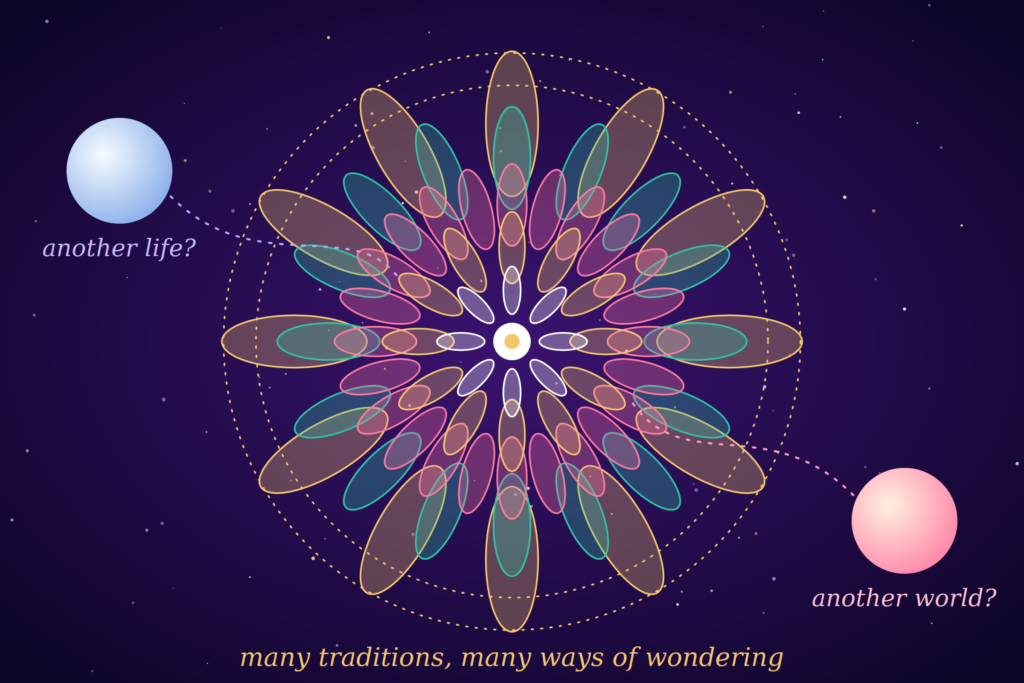
People interpret deja vu in several ways. Some describe it as a glimpse of a memory from a past life, a theme found in a number of reincarnation traditions. Others see it as a sign of being on the right path, a moment of alignment where inner knowing and outer circumstance briefly meet. Still others describe it as a brush with a shared consciousness or a peek into an alternate version of their life. Online communities are full of these interpretations, and many people say these moments feel deeply meaningful to them.
It helps to be clear about what kind of claim each view is making. The brain-based explanations come from research and can be tested, at least in part. The spiritual interpretations are experiential and traditional. They rest on personal meaning, not laboratory evidence, and science has no instrument that can confirm or rule out a past life or a parallel reality. Holding both can be perfectly reasonable. You can accept that memory systems play a role in producing the sensation and still find that the moment carries personal significance for you.
Deja vu dreams are a related area. Some people report the same sense of familiarity when they recall a dream that later seems to play out in waking life. Remembering dreams is one of the traits associated with more frequent deja vu, which may explain why these accounts are so common. Whether you view them as memory quirks, intuition, or something more, they are worth noting in a journal.
What You Can Do When Deja Vu Happens
Because deja vu is brief and usually harmless, there is nothing you need to fix. A few practical habits can still help you make sense of it.
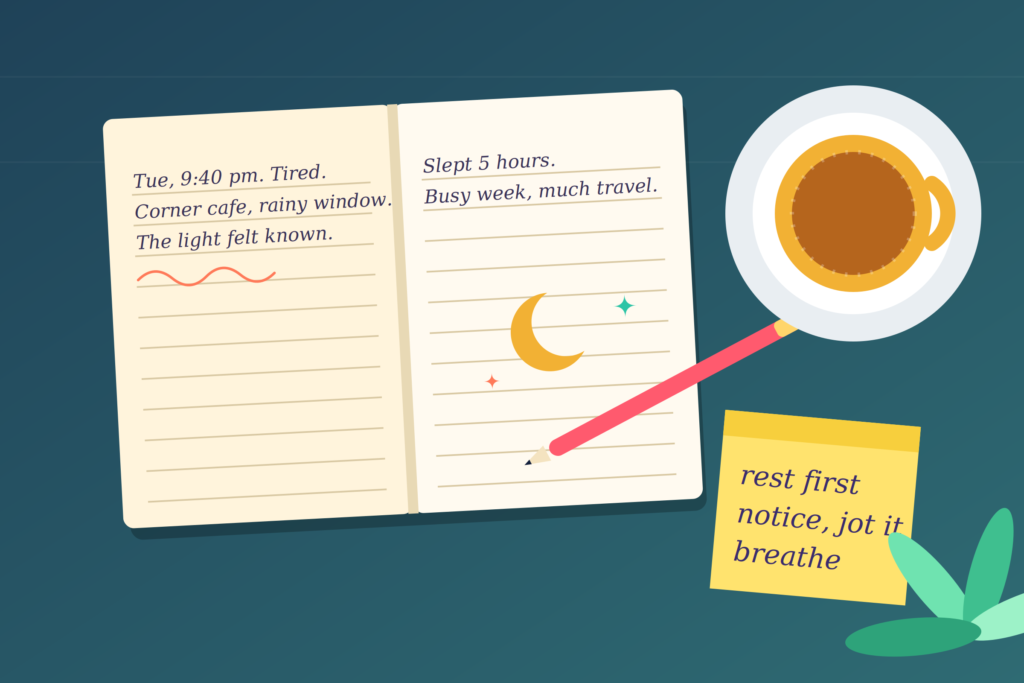
- Stay with the moment. The feeling usually fades within seconds. Rather than chasing it, take a breath and notice your surroundings.
- Notice the context. Jot down what was happening. Were you tired, stressed, traveling, or distracted? Over time, patterns often emerge.
- Protect your sleep. Since sleep deprivation and fatigue are linked with more frequent episodes, steady rest is a sensible place to start.
- Keep a simple record. If you are curious about the meaning, a short note about the date, the setting, and how the moment felt can help you spot themes, whether you read them scientifically or intuitively.
- Take frequency seriously. If episodes become regular or unusual, treat that as useful information rather than something to dismiss.
When Should You See a Doctor About Deja Vu?
Occasional deja vu that passes quickly is considered normal. It may be worth speaking with a doctor if:
- Episodes happen very frequently, such as a few times a week or more
- They last longer than a few seconds
- They come with confusion, dizziness, or weakness
- They occur alongside seizures
A neurologist can evaluate whether epilepsy or another neurological condition is involved. Seeking an evaluation is a sensible precaution, not a cause for alarm.
Deja Vu, Jamais Vu, and Other Common Misconceptions
A few ideas about deja vu are worth clearing up.
It is not a memory. The whole point of the experience is that no matching memory exists. The sensation of remembering is present, but the actual recollection is not.
It is not usually a warning sign. Most episodes are harmless and are not a sign of something serious.
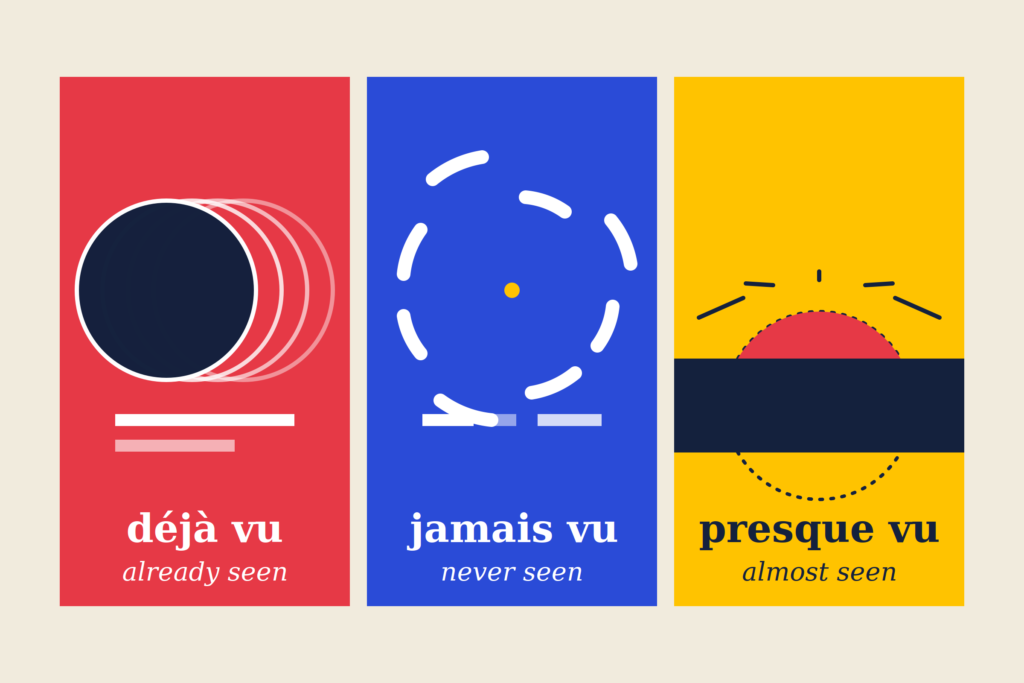
It is not only visual. The term deja vu is the most popular, but there are many related forms. Déjà entendu means “already heard,” déjà vécu means “already lived through,” déjà rêvé means “already dreamed,” and déjà pensé means “already thought.” Each describes a different kind of false familiarity.
It has opposites. The jamais vu meaning is almost the reverse of deja vu: a normally familiar situation suddenly feels strange or unrecognizable. Presque vu, meaning “almost seen,” describes the tip-of-the-tongue feeling of being on the verge of a revelation or a word that will not arrive.
Putting Deja Vu in Perspective
So, what does it mean when you have deja vu? In scientific terms, it most likely reflects a brief, harmless hiccup in how your brain pairs recognition with memory, something shared by the great majority of people. In personal and spiritual terms, it can be an invitation to pause, pay attention, and wonder. You do not have to choose one reading to the exclusion of the other. Knowing the research helps you recognize when a pattern might deserve medical attention, while staying open to meaning helps you appreciate the odd, quiet mystery of these moments.
For daily insights on consciousness, clarity, and trusting yourself, explore Bahlon’s free daily transmissions. Subscribe to receive them directly each day.
Related Articles:
Frequently Asked Questions
Is deja vu real?
Yes. Deja vu is a well-documented human experience reported by the large majority of people. The feeling is real, even though the sense of having lived the moment before is not based on an actual earlier experience.
Why do we get deja vu?
Researchers think it may stem from a brief mismatch between recognition and memory, from split perception, or from the brain detecting a familiar pattern it cannot place. Stress, tiredness, and lack of sleep are also associated with more frequent episodes.
Is deja vu a sign of epilepsy?
Usually not. Deja vu is very common in healthy people. It becomes more relevant when it is very frequent, lasts longer than a few seconds, or comes with confusion, dizziness, weakness, or seizures. In those cases, a neurologist can help.
Does deja vu have a spiritual meaning?
Many people interpret it through a spiritual lens, such as past-life memory, intuition, or alignment with their path. These readings are experiential and traditional rather than scientifically established, and they can sit alongside the scientific explanations.
What is the opposite of deja vu?
Jamais vu. It describes the feeling that something familiar suddenly seems unfamiliar or strange, such as staring at a common word until it looks unfamiliar.