What is a starseed? A starseed is a person who believes their soul originated in a distant star system, galaxy, or higher dimension rather than on Earth, and who feels they arrived here with a particular purpose. The idea comes from New Age spirituality, where the starseed meaning centers on cosmic origin, a lifelong sense of not belonging, and a mission of personal and collective growth. It is a belief framework rather than a scientifically established fact, and for many people its real value lies in how it helps them make sense of their inner lives.
What Is a Starseed? Definition and Origins
At its core, the starseed concept describes souls said to have been “seeded” on Earth from celestial locations such as the Pleiades, Sirius, or Arcturus. Those who identify with the idea often describe themselves as multidimensional beings, meaning they see themselves as more than a body and a mind, and as carrying a soul that has known other worlds or other planes of existence.
The modern term traces largely to author Brad Steiger, whose 1976 book Gods of Aquarius helped popularize it in alternative culture. Steiger drew on earlier currents in occult and contactee literature, but the phrase itself captured something fresh: the notion that a “seed” of stellar origin lives inside certain people, carrying memory, wisdom, and direction.

Four ideas run through nearly every account of starseeds:
- Cosmic origin: the soul began beyond Earth.
- Soul mission: the person incarnated for a reason, often tied to healing, teaching, or shifting collective awareness.
- Deep cosmic connection: a felt kinship with stars, planets, and the wider universe.
- Longing for home: an unexplained homesickness for a place or people the person cannot name.
Many starseeds also describe a “double mission.” One part is personal growth, learning the lessons that come with human life. The other is service, helping humanity grow, uplifting others, and supporting what is often called a shift in consciousness. Some believe they are here mainly for one purpose or the other, while many feel called to both.
Tradition adds a sense of timing. Starseeds are frequently described as ancient souls who chose to incarnate during a pivotal period in history, a crossroads that is spiritual and environmental at once. Whether or not that framing resonates, it explains why the concept so often attracts people who feel urgency about how the world is changing.
Starseed Types: Pleiadian, Sirian, Arcturian, and More
Within the tradition, starseeds are grouped by their believed cosmic lineage. These categories are descriptive and intuitive rather than standardized, and different teachers emphasize different traits. Still, certain profiles appear consistently across sources.
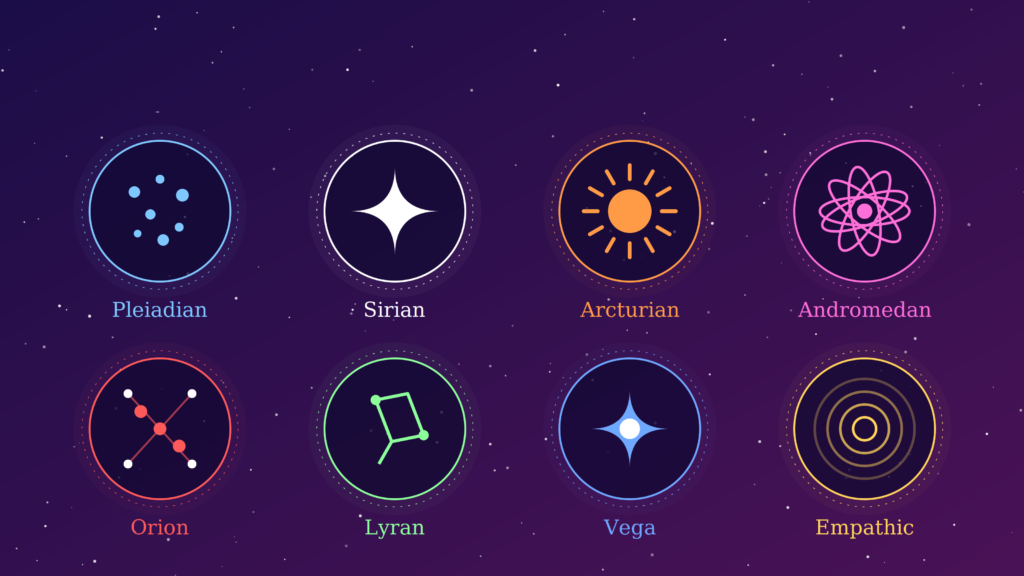
Pleiadian starseed: Linked to the Pleiades star cluster. Pleiadian starseeds are usually described as intuitive, creative, and sensitive, with a focus on helping humanity move toward greater understanding and compassion.
Sirian starseed: Associated with the Sirius system. A Sirian starseed is often portrayed as wise, empathetic, and naturally inclined toward leadership, healing, and spiritual growth.
Arcturian starseed: Tied to Arcturus. Arcturians are described as analytical, intellectually driven, and spiritually advanced, with a strong appetite for learning and sharing knowledge.
Andromedan starseed: Connected to the Andromeda galaxy. This type is said to be independent, innovative, environmentally minded, and unusually adaptable, staying calm when circumstances turn chaotic.
Orion starseed: Often called “warriors of light,” Orion starseeds are described as passionate, purpose-driven, and intense, with life lessons around overcoming difficulty and untangling karmic relationships.
Lyran starseed: Linked to Lyra. Lyrans are described as compassionate, creative, and harmonizing, drawn toward healing and unity.
Vega starseed: Associated with the star Vega. These starseeds are portrayed as artistic, intuitive, empathic, and deeply connected to nature.
Empathic starseed: Defined less by a star system than by profound emotional sensitivity. Traditional accounts note that this openness can be difficult, and that some empathic starseeds struggle with the weight of life on Earth, including depression or addiction.
Many people who search “what starseed am I” or “which starseed am I” find that they resonate with several types at once. Practitioners generally say that is normal, and that the label matters less than the qualities it points toward.
Common Signs of a Starseed and What Awakening Feels Like

Starseed signs are described as inner experiences rather than outward traits. There is no physical marker that reliably identifies a starseed, although online forums often mention birthmarks (including the “Arcturian starseed birthmark”) as clues. That is a folk belief with no basis in research, and most teachers of the tradition themselves emphasize inner recognition over anything visible.
The signs most often described include:
- Feeling like an outsider. A persistent sense of not belonging, sometimes even within one’s own family.
- Feeling that Earth is not home. A quiet homesickness for somewhere unnamed.
- A pull toward the cosmos. Fascination with stars, astronomy, space, science fiction, and the universe.
- Heightened empathy. Strong sensitivity to other people’s emotions and to the harshness of the surrounding world.
- Strong intuition. A tendency to trust gut knowing over conventional logic.
- A need for solitude. Time alone, often in nature, to recharge after overwhelming days.
- A deep sense of purpose. A feeling that life has a specific reason behind it.
- Memories or impressions of other places. Déjà vu or dreams of other worlds, read as echoes of other dimensions.
Starseed awakening symptoms
Starseed awakening is described as the moment the soul’s purpose “switches on.” It may arrive gradually, or through a catalyst such as a mystical experience, heartbreak, a near-death experience, a chance encounter, or a dark night of the soul. Some people say the knowing was there from childhood.
After awakening, people commonly report losing patience with conversations, jobs, or relationships that feel empty. They may also feel frustrated by how slowly systems change. Traditional accounts are candid that the process can be confusing, lonely, and non-linear rather than a tidy ascent. That honesty is worth holding onto, because awakening is often described as demanding as well as beautiful.
Evidence and Perspectives: What Tradition, Psychology, and Science Say
Approaching this topic fairly means separating three kinds of claims: what is experiential, what is traditional, and what can be tested.
The experiential view. For those who identify as starseeds, the framework is a lived language. It gives shape to feelings of difference, longing, and purpose that are otherwise hard to articulate. Practitioners often say the concept found them at a moment when they needed a story large enough to hold their experience.
The traditional view. Ideas of souls originating among the stars are not new. Many cultures have described ancestors, spirits, or teachers from the sky, and the Pleiades in particular appear in the lore of numerous peoples. The modern starseed concept is a contemporary synthesis, blending these motifs with reincarnation, astrology, and New Age cosmology.
What research can say. There is no scientific evidence that souls originate in specific star systems, and no method exists for testing the claim. But several well-studied phenomena overlap with the experiences starseeds describe:
- Sensory processing sensitivity. Psychologist Elaine Aron’s research suggests that roughly 15 to 20 percent of people are highly sensitive, processing emotional and sensory information more deeply. This trait maps closely onto the empathic, easily overwhelmed profile.
- Déjà vu. Surveys suggest a majority of people experience it at some point, and neuroscientists generally link it to memory processing rather than to past lives or other worlds.
- Mystical and awe experiences. Researchers such as Roland Griffiths, Ralph Hood, and Dacher Keltner have documented how experiences of awe and unity can produce lasting feelings of meaning, purpose, and connection to something larger.
- Belonging and identity. Psychology recognizes that people who feel like outsiders often seek communities and narratives that affirm their difference.
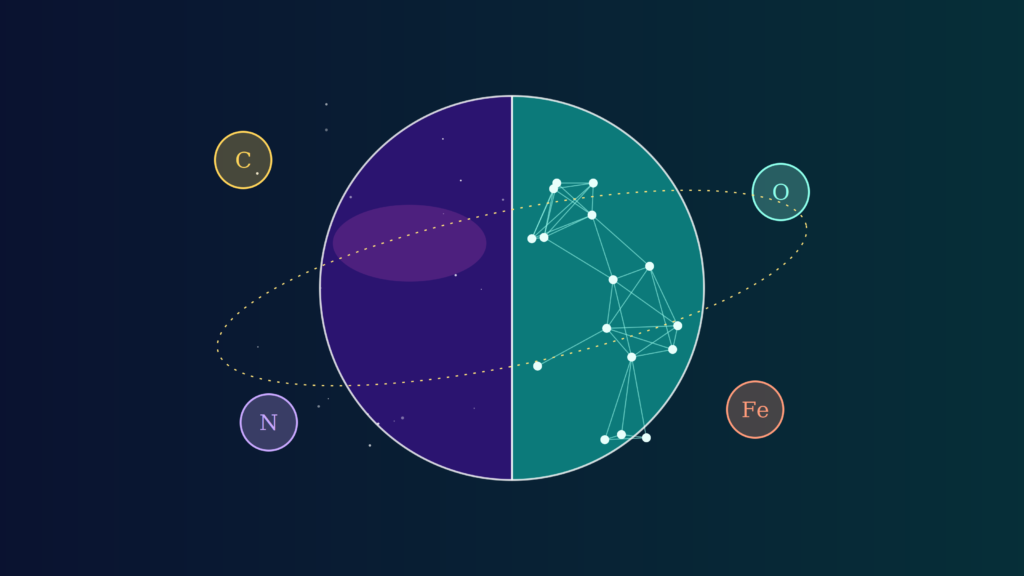
There is also a lovely point of overlap. Astrophysics tells us that the carbon, oxygen, and iron in every human body were forged inside stars. In a literal sense, everyone is made of stardust. The starseed idea extends that fact into the domain of soul and memory, which science does not address, but the emotional truth it points to, that we belong to the cosmos, is one both traditions can share.
A balanced reader can hold all of this at once: the framework is meaningful to many, its cosmic claims are matters of faith and personal experience, and the feelings it describes are real and worth taking seriously either way. If distress or persistent low mood accompanies those feelings, speaking with a qualified professional is a sensible companion to any spiritual exploration, not a contradiction of it.
How to Explore Starseed Ideas in Everyday Life
The tradition itself puts strong emphasis on embodiment, meaning bringing spiritual experience into ordinary human life instead of using it to escape that life. Here is how people commonly put that into practice.
Ground the experience. Walking outside, cooking, exercising, and spending time with animals or plants help integrate the intensity of awakening. Growth, in this view, does not require transcending the human experience.
Keep a reflective record. Journaling dreams, recurring feelings, and moments of strong intuition reveals patterns over time, whatever their ultimate source.
Use quizzes and oracle cards as prompts, not verdicts. A starseed test or starseed quiz can be a fun way to notice which qualities resonate with you. Treat the result as a conversation starter with yourself rather than a diagnosis. Oracle decks and guidebooks serve the same purpose for many people, offering companionship during transitions.
Find your people. Isolation is a common theme, and connecting with others who share similar experiences, whether in study groups, retreats, or thoughtful online spaces, eases it considerably.
Protect your energy. For sensitive people, boundaries, quiet time, and limited exposure to overwhelming environments are practical necessities. Learning to trust your intuition without letting it override sound judgment is a skill that develops with practice.
Serve where you are. The mission element does not have to be grand. Many starseeds describe fulfilling their purpose through ordinary kindness, creative work, caregiving, or teaching, and cultivating clarity and purpose in daily choices is often where that begins.
Common Misconceptions About Starseeds
“Starseeds are better than other people.” Within the tradition, starseeds are not considered superior. Every soul is said to have its own path, whether or not the person ever uses the word starseed.
“You need a specific type to count.” Types are optional lenses. Many people resonate with several, or with none of them, and still connect with the broader idea.
“Being a starseed means life should be easy.” The opposite is often reported. Awakening can bring loneliness, disillusionment, and a period of rebuilding, which is why grounding and community matter so much.
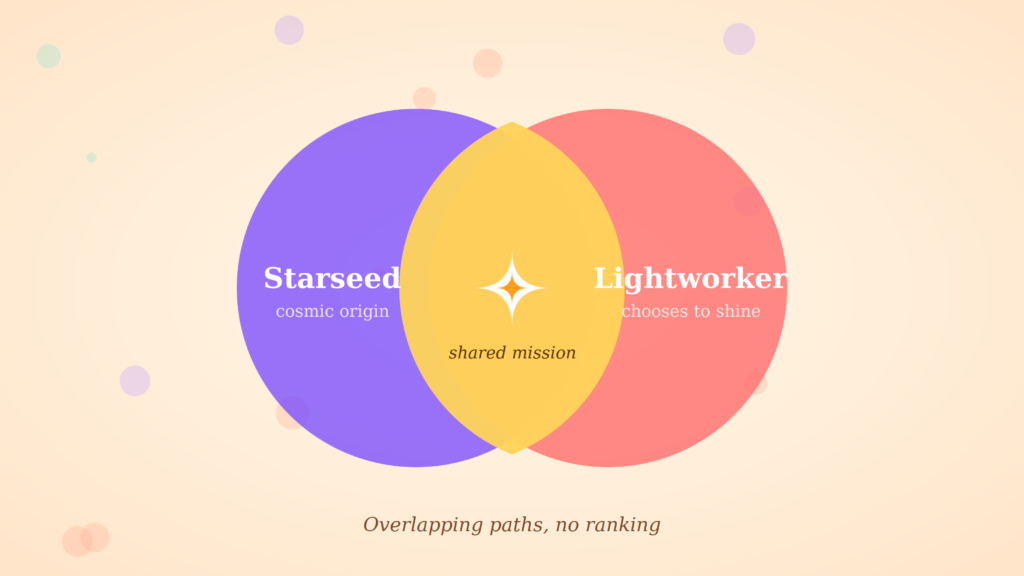
“A starseed is the same as a lightworker.” They overlap but are not identical. A lightworker is someone who consciously chooses to bring light into the world through their presence and work. A starseed is defined more by a felt cosmic origin, a longing for other realms, and a sense of not belonging. Both are usually described as sharing the double mission of personal and collective growth, and many people identify with both. For more on related spiritual identities, the distinctions can be explored further.
“Feeling different proves you are a starseed.” Feeling different is a very human experience, and many explanations can fit it. The starseed framework is one meaningful lens among several, and it is fine to hold it lightly.
For daily insights on consciousness, clarity, and trusting yourself, explore Bahlon’s free daily transmissions. Subscribe today and receive them straight to your inbox.
Related Readings:
- How to Integrate a Spiritual Awakening Into Daily Life
- Developing Your Psychic Powers: Step-by-Step
- What Is Spiritual Awakening? Signs and Stages
Frequently Asked Questions
What is a starseed in simple terms?
A starseed is someone who believes their soul came from another star system, galaxy, or dimension before incarnating on Earth. They usually feel a strong sense of purpose and a lifelong feeling of being different.
What are the main signs of a starseed?
Commonly reported signs include feeling like an outsider, longing for an unknown home, fascination with space, deep empathy, strong intuition, a need for solitude, and dreams or déjà vu that feel like memories of other worlds.
How many types of starseeds are there?
There is no official count, but the most frequently cited are Pleiadian, Sirian, Arcturian, Andromedan, Orion, Lyran, Vega, and empathic starseeds.
Is there scientific proof that starseeds exist?
No. The claim of extraterrestrial soul origin cannot currently be tested, so it remains a matter of belief and personal experience. Research does support that traits such as high sensitivity, awe, and mystical experience are real and meaningful.
How do I know which starseed I am?
Most people reflect on which descriptions resonate with their personality, interests, and inner experiences. Quizzes can help spark that reflection, but the sense of recognition you feel matters more than any score.