Meditation for beginners comes down to one simple act: sitting still and paying attention to something, usually the breath, and gently returning to it every time the mind wanders off. That’s it. There’s no special posture required, no need to empty your mind, and no equipment beyond a quiet-ish spot and a few minutes you’re willing to give up. The rest, the cushions, the apps, the chanting, is optional decoration on a practice that is fundamentally about training attention.
That simplicity is also why so many people quit before they get anywhere. They sit down expecting stillness and instead find a mind that won’t stop talking, and they assume they’re doing it wrong. They’re not. What follows is a practical, honest look at what meditation actually is, how it works, what the evidence says, and how to build a habit that survives your first bad week.
What Meditation Actually Is?

At its core, meditation is the practice of training attention and awareness on purpose. That’s a broader definition than most people expect. It doesn’t require a religious framework, though it has deep roots in Buddhist, Hindu, and other contemplative traditions that developed these techniques over thousands of years. It also doesn’t require silence, incense, or a lotus position. A person meditating on a subway platform for ninety seconds, eyes open, breathing normally, is doing the same fundamental thing as a monk on a retreat: directing attention somewhere specific and noticing when it drifts.
This is really the whole idea behind meditation for beginners: pick something to pay attention to and keep coming back to it. For someone just starting out, the clearest way to think about it is this: your mind runs on autopilot most of the day. Thoughts arise, you follow them, one leads to another, and an hour disappears without you choosing any of it. Meditation interrupts that autopilot. It doesn’t stop thoughts from happening, and that’s a common misconception worth clearing up early. The goal was never a blank mind. The goal is noticing when you’ve drifted and choosing, again and again, to come back.
How It Works: The Mechanics of Attention
The mechanics behind meditation for beginners are almost embarrassingly simple, which is part of why the practice is so hard to take seriously until you try it.

You pick an anchor, usually the breath, though sound or body sensation work just as well. You rest your attention there. Within seconds, sometimes less, a thought pulls your focus away: a memory, a worry, a grocery list. You notice this has happened. You let go of the thought without scolding yourself for having it, and you bring attention back to the anchor. Then it happens again. And again.
That entire loop, focus, wander, notice, return, is the practice. Not the sitting still. Not the deep breathing. The returning is where the actual training happens, the same way a rep in the gym is where the muscle gets built. Each time you notice a wandering mind and choose to come back, you are exercising a specific mental skill: catching yourself mid-thought instead of being carried along by it. Over weeks and months, that skill tends to show up elsewhere too, in moments when you’d normally snap at someone or spiral into a worry loop.
What the Research and the Traditions Say
When people search for evidence on meditation for beginners, they’re usually looking for something specific: proof it’s worth the time investment. It’s worth being honest about the difference between what’s been studied and what’s been experienced for centuries, because both matter and they’re not the same kind of evidence.
On the research side, a fair amount has been measured. Regular practice has been linked to lower self-reported stress, better emotional regulation, improved sleep quality, and stronger immune function in some studies. One frequently cited finding suggests that around twelve minutes of practice, five days a week, can measurably improve sustained attention over a matter of weeks. These are meaningful results, though it’s worth noting that meditation research varies widely in quality, sample size, and how “meditation” is even defined from one study to the next. It is not a cure for anxiety disorders, depression, or trauma, and it isn’t a replacement for professional mental health care when that’s what’s needed.
On the traditional side, practitioners across centuries and cultures have described benefits that are harder to quantify but no less real to the people experiencing them: a felt sense of spaciousness, reduced reactivity, deeper empathy, and a clearer relationship with one’s own thoughts. These accounts are experiential rather than clinical, and they deserve to be presented as exactly that, not as scientific fact, but not dismissed either. Millions of people across very different belief systems have arrived at similar descriptions of what sustained practice does to the mind, and that convergence is itself worth taking seriously.
The honest summary: meditation creates mental space. It helps with decision-making, self-awareness, and emotional balance. It requires patience and a bit of self-kindness, and it asks for consistency more than intensity.
How to Meditate for Beginners: A Step-by-Step Practice
This is the part most guides rush through. Here’s a version you can follow the first time you sit down.

1. Find a stable seat.
A chair, a cushion, the edge of your bed, all work fine. Keep your spine reasonably upright and your shoulders relaxed. Cross-legged is optional, not required.
2. Set a short timer.
Five minutes is enough to start. There is no prize for sitting longer than you can sustain, and a five-minute session you do beats a thirty-minute session you dread and skip.
3. Close your eyes, or don’t.
Both are fine. If closing your eyes makes you sleepy or anxious, keep a soft, downward gaze instead.
4. Anchor your attention on your breath.
Breathe naturally, without trying to control or deepen it. Notice where you feel it most, maybe the air at your nostrils, maybe the rise and fall of your chest or belly.
5. When your mind wanders, notice it and come back.
It will wander. Often within seconds. This isn’t failure, it’s the exercise itself. Notice the thought without judging it, then gently return attention to the breath.
6. Close the session slowly.
When the timer sounds, don’t jump up immediately. Take a moment to notice your body, the sounds around you, how you feel. Then open your eyes and carry on with your day.
Do this daily if you can, even for a minute or two on the days you’re rushed. Consistency matters more than duration. A guided audio session can help in the early weeks, since having a voice walk you through the structure takes some of the guesswork out of it while you’re still building the habit.
Meditation Techniques Worth Trying
Once the basic breath practice feels familiar, a few other meditation techniques for beginners are worth exploring, each with a slightly different focus.
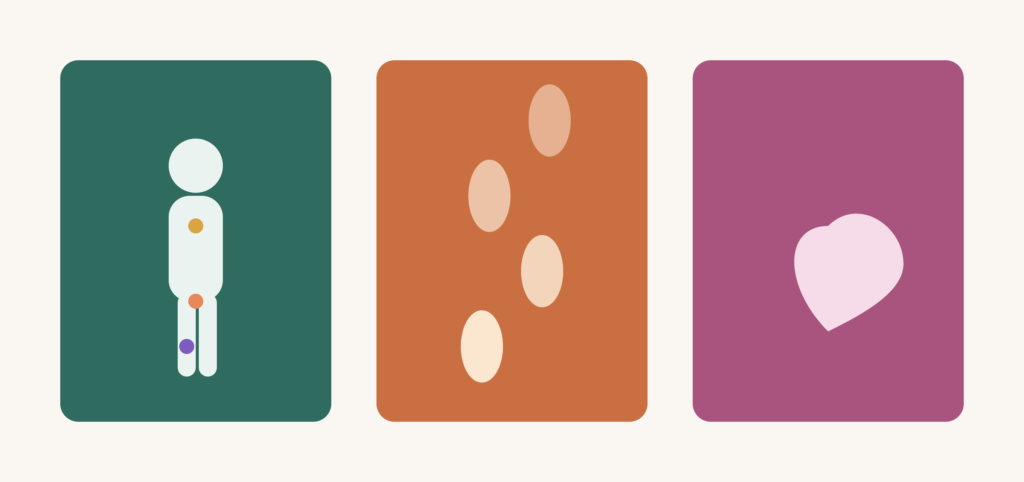
Body scan meditation moves attention slowly through the body, from your toes up through your legs, torso, arms, and head, noticing sensation at each stop without trying to change anything. If your mind wanders, you simply return to the last body part you were focused on. It’s a good option if sitting with the breath alone feels too abstract.
Walking meditation pairs awareness with movement instead of stillness. You walk at a natural pace and focus on the physical sensation of each step, lifting, moving, placing. Some people count steps in cycles of ten to keep attention anchored. It’s a useful entry point for anyone who finds sitting still genuinely uncomfortable.
Loving-kindness meditation shifts the focus from attention training toward cultivating compassion. You silently repeat phrases like “may I be safe, may I be happy, may I be healthy, may I live with ease,” then gradually extend those same wishes toward others, starting with people you love and eventually widening the circle further out. It’s a different texture of practice, less about watching the mind and more about deliberately generating warmth.
Guided meditation for beginners simply means any of the above led by a recorded voice rather than practiced in silence. Sessions typically run anywhere from one minute for a quick reset to fifteen or twenty minutes for a deeper sit, and they’re a genuinely helpful bridge while you’re still learning to hold your own attention unassisted.
Common Misconceptions and Questions New Meditators Have
A lot of people abandon meditation for beginners in the first week because of a handful of misunderstandings that are worth addressing directly.

The first is thinking a busy, wandering mind means you’re bad at meditating. It doesn’t. Noticing that your mind has wandered is the practice working, not the practice failing. The second is assuming you need forty-five minutes of silence in a candlelit room. Five minutes on a park bench with traffic noise in the background counts. The third is believing you have to sit perfectly still through discomfort. If you itch, notice the itch first, then scratch it if you need to; nothing about meditation requires enduring unnecessary discomfort. And the fourth is thinking there’s one correct way to breathe, sit, or focus. Eyes open or closed, with music or without, breath or sound or body sensation as your anchor, these are all legitimate variations, not shortcuts that invalidate the practice.
Building this into an actual habit, rather than a thing you did twice, tends to work better with small environmental nudges. Leaving a cushion or mat somewhere visible, or attaching the practice to something you already do every day (a deep breath the moment you sit down at your desk, for instance) tends to outperform relying on willpower alone.
For daily insights on consciousness, clarity, and trusting yourself, explore Bahlon’s free daily transmissions. Subscribe here to receive them straight to your inbox.
Related Readings:
Frequently Asked Questions
How long should a beginner meditate for?
Five to ten minutes daily is a solid starting point, and even a single minute is worth doing on days when that’s all you have. Consistency matters more than length.
Is it normal to have thoughts during meditation?
Yes, entirely. The practice isn’t about stopping thoughts, it’s about noticing them and returning attention to your anchor without judgment.
Should my eyes be open or closed while meditating?
Either works. Closed eyes reduce visual distraction for most people, but open eyes with a soft gaze are just as valid, especially if closing them makes you drowsy.
Do I need an app or guided audio to meditate?
No, but guided sessions can make the early weeks easier by giving you structure to follow instead of guessing at what to do next.
What’s the best time of day to meditate?
Whatever time you’ll actually do it consistently. Morning practice is popular because it happens before the day’s distractions pile up, but there’s no rule requiring it.