Indigo children are young people who, in New Age belief, are said to be born with heightened sensitivity, strong intuition, and a powerful urge to challenge outdated systems. The concept is spiritual and cultural rather than scientific, and it has no clinical or diagnostic standing. Even so, the traits it describes strike a chord with many parents, teachers, and adults who have always felt slightly out of step with the world around them.
What Are Indigo Children? The Meaning Behind the Term
To understand the indigo child meaning, it helps to start with color. The label is usually traced to Nancy Ann Tappe, a Californian who reported seeing auras and, in the 1970s, began observing that many children carried a deep indigo hue. She described her ideas in her 1982 book Understand Your Life Through Color. The idea spread widely after Lee Carroll and Jan Tober published The Indigo Children in 1998, which gathered accounts from parents and counselors who felt the label explained kids they found hard to categorize.
In this view, indigo is the color said to appear at the outer edge of a person’s aura, and it is associated with the sixth chakra, often called the third eye. That energy center is linked with intuition, insight, and the ability to perceive what lies beneath surface appearances. So when people ask what an indigo child is, the traditional answer is someone whose intuitive faculties are unusually active from an early age and who feels called to question, disrupt, and reshape the way things are done.
The word “children” can be misleading. Those first described as indigo are now grown, and many indigo people today are adults. Some sources hold that a person is indigo from birth. Others suggest a person can enter an “indigo mode” later in life, often after an accident, illness, bereavement, separation, or another experience that changes how they see everything. After such a shift, people may rebuild their work, interests, and relationships. Friends and family sometimes struggle to follow, which can bring a lonely stretch before new connections form or old ones reconcile.
Spanish-language readers will know the idea as niños índigo, and the concept travels easily across cultures because the underlying experience is universal: feeling different, and wondering why.
Key Traits and Signs of Indigo Children
Descriptions vary between authors, but the same themes recur. Here are the core traits of indigo children as commonly described.
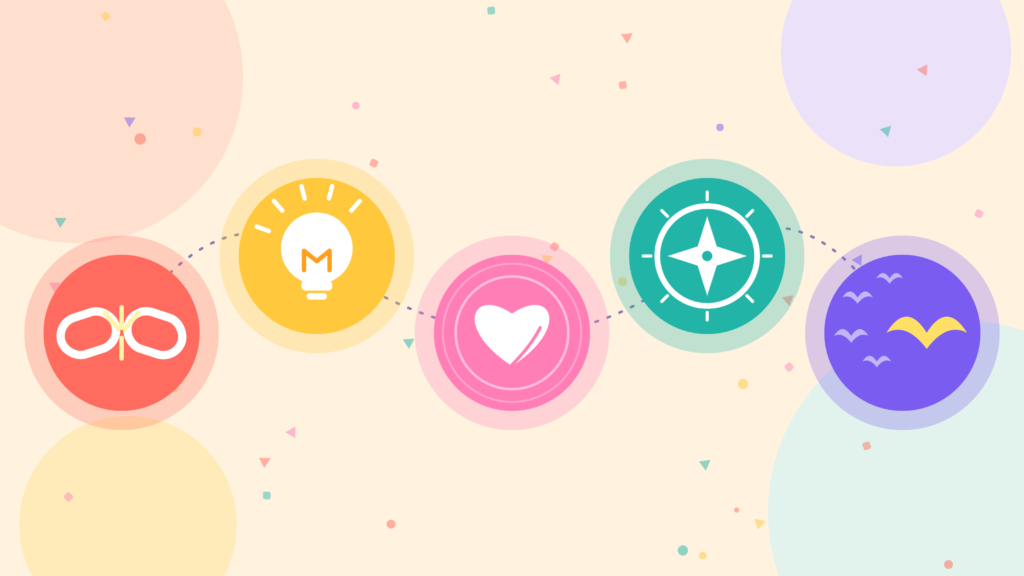
A strong reaction to authority. Indigo children are said to resist rigid rules, fear-based discipline, and hierarchies they see as disrespectful. They tend to respond to explanation and mutual respect rather than commands, and they value independence highly.
Intelligence and unconventional thinking. They are often described as creative, abstract thinkers who solve problems from unexpected angles. Some are labeled “high potential,” a term also used for gifted learners.
Deep empathy and sensitivity. Many are described as absorbing the emotions of people around them, reacting strongly to cruelty or unfairness, and feeling especially close to animals and nature. Crowded or noisy environments may drain them quickly.
A sense of purpose. A recurring feature is the feeling of having a mission, of being meant to help change something in the world, even when the child cannot yet say what.
A feeling of not belonging. Some describe feeling born on the wrong planet or into the wrong family. That sense of marginalization is one of the most consistent signs reported.
In daily life, practitioners and parents point to a familiar cluster of behaviors:
- Difficulty with conventional classrooms, sometimes leading to labels such as ADHD or behavioral problems
- Strong willpower and resistance to guilt-based parenting
- Big existential or spiritual questions asked at a surprisingly young age
- Sensitivity to people, places, and atmospheres
- A powerful sense of justice and a habit of defending those treated unfairly
- A need for solitude, sometimes called “bubble time,” to recharge
- Interest in intuition, angels, psychic experience, or other spiritual subjects
- Retreat into video games or online communication as an escape
- Passion for social, personal, or spiritual causes
- An early hunger to travel and explore
- Trouble finding a workplace that fits, and a wish to create their own work
- Discomfort with systems that seem inconsistent, and an urge to fix them
No single sign proves anything, and most people will recognize some of these in themselves without recognizing all of them. Within the tradition, the pattern matters more than any one behavior.
The Three Waves of Indigo People
Some writers divide indigo people into three waves. The dates are loose references, and different researchers give different ones. The characteristics matter more than the years.

Wave 1 (from the 1940s). These are the pioneers, often described as arriving with a strong wish to change the world and bringing radical ideas. The hippie movement is a frequently cited example. This wave is said to have a well-developed sixth chakra but weaker grounding, and its members may travel to places like India to seek teachers and healing traditions. Their common challenge is self-confidence. They are also described as the parents of later generations.
Wave 2 (from the 1960s). Often described as the children of the first wave, they carry similar ideals with better grounding, which is said to help them turn ideas into practical projects such as wellness centers, community spaces, or quiet Zen rooms inside workplaces. Their strengths are relationship-building and care for others. Their growth edge is trusting their own intuition rather than leaning on outside authorities. One caution in the literature is that a Wave 2 parent may treat a Wave 3 child as wiser than themselves, elevating the child into a “child-king” instead of parenting them.
Wave 3 (from the 1980s). These are the people most often meant when someone says “indigo children” today. They are described as strong disruptors who won’t follow advice until they have tested it personally. They are said to carry knowledge of older traditions but prefer to build their own methods. Strengths named include intuition, intellectual ability, mediumistic gifts, and the ability to see auras. Challenges include managing strong emotions, absorbing too much information from their surroundings, and a tendency to intellectualize. Their single-minded focus can also read as stubbornness or self-absorption. Some sources say they need grounding, especially through the second chakra, to build closer relationships.
Practitioners also assign each wave an approximate vibrational frequency, but these figures are traditional and experiential descriptions with no measurement behind them, and they are best read as part of the belief system rather than as data.
Evidence and Perspectives: What Science and Tradition Say

Honesty matters here, because two things are true at once.
From a scientific standpoint, the indigo children concept is classed as pseudoscience. Aura colors cannot be measured or verified, and no study has shown that a distinct group of children with special abilities exists. Researchers also point to the Barnum effect, the tendency to see ourselves in broad, flattering descriptions. Traits like “sensitive,” “creative,” and “feels different” describe a large share of the population. Child psychologists also caution that behavior described as indigo can overlap with ADHD, autism spectrum conditions, anxiety, or giftedness, and that a spiritual label should never delay a proper evaluation when a child is struggling.
At the same time, real research supports some of the underlying experiences. Psychologist Elaine Aron’s work on sensory processing sensitivity suggests that roughly 15 to 20 percent of people process stimuli more deeply and are more affected by emotional and sensory input. Studies of gifted children describe intensity, existential questioning, and a strong sense of fairness. These findings don’t validate auras or waves, but they show that many indigo traits echo real, measurable temperament differences.
Within spiritual communities, the concept is understood differently. For many people, the idea is experiential and meaningful rather than empirical. It offers language for feeling different and gives a sense of belonging and purpose. Traditions that work with chakras, auras, and energy have long treated intuition as a real faculty, and practitioners offer accounts of parents and teachers who found the framework helpful. A fair reading holds both views: the label is not scientifically established, and the experiences behind it are often real and worth taking seriously.
Astrology enters the conversation too. Some astrologers look at an indigo child birth chart for emphasis on planets like Uranus or on Aquarian themes, but there is no agreed method, and interpretations differ from one astrologer to another.
Supporting Indigo Children and Adults in Practice
Whether you view the idea literally, symbolically, or skeptically, the practical needs it describes are sound.

Offer reasons, not just rules. Children who resist authority often cooperate when they understand why. Collaborative agreements and real choices tend to work better than ultimatums.
Protect quiet time. If a child or adult needs solitude to recharge, treat it as a need rather than a problem. Regular downtime is especially helpful for highly sensitive people.
Ground the body. Tradition suggests walking in nature, leaning against a tree, or spending time barefoot outdoors to stay grounded. Many people also use lapis lazuli, the classic indigo gemstone, as a calming focus. Sodalite and iolite are sometimes used similarly. Their effects are traditional and personal, not proven, but time in nature has well-documented benefits for stress and mood.
Teach emotional skills. Sensitive, intense children benefit from learning to name feelings, set boundaries with information and media, and recover after overwhelming days. This applies especially to those who retreat into games and virtual spaces as an escape. Balance matters more than restriction.
Channel the sense of mission. Volunteering, creative projects, and causes give purpose somewhere to go. Adults who struggle with conventional jobs often thrive when they design their own work.
Seek professional input when needed. If a child struggles with attention, anxiety, or school, consult a pediatrician, psychologist, or educator. A spiritual framework can sit alongside professional care rather than replace it.
Indigo Children, Crystal Children, and Star Children: Common Misconceptions
Indigo children are often mentioned alongside related labels, which causes confusion.

Crystal children are the term some writers use for a later generation, usually described as gentle, tuned in, and less confrontational than indigos. Where indigos are cast as system-breakers, crystals are cast as peacemakers.
Star children is a broader phrase used for people believed to have a cosmic or otherworldly origin. Indigo starseed carries a similar idea, that an indigo soul incarnated from beyond Earth for a specific purpose. Beliefs about where indigos come from vary widely, and these origin stories belong to personal or spiritual tradition rather than fact.
A few misconceptions are worth clearing up. Being an indigo child does not mean being superior. Even inside the tradition, writers list ego, stubbornness, and emotional difficulty as challenges. It does not mean a child is disordered, and it does not excuse harmful behavior. It is also not a fixed identity. Some people find the framework useful for a season and later set it aside.
Final Thoughts
Indigo children remain a contested but enduring idea. Science does not confirm the aura colors or the waves, yet the human experience behind the concept, feeling sensitive, questioning, and out of step, is genuine. Held with openness and discernment, the framework can offer language, comfort, and a starting point for understanding yourself or a child you love.
For daily insights on consciousness, clarity, and trusting yourself, explore Bahlon’s free daily transmissions. Subscribe today and receive them straight to your inbox.
Related Readings:
Frequently Asked Questions
What is an indigo child?
In New Age belief, an indigo child is a person said to be born with strong intuition, high sensitivity, and an urge to challenge established systems. It is a spiritual concept, not a medical or scientific category.
Are indigo children real?
The traits are real and widely observed, including sensitivity, intensity, and a strong sense of justice. The idea that they form a distinct group with special auras or abilities is not supported by scientific evidence, though many people find it personally meaningful.
How can you tell if someone is an indigo person?
Believers point to a cluster of signs: resistance to authority, deep empathy, a sense of mission, a feeling of not fitting in, and strong intuition. No test confirms it, and recognizing yourself in the description is a personal judgment.
Is an indigo child the same as ADHD or giftedness?
No. Some behaviors overlap, which is why professional evaluation is important when a child is struggling. The spiritual label and clinical assessment answer different questions.
What is the difference between indigo and crystal children?
ndigo children are described as disruptors who push against old systems. Crystal children are described as gentler, more harmonizing souls, often said to be a later generation.