An old soul is a person who seems to carry a depth of maturity, insight, and emotional wisdom well beyond their years. In spiritual traditions, the phrase points to a soul believed to have lived many lifetimes and gathered wisdom along the way. In everyday and psychological usage, it describes a reflective, empathic, meaning-seeking personality, whatever one believes about reincarnation.
What Is an Old Soul? The Core Definition
The old soul definition has two layers, and it helps to hold both at once.
The first is spiritual. Many traditions teach that the body is a vessel and the soul is what persists. Hinduism, Buddhism, and a number of esoteric and indigenous systems describe the soul moving through repeated lives and accumulating experience. Within that framework, an old soul is simply one with many lifetimes behind it, which would explain a calm, discerning presence in a young person.
The second is descriptive. People often use the phrase as shorthand for a recognizable personality pattern: thoughtful, sensitive, self-aware, and more interested in substance than surface. Used this way, it makes no claim about past lives. It names something people notice in each other, the child who listens more than talks or the twenty-five-year-old who gives advice that sounds like it came from someone twice their age.

Neither reading cancels the other. Someone can find the reincarnation framework meaningful, someone else can treat the idea as a metaphor, and both can recognize the same person in the same way. That shared recognition is why the old soul meaning has lasted so long.
Old Soul Meaning: Beyond Age and Aesthetics
A common misunderstanding is that being an old soul is about taste. Vintage records, antique shops, and a fondness for handwritten letters are often attached to the idea, and they can go along with it. But they are not the core of it.
What defines an old soul is depth. It shows in how a person processes experience, weighs what matters, and relates to other people. An old soul often has little appetite for status symbols or passing trends and gravitates toward authenticity, wisdom, and meaningful experience. Someone who dresses in tweed and cares only about appearances is not an old soul in any meaningful sense. Someone in jeans who quietly notices what everyone in the room is feeling might be.
It is also worth saying that old souls do not all look alike. They can be introverted or outgoing, and their interests vary widely. Not everyone who identifies with the label will recognize every trait, and that is entirely normal.
Signs of an Old Soul: 12 Common Traits
The following old soul personality traits come up repeatedly in spiritual writing and in how people describe themselves. Treat them as a pattern of resemblance rather than a diagnostic checklist.

1. A sense of not quite fitting in as a child. Many old souls recall feeling different from peers early on. They may have preferred their own ideas, avoided gossip and social drama, and judged people by character rather than popularity. Some were quiet or daydreamy, less because they were shy than because small talk held little interest.
2. A preference for deep conversation. Philosophy, spirituality, art, science, human behavior, and the meaning behind events tend to energize them. Small talk is not necessarily a problem, but an evening of only surface chatter can feel oddly draining.
3. A calm temperament. Old souls often stay steady when others become alarmed. They tend to observe before reacting, which can occasionally be misread as indifference. Usually it is a sense of proportion about what deserves a strong response.
4. A habit of seeing the bigger picture. They tend to think about long-term consequences, direction, and how things could be improved, which can make them natural strategists and creative problem-solvers.
5. A real enjoyment of solitude. Time alone is where they reflect, write, meditate, create, or walk in nature. This does not mean they dislike people. Most simply want a balance between quiet and connection with people who share their values.
6. A minimalist streak. Because they see material things as temporary, many old souls buy carefully and value experiences and memories over objects. Sentimental items, such as a gift or an heirloom, may still matter deeply for the story they carry.
7. A creative or intuitive way of working. Music, writing, painting, cooking, and other forms of expression often appeal to them. They may prefer to experiment rather than follow instructions to the letter.
8. A search for soul-level connection. Old souls tend to value relationships where they do not have to perform. Silence feels comfortable, conversation flows, and the bond survives distance. Some spiritual traditions describe such people as belonging to the same “soul family.”
9. An independent streak. They often follow their own path, listen to intuition, take responsibility for their choices, and question authority or convention. This can make them look rebellious, though it usually comes from a desire to live authentically.
10. Strong empathy and compassion. Many find it easy to sense what others are feeling and to look past appearances to character. That sensitivity often extends to animals and the natural world.
11. A lifelong appetite for learning. Personal development, philosophy, mental health, spirituality, and human behavior are common interests. Mistakes and setbacks tend to be treated as material to learn from.
12. A persistent sense of purpose. Many describe a quiet conviction that their life is meant for something, even when they cannot yet name it. Many also say that purpose unfolds gradually and that patience is part of the process.
Two further signs come up mostly in spiritual interpretations. One is a feeling of deep familiarity with certain places, cultures, or historical eras. The other is unexplained fears that seem to have no origin in a person’s own life. In reincarnation-based frameworks, both are read as echoes of earlier lifetimes. Others would explain them through imagination, early exposure, or memory. The experiences themselves are real to the people who have them, and their interpretation is a matter of belief.
The Spiritual View: Reincarnation, Soul Growth, and Purpose

From a spiritual perspective, an old soul has moved through many lives, and what it carries forward is wisdom, intuition, relationships, and sometimes unresolved fears. Ideas commonly attached to this view include soul growth, life purpose, soul connections, and spiritual awakening.
Some systems go further and speak of soul age or soul maturity, a framework in which souls progress through stages of experience. Concepts like this vary widely between traditions and modern spiritual teachers, and they are experiential and interpretive rather than something that can be tested. Readers who find them meaningful can treat them as a lens for reflection.
There is one body of research that engages reincarnation claims directly. The psychiatrist Ian Stevenson at the University of Virginia spent decades documenting accounts of children who described what they took to be previous lives. His work drew both serious interest and serious criticism, and it has not been accepted by mainstream science as proof of reincarnation. What can be said honestly is that the question remains open for some and settled for others, depending on worldview.
The Psychological View: What Research Suggests
Psychology does not recognize “old soul” as a clinical or scientific category, but several established areas of research overlap with the traits people describe.
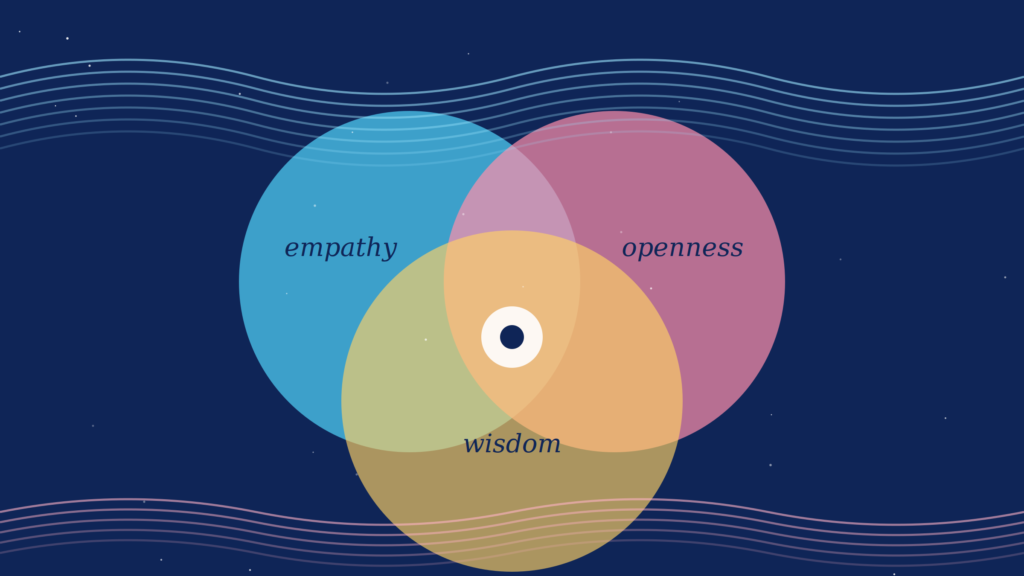
Sensitivity and empathy. Psychologist Elaine Aron’s research on sensory processing sensitivity, often called high sensitivity, describes a trait in which people process stimuli and emotion more deeply. It is estimated to apply to roughly one in five people. Many descriptions of old soul traits, such as depth of reflection, empathy, and preference for calm, resemble it closely.
Openness to experience. In the Big Five model of personality, openness reflects curiosity, imagination, and appreciation of ideas and beauty. High openness fits the old soul’s love of learning, creativity, and philosophical conversation.
Wisdom as a measurable quality. Researchers such as Igor Grossmann have studied wise reasoning, including humility about one’s knowledge, openness to other perspectives, and awareness that circumstances change. Their work suggests that wisdom is a set of learnable habits of thought rather than a simple product of age, which helps explain why some young people seem wise and some older people do not.
Emotional regulation. Laura Carstensen’s socioemotional selectivity theory finds that people tend to prioritize meaningful relationships and emotional satisfaction more as they become aware of time’s limits. An old soul may simply have that orientation earlier in life, perhaps because of temperament or early experiences, including a childhood spent as a thoughtful observer.
A caution about self-recognition. Descriptions of personality types are often broad enough that almost anyone can see themselves in them, a tendency psychologists call the Barnum or Forer effect. That does not make the old soul concept meaningless. It does mean that resonance alone is not proof, and that the most useful approach is to notice which traits honestly fit you.
Seen together, psychology can account for much of what people describe without contradicting spiritual readings. It offers a vocabulary for the patterns, while spiritual traditions offer a story about where they come from.
Are Old Souls Real? Common Questions and Misconceptions

“Are old souls real?” depends on what is being asked. If the question is whether people with this cluster of traits exist, the answer is clearly yes. If it means whether those people carry the memories or wisdom of previous lives, that is a matter of belief and experience that science can neither confirm nor rule out.
A few misconceptions are worth clearing up:
- Being an old soul means being superior. It does not. Depth is not a hierarchy, and a “young soul” in some spiritual systems is simply someone with a different kind of learning ahead of them.
- Old souls are always serious or sad. Many are playful and funny. Their depth coexists with lightness.
- They dislike modern life. Most old souls use technology and appreciate what it offers. They are simply selective about how much of it they let shape their attention.
- The label explains everything. Loneliness, anxiety, or difficulty in relationships deserve real attention and are not just signs of an ancient soul. If those feelings are heavy or persistent, speaking with a qualified professional is worthwhile.
Living as an Old Soul: Practical Ways to Thrive
Whether the label feels literal or metaphorical, a few practices tend to help people with this temperament.

Protect your solitude. Reflection is how old souls process the world, so schedule quiet time the way you would any important commitment.
Seek depth on purpose. Find the friend, mentor, community, or book group where conversation goes somewhere. You do not have to give up small talk, but you should not live on it alone.
Trust your intuition, and test it. Old souls often lean on inner knowing. Pair it with reasoning and practical feedback, and notice over time when your instincts were right.
Channel your creativity. Writing, music, art, or cooking give reflection a shape and keep it from becoming rumination.
Be patient with purpose. A sense of meaning tends to clarify through action. Take the next honest step rather than waiting for a complete picture.
Stay grounded in the present. Being wise beyond your years does not exempt you from ordinary life. Relationships, health, and everyday joys are where wisdom actually gets practiced.
For more on cultivating this kind of inner steadiness, see our pieces on trusting your intuition, understanding empathy and sensitivity, and the practice of meditation for clarity.
For daily insights on consciousness, clarity, and trusting yourself, explore Bahlon’s free daily transmissions. Subscribe here.
Related Readings:
- Intuition Guide: Everything You Need to Know
- Empathy in the Digital Age: Maintaining Genuine Human Connections
- Meditation Guide for Beginners: How to Start, Step by Step
Frequently Asked Questions
What does it mean to have an old soul?
It means showing a maturity, reflectiveness, and emotional depth that feels beyond your age. Spiritually, it suggests a soul with many lifetimes of experience. Psychologically, it describes a personality marked by empathy, introspection, and a desire for meaning.
What are the main signs of an old soul?
Common signs include feeling different as a child, preferring deep conversation, enjoying solitude, staying calm under pressure, valuing experiences over possessions, feeling strong empathy, and sensing a life purpose. No one has every trait.
Can a young person be an old soul?
Yes. The phrase is most often used precisely for young people, children and young adults, who seem wise or emotionally mature for their age.
Is being an old soul the same as being introverted?
No. Many old souls are introverted, but some are outgoing. The defining quality is depth and reflection, not social energy.
Is there scientific proof that old souls exist?
There is no scientific evidence that souls have ages or past lives. Research on traits such as sensitivity, openness, and wisdom overlaps with how people describe old souls, and the spiritual interpretation remains a matter of personal belief.