Learning how to forgive someone who hurt you starts with understanding what forgiveness actually is, and just as importantly, what it isn’t… That distinction matters more than almost anything else in this process. Most people stay stuck not because they lack willpower, but because they think forgiving someone means excusing them.
That distinction matters more than almost anything else in this process. Most people trying to figure out how to forgive someone who hurt you get stuck at the same point: they think forgiving someone means excusing them. It doesn’t. You can forgive fully and still never speak to that person again. You can release resentment and still hold firm boundaries. The two are not in conflict, they’re actually partners.
What Forgiveness Really Means
At its core, forgiveness is the conscious decision to stop letting a past injury dictate your present emotional state. Psychologists who study this, including researchers at institutions like the Greater Good Science Center at UC Berkeley, generally define it as a voluntary shift in feeling toward an offender, away from vengeance and negativity and toward something closer to neutrality or goodwill. It’s an internal transformation, not necessarily an external act of reconciliation.
Spiritually, many traditions frame it differently but arrive at a similar destination. In Christian teaching, forgiveness is often tied to grace, the idea that because you have been forgiven, you’re called to extend the same mercy outward. In Buddhist thought, holding onto resentment is compared to grasping a hot coal with the intent of throwing it at someone else; you’re the one who gets burned. Wayne Dyer, whose writing on forgiveness has influenced a generation of readers exploring practical spirituality, described unresolved anger and hatred as thoughts that occupy space in the mind and block a person’s access to peace.
None of these frameworks require you to believe the other person deserves forgiveness. They simply agree that you deserve freedom from what happened.
How Forgiveness Actually Works (The Mechanics Behind It)
Forgiveness isn’t a single event you flip on like a switch. It tends to move in stages, even when those stages aren’t obvious while you’re living through them.
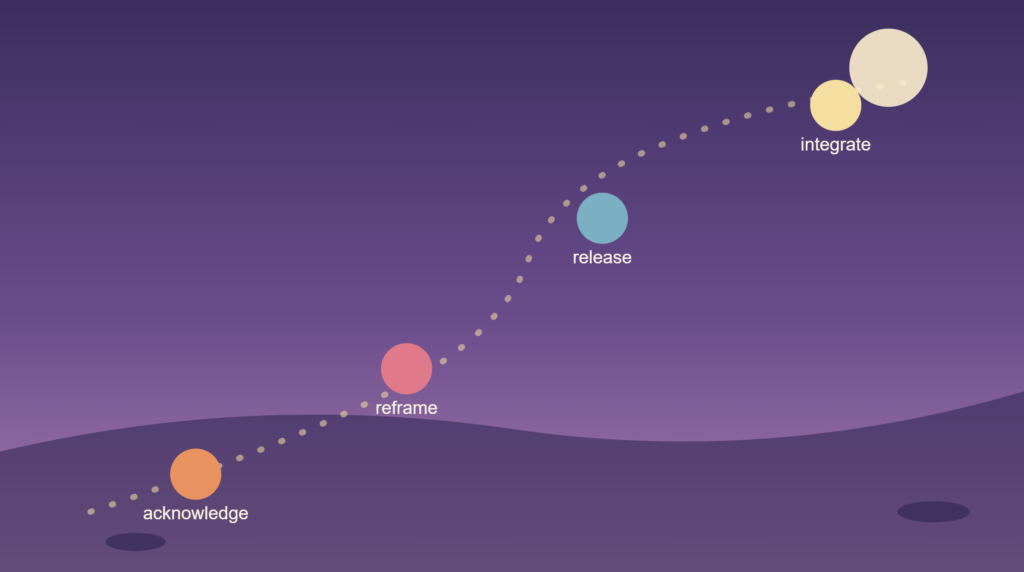
First comes acknowledgment. You have to actually feel the anger, grief, or betrayal rather than bypass it. Suppressing pain doesn’t make it disappear, it just buries it somewhere it will resurface later, often in unrelated relationships or in physical tension.
Second comes reframing. This is where you start to separate the person from the act, and sometimes separate your identity from the wound itself. Instead of “I am someone who was betrayed,” the internal language shifts toward “something painful happened to me, and I get to decide what it means going forward.” This is close to what Dyer described as understanding your own emotional response rather than fixating on controlling or explaining the other person’s behavior.
Third comes release, which is the part most people associate with forgiveness itself; letting go of the need for the other person to suffer, apologize, or understand what they did. Many spiritual traditions describe this as surrendering the outcome to something larger than yourself, whether that’s God, the universe, karma, or simply time.
And fourth, often overlooked, comes integration: carrying the lesson forward without carrying the wound. This is the difference between someone who has forgiven and moved on, and someone who says the words “I forgive you” while still replaying the offense every night.
What Research and Tradition Both Say About Forgiveness
The scientific literature on forgiveness has grown substantially over the past two decades, and it’s worth being honest about what it does and doesn’t show.
Studies published in journals such as the Journal of Behavioral Medicine have linked forgiveness to lower levels of anxiety, depression, and hostility, along with better cardiovascular markers in some populations. Researchers like Dr. Frederic Luskin at Stanford, who has spent years studying forgiveness interventions, found that people who completed structured forgiveness training reported measurable drops in anger and stress, along with an increased sense of optimism. It’s worth noting these are correlational and intervention-based findings, not universal guarantees, and results vary by individual and context.
What the research generally does not support is the idea that forgiveness requires reconciliation or contact with the person who caused harm. That part is left to the individual, and it’s here that spiritual and practical guidance diverge slightly. Practical, therapeutic approaches to forgiving someone who hurt you emotionally tend to emphasize personal boundaries and emotional regulation techniques. Spiritual approaches often emphasize surrender, prayer, or a felt connection to something greater than the self. Practitioners across both camps generally agree on one point: forgiveness benefits the forgiver first, regardless of whether the other person ever knows about it or changes at all.
It’s also fair to say that some of this remains experiential rather than clinically proven. Claims about forgiveness “healing the body” at a cellular level, for instance, are often anecdotal or drawn from small studies, and should be treated as promising rather than definitive.
Practical Steps for How to Forgive Someone Who Hurt You
Understanding forgiveness intellectually and actually doing it are two different exercises. Here’s a grounded, step-by-step approach that draws from both therapeutic practice and contemplative tradition.
Let yourself feel the full weight of it first. Before you can release anger, you have to admit it’s there. Skipping this step is one of the most common reasons people who hurt you in a relationship or otherwise remain stuck years later; they tried to “forgive” before they ever actually grieved.
Change the story you’re telling yourself. Notice how many times a day you replay the incident. Each replay reinforces the neural and emotional groove. Instead, practice narrating the event in the past tense, as something that happened rather than something that is still happening to you.
Separate forgiveness from reconciliation. You do not owe anyone renewed access to your life. Setting a firm boundary, limiting contact, or ending a relationship entirely is completely compatible with having forgiven someone. In fact, clear boundaries often make forgiveness more sustainable, because you’re no longer relying on willpower to protect your peace.
Use a symbolic release. Many therapists and spiritual teachers recommend a physical act that mirrors the internal one: writing a letter you never send, then burning or tearing it; saying the words out loud in private; performing a small ritual that marks the moment you’re choosing to stop carrying the weight.
Reconnect to something larger than the grievance. Whether that’s prayer, meditation, time in nature, or simply a quiet walk, stepping outside the narrow lens of the conflict tends to restore perspective. Dyer’s own suggestion, borrowed loosely from the Prayer of St. Francis, was to consciously try to become “an instrument of peace” in the moments right after a hurt, rather than an instrument of retaliation.
Practice it before sleep. Unresolved anger tends to get replayed right before bed, which reinforces it in the subconscious mind overnight. A simple nightly practice of repeating calming, self-affirming statements such as “I am at peace” or “I am free” can interrupt that cycle over time.
Give yourself permission to end the day on love, even imperfectly. You won’t get this right every night. The goal isn’t perfection, it’s a repeated intention: something closer to consistency than mastery.
Common Misconceptions About Forgiveness
Common Misconceptions About How to Forgive Someone Who Hurt You
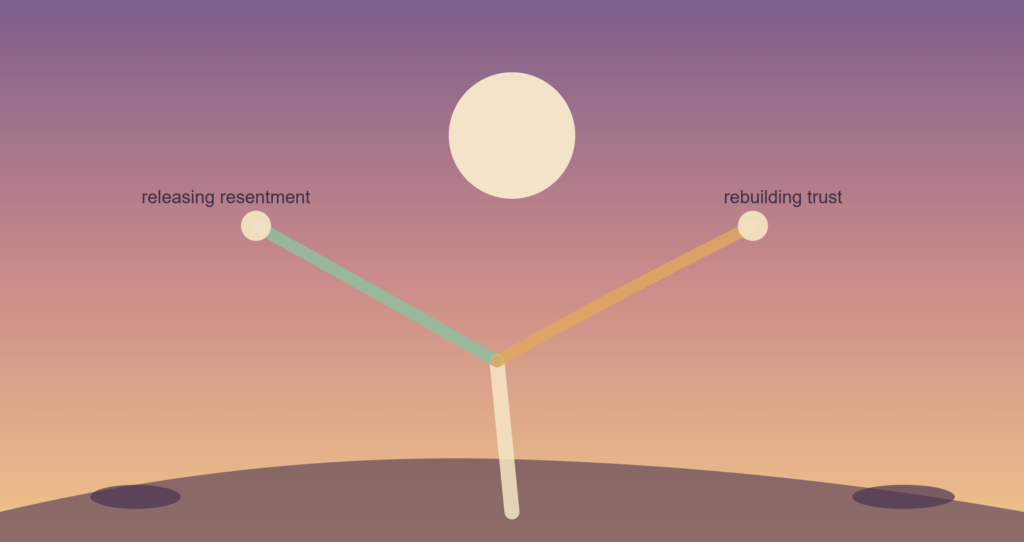
The first is that forgiveness means the relationship goes back to normal. It doesn’t have to. You can forgive someone and still choose distance, and for cases involving abuse or repeated betrayal, distance is often the healthiest outcome.
The second is that forgiveness has to happen all at once, in a single dramatic breakthrough. In reality, most people forgive in layers. You might forgive the same event several times over months or years, each time releasing a little more.
The third misconception is that forgiveness requires the other person’s apology or even their awareness. It doesn’t. Many people successfully forgive someone who has died, who has disappeared from their life, or who has never acknowledged any wrongdoing at all.
Finally, there’s a belief that if you still feel a flicker of anger occasionally, you haven’t really forgiven. That’s not quite accurate either. Old wounds can resurface briefly, especially around anniversaries or reminders, without meaning the work hasn’t held. Forgiveness reduces the emotional charge over time; it doesn’t necessarily erase memory or every trace of feeling.
Learning how to forgive someone who hurt you isn’t about forgetting what happened. It’s about deciding the memory no longer gets to run your life.
For daily insights on consciousness, clarity, and trusting yourself, explore Bahlon’s free daily transmissions. Subscribe here.
- Radical Acceptance: What It Means and How to Practice It
- What Does It Mean to Surrender Spiritually?
- How to Surrender to the Universe (and Why It’s So Hard)
Frequently Asked Questions
How do I forgive someone who hurt me if they’re not sorry?
You can. Forgiveness is an internal process that doesn’t depend on the other person’s remorse, awareness, or even presence. Many people find it easier, in fact, once they stop waiting for an apology that may never come.
Is forgiving someone who hurt you the same as forgetting what happened?
No. Forgetting isn’t required, and in many cases isn’t even healthy, since the memory can serve as useful information about boundaries going forward. Forgiveness changes your relationship to the memory, not the memory itself.
How long does it typically take to forgive someone who hurt you emotionally?
There’s no fixed timeline. Some people move through it in weeks, others in years, and it often depends on the depth of the betrayal and whether ongoing contact with the person is unavoidable. Progress is usually gradual rather than sudden.
Can you forgive someone without telling them?
Yes. Forgiveness is primarily an internal shift. Communicating it to the other person can be meaningful, but it isn’t a requirement for the process to be complete or valid.
What if I keep trying to forgive and the anger keeps coming back?
That’s common, and it doesn’t mean you’ve failed. Forgiveness tends to happen in layers rather than a single decision. Each time the anger resurfaces, treat it as another opportunity to practice release rather than evidence that the earlier work didn’t count.