An energy vampire is a person who leaves you feeling emotionally and mentally drained after almost every interaction, whether they mean to or not. You might walk away from a conversation with one feeling exhausted, anxious, irritable, or strangely responsible for problems that were never yours to solve. The pattern isn’t about one bad day or one difficult conversation. It’s a consistent, repeating dynamic that chips away at your energy over time.
The term has become part of everyday language, showing up in therapy sessions, group chats, and pop culture alike (the mockumentary vampires of What We Do in the Shadows even turned the concept into a literal, energy-sucking character for laughs). But behind the meme-worthy label is a genuinely useful psychological concept, one worth understanding in depth if you’ve ever left a coffee date wondering why you feel worse than when you arrived.
What Is an Energy Vampire, Exactly?
At its core, the energy vampire meaning describes someone whose presence consistently depletes the people around them, usually through emotional demands, negativity, or a persistent lack of give-and-take. This isn’t a clinical diagnosis. You won’t find “energy vampire” in the DSM-5. It’s a descriptive term, a shorthand that mental health professionals and everyday people use to talk about a real and recognizable pattern of behavior.
Some people use “emotional vampire” or “psychic vampire” interchangeably with energy vampire, and in casual conversation, that’s generally fine. There are subtle distinctions in more esoteric or spiritual frameworks (more on that shortly), but for most practical purposes, they’re describing the same experience: someone who takes more emotional energy than they give.
It’s important to say clearly that most energy vampires aren’t villains. Very few people wake up intending to drain the people who care about them. The behavior often stems from unmet needs, unresolved pain, or coping strategies formed long before you ever met them. Understanding this doesn’t obligate you to tolerate the behavior, but it does help explain why it happens.
How Energy Vampires Operate
The mechanics behind energy-draining behavior usually come down to an imbalance: one person consistently takes emotional labor, attention, and support, while giving very little back. Over time, this imbalance shows up in recognizable patterns.
They may not seem draining at first. Many energy vampires come across as warm, engaging, or even magnetic in early interactions. They might quickly share a story about bad luck or personal struggle, which can create fast intimacy and a sense of being “chosen” as a confidant. It’s often only after repeated exposure that the pattern becomes clear.
The drain shows up in how you feel, not just what they say. You might notice you feel overstimulated, apathetic, fatigued, stressed, or irritable after time with them, even if nothing overtly dramatic happened. That gut-level, cumulative fatigue is often the clearest signal available.
Common behaviors associated with energy vampires include:
- Constant complaining about work, relationships, or life, without any real interest in solutions
- Self-focused conversation, where your experiences rarely get airtime
- Demanding constant attention and expecting you to be available on their schedule
- Ongoing drama, where minor problems get inflated into crises
- Gossip and conflict creation, sometimes to feel more central or important
- A victim mentality, with little accountability for their own choices
- Chronic pessimism that colors every conversation
- Jealousy toward your successes or relationships
- Neediness that puts the emotional burden on you
- Lack of reciprocity, where support flows one direction only
- Guilt-based pressure to get you to comply with their wishes
- Taking without noticing, often with genuine unawareness of how it affects others
In group settings, the effect can be even more visible. Conversations may go quiet when an energy vampire joins, humor tends to disappear, and the mood shifts toward something heavier. You might notice people quietly stepping away from the conversation, uncomfortable personal questions being asked in front of the group, or one person dominating and steering every topic back to themselves. Even easygoing people can become short-tempered or sarcastic in that kind of environment, which is itself a telling sign.
Energy Vampires vs. Trauma Dumping: An Important Distinction

Not every emotionally heavy conversation means you’re dealing with an energy vampire, and conflating the two can do real harm to people who are simply struggling and need support.
Trauma dumping typically centers on one specific painful experience, often shared somewhat impulsively, and it frequently reflects someone who needs (even if they can’t articulate it) genuine support in a difficult moment. It isn’t usually accompanied by the broader pattern of manipulation, neediness, or lack of reciprocity that defines energy-vampire dynamics.
Energy-draining behavior, by contrast, tends to be ongoing rather than situational. The drama repeats, gets exaggerated, and rarely moves toward resolution, sometimes because the attention itself, rather than the problem-solving, seems to be the point. Someone engaging in this pattern may also have a trauma history, but the key difference lies in the orientation toward solutions versus the orientation toward sustained attention.
This distinction matters because it protects you from writing off someone who genuinely needs compassion in a hard moment, while still giving you language for the pattern that’s actually harmful when it repeats.
Who Tends to Drain Energy, and Why
There’s no single personality type behind energy-draining behavior. Several overlapping factors can contribute, and understanding them can bring a surprising amount of compassion into a frustrating situation.
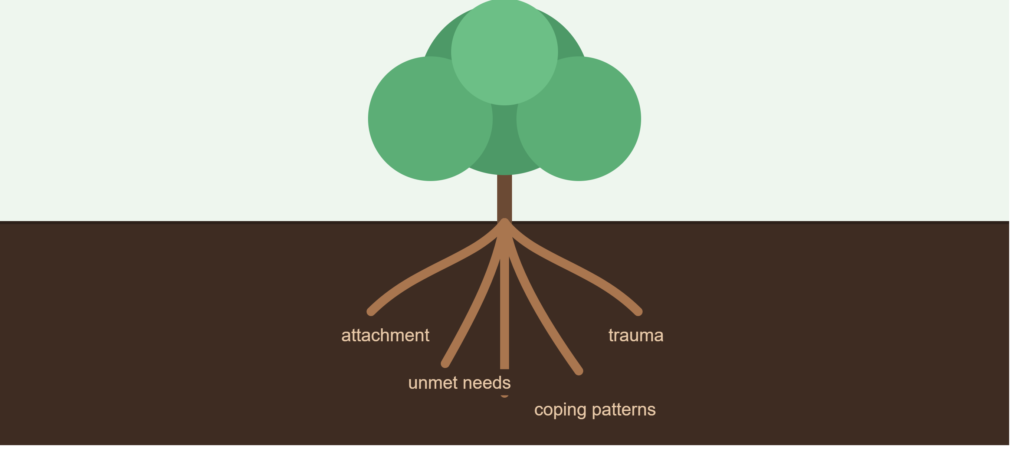
Codependency. People with codependent tendencies often struggle with self-sufficiency and lean heavily on others to meet emotional needs that they haven’t learned to meet themselves.
Attachment styles. Insecure, anxious, or avoidant attachment patterns, often formed in childhood, can shape adult relationships in ways that lead to energy-draining dynamics, even when the person has no awareness of the connection.
Mental health conditions. Depression and anxiety can contribute to withdrawal, neediness, or negativity that wears on the people nearby. Conditions involving psychosis or mania, including some presentations of bipolar disorder, can also involve attention-seeking behavior tied to the condition itself rather than any intentional harm.
Personality disorders. Certain personality disorders, including narcissistic, histrionic, and borderline personality disorder, are associated with difficulty respecting others’ emotional boundaries. This is a clinical reality worth naming honestly, though it’s not a label to apply casually to anyone who’s simply having a rough season.
Unresolved trauma. A history of unaddressed trauma, abuse, or neglect can manifest as ongoing chaos or toxicity in relationships, often as a survival pattern rather than a deliberate choice.
None of this is offered as an excuse. It’s offered as context, because recognizing the “why” behind draining behavior often makes it easier to set boundaries without guilt, and easier to protect your own energy without needing to villainize the other person.
Why Empaths Are Especially Vulnerable
An empath is someone with an unusually high sensitivity to other people’s emotions, often paired with a strong instinct to help. That combination, compassion plus sensitivity, can make empaths particularly susceptible to psychic vampire dynamics, because their natural generosity is exactly what energy-draining people are drawn to.
The important distinction here isn’t about who deserves help. It’s about the difference between people who receive support and genuinely use it to grow, and people who absorb that same support without any real movement toward change. Recognizing which category someone falls into can save an empath from years of one-sided emotional labor.
It’s also worth noting that your own mental state affects your vulnerability. Periods of depression, grief, or anxiety can weaken your ability to hold firm boundaries, which makes it easier for an energy-draining relationship to take root or intensify during an already difficult time.
Different Perspectives: Psychological and Spiritual Views
Psychology tends to frame the energy vampire concept through the lens of emotional labor, attachment theory, and personality patterns, as described above. This is the evidence-backed lens, grounded in decades of research on codependency, attachment, and interpersonal dynamics.
Alongside that, many spiritual and energetic traditions describe a related but distinct idea: psychic vampirism, or vampiric power, the notion that some people draw literal energetic or spiritual force from others, sometimes unconsciously. In these traditions, spiritual vampires or “psi vampires” are described as feeding on subtle energy rather than simply demanding emotional attention. This framework isn’t something mainstream science currently measures or validates, and it’s fair to say so honestly. At the same time, it holds real meaning for people who practice within energy-based or spiritual traditions, and many describe genuinely feeling drained in ways that align with these frameworks. Both the psychological and spiritual lenses point toward the same practical guidance: notice the pattern, protect your energy, and set boundaries accordingly.
How to Protect Yourself From Energy Vampires
Once you’ve identified energy-draining behavior in someone, you have real, practical options. None of them require you to diagnose the other person or confront them dramatically.
Set clear boundaries. Decide in advance what you will and won’t tolerate, and communicate your availability instead of letting the other person dictate it. Boundaries only work when they’re maintained consistently, so this is less a one-time conversation and more an ongoing practice.
Limit your exposure. You don’t need to cut someone off entirely to protect your energy. Skipping optional outings, shortening visits, and reducing unnecessary contact can meaningfully lighten the load.
Use assertive communication. If someone repeatedly hijacks a conversation, a simple redirect like “let’s circle back to what I was saying” keeps things respectful without becoming confrontational.
Ask for space. When you can’t avoid the person entirely, being kind but direct about needing personal space is a reasonable and often necessary request.
Try the gray rock method. Responding with short, neutral, factual answers, rather than emotional engagement, can reduce the amount of attention and energy a draining interaction receives, which often naturally de-escalates it.
Practice saying no. This is especially hard for people-pleasers, but “no” is itself a complete boundary. You’re not obligated to fix someone else’s problems or attend every event you’re invited to. If guilt shows up afterward, that discomfort can actually reinforce why the boundary mattered in the first place.
Adjust your expectations. You cannot change another person, no matter how much insight or support you offer. Shifting your focus from “fixing” them to maintaining your own boundaries is often the most sustainable long-term strategy.
For daily insights on consciousness, clarity, and trusting yourself, explore Bahlon’s free daily transmissions. Subscribe here to start receiving them.
Related Readings:
- What Are the Akashic Records and How Do You Access Them?
- Aura Colors and Their Meanings: A Complete Guide
- What Is Energy Healing? Types and Benefits
Frequently Asked Questions
What is the difference between an energy vampire and someone just going through a hard time?
A hard time is usually temporary and often involves the person actively seeking solutions. Energy-draining behavior tends to be a repeating pattern, without much movement toward resolution, and often without much reciprocity either.
Is “energy vampire” a real psychological term?
No, it’s not a clinical diagnosis, but it’s a widely used descriptive term for a real and researched pattern of one-sided, emotionally taxing relationships.
Can an energy vampire change?
Sometimes, especially if the underlying cause (like an attachment wound or an unaddressed mental health condition) is acknowledged and worked through, often with professional support. Change isn’t guaranteed, though, and it isn’t something you can force.
Are empaths more likely to attract energy vampires?
Empaths’ heightened sensitivity and instinct to help can make them more susceptible to one-sided emotional dynamics, particularly when their own boundaries are weakened by stress, grief, or anxiety.
Is psychic vampirism scientifically proven?
Mainstream science hasn’t measured the energetic or spiritual version of this concept, though the psychological pattern of emotional draining is well documented. Many people find the spiritual framework meaningful even without scientific validation, and both perspectives point to similar protective strategies.