A kundalini awakening is the rising of a dormant spiritual energy, traditionally believed to rest coiled at the base of the spine, as it moves upward through the body’s energy centers and into the crown of the head. In yogic and tantric philosophy, this energy is described as the source of consciousness itself, and its activation is said to bring profound shifts in perception, identity, and inner experience. For those who go through it, the process is often remembered as one of the defining turning points of their life.
That is the short answer. The longer one requires some unpacking, because kundalini is a concept that sits at the intersection of ancient contemplative science, modern psychology, and deeply personal experience, and it deserves to be treated with all three lenses in mind.
What Is Kundalini Awakening?

The word “kundalini” comes from Sanskrit and is generally translated as “coiled one,” an image drawn from the picture of a serpent resting in three and a half coils at the base of the spine. This is the traditional root of the kundalini meaning found across centuries of yogic and tantric texts. In these frameworks, kundalini energy is not merely metaphorical. It is described as a real, if subtle, force that exists within every person, usually dormant, waiting to be activated through practice, grace, or circumstance.
When this energy is said to awaken, it begins to travel through a central channel of the subtle body (called the sushumna nadi) and pass through seven major energy centers, or chakras, that run from the base of the spine to the top of the head. Each chakra is associated with a different aspect of human experience, from survival and security at the base, to intuition and higher awareness near the crown. (For a deeper look at how these centers work individually, see this guide to the chakra system.) As kundalini energy moves through and clears these centers, practitioners describe an expansion of consciousness that can touch every part of life: how a person thinks, feels, relates to others, and understands their place in the world.
It is worth being precise about what a kundalini awakening is not. It is not a single, universal event that looks the same for everyone. It is not exclusively physical, nor exclusively psychological. And according to most traditional teachings, it is not something that can be manufactured or forced on demand. It is described as a process, sometimes slow and subtle, sometimes sudden and overwhelming, that unfolds according to a timeline the traditions say cannot be fully controlled.
How Kundalini Energy Works: The Chakras and the Rising Process

To understand how kundalini awakening is believed to function, it helps to understand the chakra system it moves through. The seven chakras, according to yogic anatomy, are energetic centers positioned along the spine: root, sacral, solar plexus, heart, throat, third eye, and crown. Each is thought to govern specific physical, emotional, and mental functions, and each can be relatively open or relatively blocked depending on a person’s life experience, habits, and inner state.
In the traditional model, dormant energy at the base of the spine begins to rise when conditions allow it to, whether through sustained practice or an unplanned trigger. As it ascends, it is said to encounter blockages, often described as accumulated tension, unresolved emotion, or limiting patterns of thought held in the body. The process of kundalini rising, in this view, is as much about releasing what is in the way as it is about generating new energy. This is one reason practitioners so often describe emotional release, old memories surfacing, or sudden clarity about long-standing patterns as part of the experience.
Modern interpreters, including some psychologists and researchers interested in altered states of consciousness, have offered parallel explanations. Some frame kundalini experiences through the lens of the autonomic nervous system, suggesting that intense meditation, breathwork, or emotional upheaval can trigger physiological states that produce sensations of heat, energy movement, or emotional flooding. Others approach it as a culturally specific framework for making sense of powerful, otherwise disorienting shifts in consciousness. Both readings deserve respect. The traditional and the modern do not have to compete for a single correct interpretation; they can be understood as two different vocabularies describing an experience that remains, at its core, deeply personal.
Signs and Symptoms of a Kundalini Awakening
Because kundalini awakening symptoms vary so widely from person to person, no single checklist can capture the full range of what someone might experience. That said, certain patterns appear frequently enough across accounts, both ancient and contemporary, to be worth outlining.
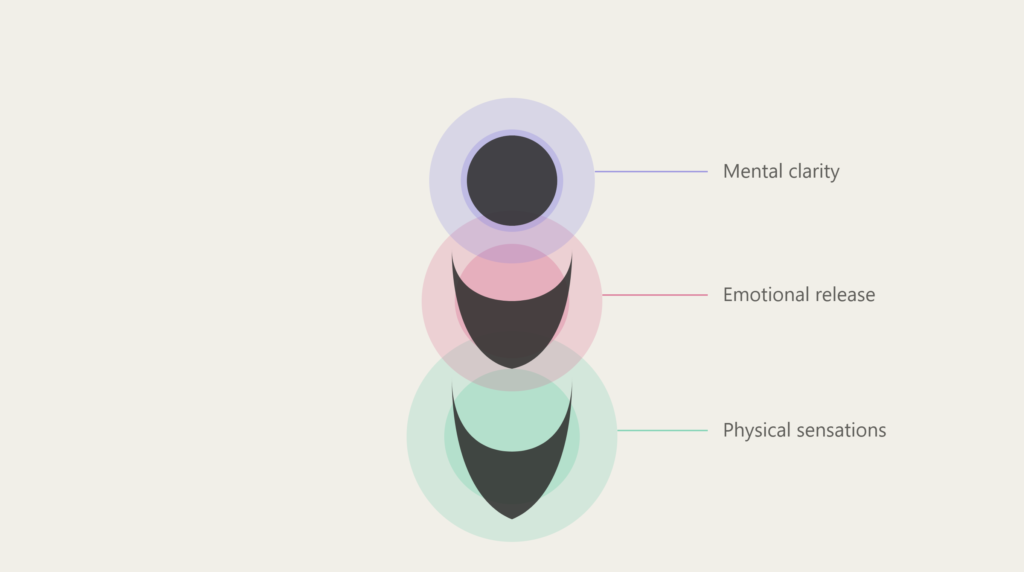
Physical sensations commonly reported include heat, tingling, or a buzzing quality moving along the spine; spontaneous shaking or muscle twitching; disrupted sleep; sudden waves of energy followed by fatigue; and occasional dizziness or light-headedness. These sensations are often described as moving in a fairly specific path, tracing the spine upward, which is part of why they are so often linked back to the traditional chakra model.
Emotional symptoms can be just as varied. Some people describe intense joy, peace, or a sense of bliss that arrives without an obvious external cause. Others experience sudden sadness, fear, or anxiety, sometimes tied to the release of emotional material that had been suppressed for years. A recurring theme in many accounts is an increase in compassion and empathy, both for oneself and for others, as though old emotional armor has softened.
Mental and spiritual shifts round out the picture. These often include heightened intuition, a stronger sense of purpose, a pull toward changing one’s life direction, increased creativity, and a felt sense of connection to something larger than the individual self. Many describe an improved capacity for self-awareness, as though they are observing their own thoughts and reactions with more clarity than before.
It is important to state plainly that not everyone who meditates, practices yoga, or goes through an intense life period will experience anything resembling a kundalini awakening, and that is entirely normal. The absence of dramatic symptoms says nothing about the depth or validity of a person’s spiritual practice.
What Triggers an Awakening: Causes and Practices
Traditional and contemporary accounts point to several broad categories of triggers, though it is generally understood that no single cause guarantees the experience.
Spiritual practices are the most commonly cited pathway. These include seated meditation, kundalini yoga and other yogic disciplines, pranayama and breathwork techniques, chanting, prayer, and long-term spiritual discipline known in Sanskrit as sadhana. Kundalini yoga in particular was designed, according to its teachers, specifically to work with this energy through a combination of postures, breath, sound, and meditation, which is part of why the practice and the phenomenon share a name.
Spontaneous awakening is also widely documented. Some people report an awakening that arrives with no apparent spiritual practice behind it at all, unplanned and unexpected, sometimes during ordinary daily life.
Intense life events form a third category. Major stress, emotional trauma, grief, illness, or any significant life crisis can, according to many accounts, act as a catalyst. The common thread across all three categories seems to be a kind of pressure or opening, whether generated through discipline or forced open by circumstance, that allows dormant energy to move.
Traditional teachings generally agree on one point: the process cannot be fully controlled or rushed. Some lineages describe the awakening as happening naturally once a person is “ready,” a readiness shaped by the gradual release of limiting beliefs and mental blocks built up over a lifetime. Others emphasize that grace, or an unpredictable readiness within the practitioner, plays as large a role as effort does.
The Stages of Kundalini Awakening
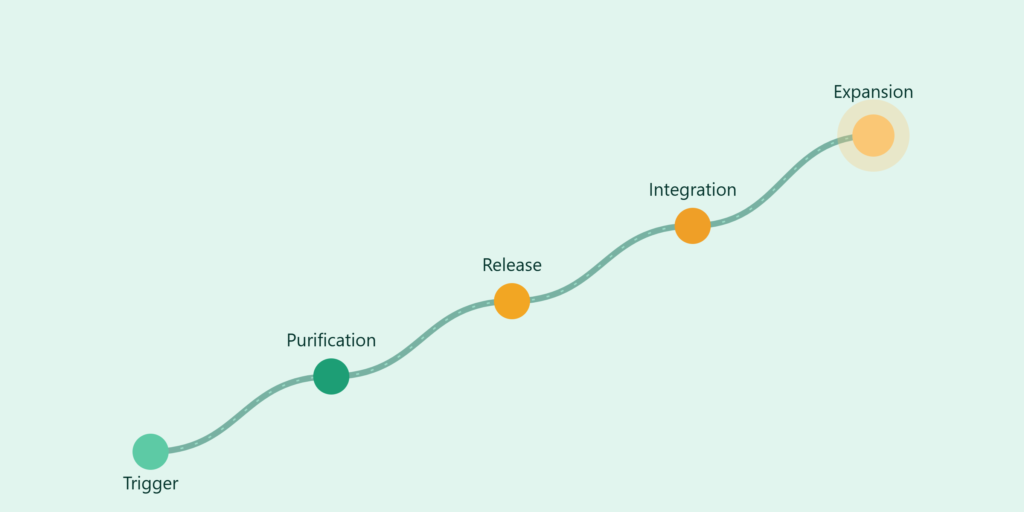
Many teachers describe kundalini awakening stages as a rough map rather than a fixed itinerary, since the traditions themselves vary in how they divide the process. A commonly referenced framework moves through phases such as an initial awakening or triggering event, followed by a period of purification as blockages and old patterns surface and clear, a phase of integration in which new levels of awareness begin to settle into daily life, and eventually a more stable, sustained state of expanded consciousness.
It is worth noting that these stages are not always linear. A person may experience intense purification, settle into calm for a period, and then encounter another wave of release months or years later. Some traditions describe the full rising of kundalini energy through all seven chakras as a lifelong or even multi-lifetime process, while others describe more contained, singular awakening experiences. Because there is no single authoritative source on staging, readers should treat any specific numbered framework, including popular lists describing a fixed sequence of stages, as one interpretive model among several rather than settled fact.
Approaching Kundalini Awakening Safely: Practical Guidance
For readers wondering how to awaken kundalini, or how to work with an awakening that has already begun, the most consistent advice across traditions is to move slowly and with support.
(If you are just starting out, this beginner’s guide to meditation is a useful place to build that foundation before exploring more advanced kundalini-specific techniques.) A few practical principles tend to recur across teachings:
- Build a steady foundation first. Establishing a regular, gentle meditation or breathwork practice tends to be favored over intense or rapid techniques, particularly for beginners.
- Work with experienced guidance. Teachers familiar with kundalini phenomena can help contextualize unusual experiences and offer pacing advice that reduces the risk of feeling overwhelmed.
- Prioritize emotional and physical stability. A stable base of sleep, nourishment, and emotional support appears to make the process considerably easier to move through, according to both traditional teachers and practitioners who have written about their own experiences.
- Seek professional support when needed. Because intense energetic experiences can sometimes resemble or intersect with psychological distress, many teachers now recommend involving a medical or mental health professional alongside spiritual guidance, especially if symptoms include significant anxiety, disorientation, or instability.
- Release the goal of forcing it. Since the experience is described as unpredictable and ultimately outside full personal control, most traditions suggest treating awakening as a possible byproduct of sincere practice rather than a target to chase.
None of this is meant to suggest that kundalini practices are inherently risky for most people. The vast majority of those who practice yoga, meditation, or breathwork do so without any dramatic energetic experience at all. But for the smaller number who do encounter something intense, having a framework and a support system in place tends to make a meaningful difference.
Common Questions and Misconceptions
A few misunderstandings come up often enough to address directly. The first is the belief that a dramatic kundalini awakening is required for spiritual growth. It is not. Countless contemplative traditions describe gradual, quiet development that never involves anything resembling the intense symptoms outlined above, and that path is no less legitimate.
The second misconception is that intensity equals authenticity, as though a more dramatic experience is somehow a more “real” one. Traditional teachers generally reject this idea. A subtle, gentle unfolding is regarded as just as valid as a sudden, overwhelming one.
A third point of confusion involves the relationship between kundalini yoga (the practice) and kundalini awakening (the phenomenon). Practicing kundalini yoga does not guarantee an awakening experience, and an awakening can occur through entirely different paths, or with no formal practice at all.
For daily insights on consciousness, clarity, and trusting yourself, explore Bahlon’s free daily transmissions. Subscribe here.
Frequently Asked Questions
What is kundalini energy, exactly?
Kundalini energy is described in yogic and tantric traditions as a dormant, potent form of consciousness or life force believed to rest at the base of the spine until it is activated through practice, grace, or an unplanned trigger.
What is a kundalini awakening supposed to feel like?
There is no single feeling associated with it. Descriptions range from waves of energy moving up the spine and deep states of bliss, to emotional release, anxiety, or physical sensations like heat and tingling. The experience is highly individual.
How long does a kundalini awakening last?
Traditional accounts vary widely. Some describe a single, intense episode lasting days or weeks, while others describe a gradual process unfolding over months, years, or even a lifetime of ongoing integration.
Is a kundalini awakening dangerous?
For most people who engage in gentle, gradual spiritual practice, no significant risk is reported. However, rapid or forced attempts to trigger the process, or an awakening that happens without adequate support, can be destabilizing for some individuals, which is why traditional guidance emphasizes moving slowly and seeking experienced support.
Can everyone experience a kundalini awakening?
Not necessarily, and not experiencing one does not indicate a lack of spiritual progress. Many long-term practitioners never have a dramatic awakening experience, and traditional teachings are clear that it is not a required milestone for genuine spiritual growth.