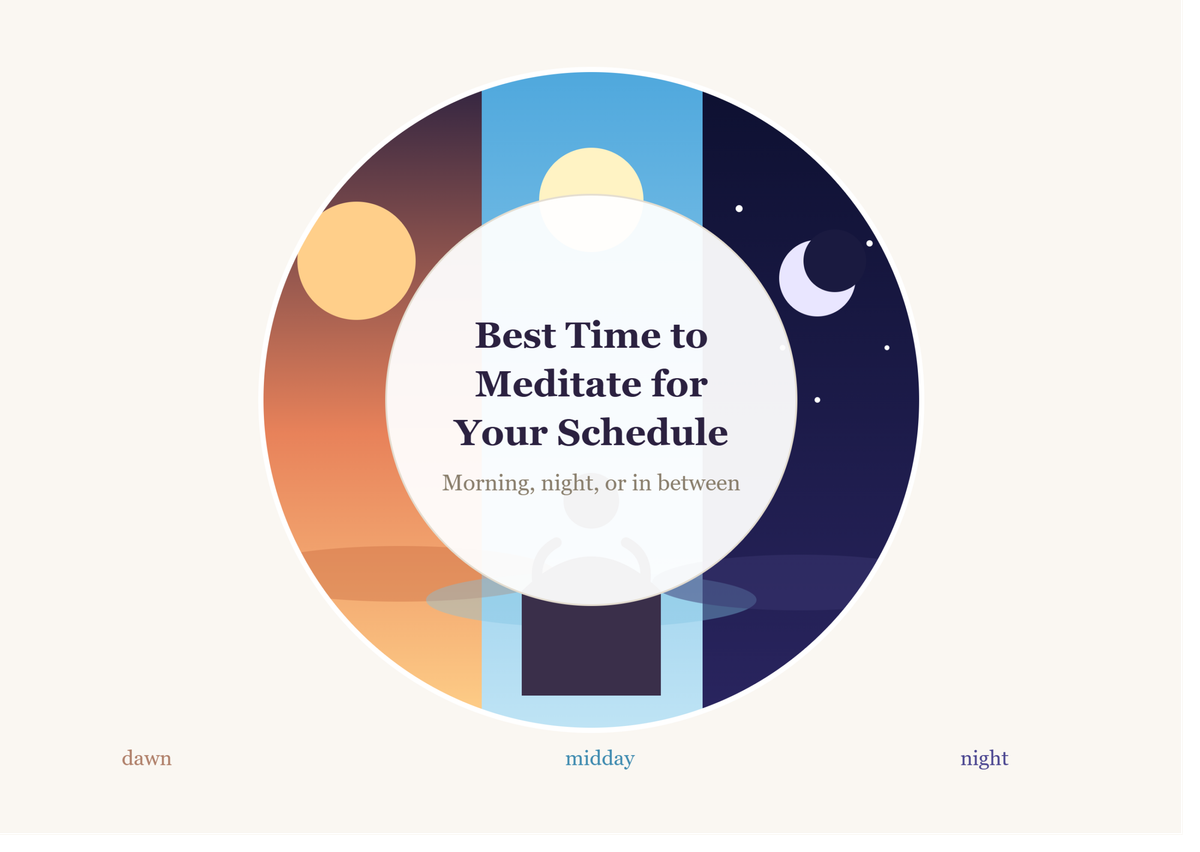
The best time to meditate is not a fixed hour that applies to everyone, but the moment in your day when you can show up consistently without a fight. Some people find clarity at sunrise, others need a midday reset before the afternoon slump takes over, and plenty of practitioners swear by the quiet stillness of night. What actually matters, according to most research on habit formation and mindfulness, is less about pinpointing the single best time to meditate and more about whether you return to it again and again.
That single idea, consistency over precision, tends to surprise people who come to meditation expecting a strict formula. It’s worth sitting with, because it changes the entire question you should be asking yourself.
Why “Best Time to Meditate” is the Wrong Question to Start With
Ask ten meditation teachers what the best time to meditate really is and you’ll likely get ten different answers, each rooted in a real tradition or a real result. Vedic traditions have long emphasized the hours around dawn, sometimes called brahma muhurta, as ideal for stillness because the world hasn’t yet filled with noise. Buddhist monastic schedules often build in multiple sits across the day, tying practice to bells and communal rhythms rather than personal preference. Modern secular mindfulness programs, meanwhile, tend to sidestep the timing debate almost entirely and focus on frequency.
None of these views are wrong. They’re answering different questions. A monastery isn’t optimizing for a single office worker’s calendar, and a stress-reduction program isn’t trying to align with lunar or solar timing. The honest answer is that the research base directly comparing morning versus afternoon versus night meditation is thin. What we have instead is a much larger body of evidence on circadian rhythms, cortisol patterns, and habit psychology, and from that we can draw reasonable, evidence-informed conclusions about when different benefits are more likely to show up.
How Timing Actually Shapes the Meditation Experience
Meditation itself doesn’t change chemically depending on the clock. What changes is you. Your nervous system, alertness, hormone levels, and mental clutter shift naturally across a 24-hour cycle, and those shifts interact with whatever technique you’re practicing.
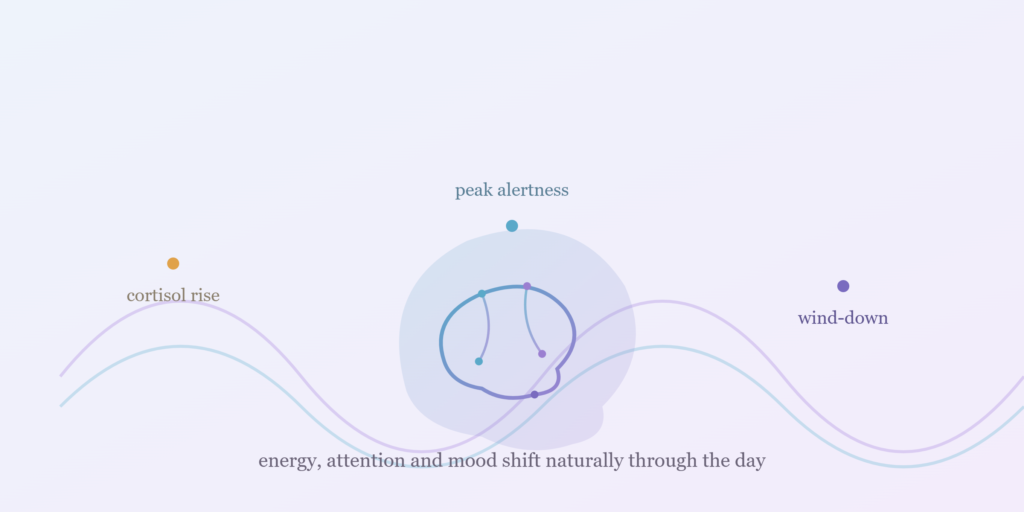
In the morning, cortisol naturally rises shortly after waking as part of the body’s normal wake-up response. This hormonal lift tends to support alertness, which is one reason a seated, attention-based practice often feels easier to sustain early in the day. The mind hasn’t yet accumulated the day’s inputs, emails, conversations, decisions, so there’s simply less mental residue to sit through before reaching stillness.
By midday, accumulated stress from work or responsibilities starts to build, and attention often begins to fray. This is where even a short mindfulness break tends to be disproportionately useful. Brief sessions, sometimes just a few minutes of focused breathing, have been associated with measurable short-term reductions in perceived stress and improvements in mood. You’re not trying to achieve deep stillness at 2 p.m.; you’re interrupting a stress spiral before it compounds.
At night, the goal usually shifts again. The nervous system is (ideally) downshifting from activity toward rest, and slower techniques, body scans, long exhales, progressive relaxation, tend to support that transition rather than fight it. Evening practice has been linked to improvements in sleep quality and reductions in the kind of mental rumination that keeps people staring at the ceiling.
In other words, the “mechanics” of meditation timing aren’t about the practice becoming more powerful at a certain hour. They’re about matching the technique to the state your body and mind are already moving through.
What the Evidence Says, and What It Doesn’t
It’s worth being precise about the limits of the science here, because a lot of wellness content overstates certainty that doesn’t exist.
Brain imaging research has shown that regular meditation practice is associated with changes in regions tied to attention, focus, and emotional regulation. Other studies have found shifts in stress-related markers such as cortisol levels and heart rate variability among consistent practitioners. Mindfulness-based programs, broadly, have a fairly robust evidence base for reducing stress, improving attention, and supporting better sleep.
What’s missing is a large, direct comparison of identical meditation protocols run at different times of day to see which produces superior outcomes. Most of what informs “best time” advice is inferred, reasonably, from circadian rhythm research showing how energy, mood, and alertness naturally rise and fall throughout the day. That’s a meaningful distinction. It means the morning-versus-night debate is grounded in solid adjacent science, but it isn’t itself a settled research question with a definitive winner.
Practitioner accounts fill in some of that gap, though they should be read as experience rather than proof. Long-term meditators frequently describe morning sits as clearer and less effortful, and evening sits as harder to stay awake through but more emotionally settling. Traditional teachings, as noted earlier, often have their own internal logic for timing that predates any of this research by centuries. None of these perspectives cancel each other out. They’re describing the same practice through different lenses.
Finding the Best Time of Day to Meditate for Your Own Life
Given that there’s no single best time to meditate for everyone, the practical task becomes figuring out what fits your actual life. A few steps tend to help.
Start with your reason for meditating. Someone trying to manage constant work stress will likely get more immediate value from a midday pause than from a session eight hours before the stress even begins. Someone struggling with sleep is probably better served by a wind-down practice at night. If your main goal is simply building the habit at all, the deciding factor should be whichever time has the fewest obstacles, not the time that sounds most ideal on paper.
Pay attention to your own patterns for a week or two. Notice when your mind feels alert without being scattered, and when it tends to be either too tired or too reactive to sit still. Most people find these patterns become obvious fairly quickly once they’re actually looking for them.
Keep the early sessions short. A one- to five-minute practice done daily tends to build a more durable habit than an ambitious thirty-minute session attempted a few times a month and then abandoned. This mirrors what’s generally understood about habit formation: small, repeatable actions stick better than large, sporadic ones.
Anchor the practice to something you already do. Meditating right after brushing your teeth, or taking a few breaths before opening your laptop, removes the need to remember or negotiate with yourself. This kind of habit stacking is a well-documented way to make new behaviors feel automatic rather than effortful.
Match your technique to your chosen time. A seated, attention-focused session tends to suit daytime hours, while breath-based or body-scan techniques often work better as evening wind-downs. If you’re falling asleep during a night session and that’s not your goal, sitting upright, choosing a shorter practice, or shifting earlier in the evening can help.
Build in a backup plan. Mornings get rushed, lunch breaks get skipped, evenings get swallowed by obligations. Deciding in advance what you’ll do when your preferred slot falls through, even if that’s just “move it to whenever I next have five free minutes”, protects the habit from single missed days turning into abandoned ones.
Revisit the schedule periodically. What works during one season of work or family life may stop working a few months later. Treating your meditation time as adjustable rather than fixed tends to keep the practice alive longer than treating it as a rule you either follow perfectly or fail.
Common Misconceptions About Good Time for Meditation
A few misunderstandings come up often enough to address directly.
One is the belief that missing your “ideal” time means the day’s practice is lost. It isn’t. A five-minute session at an imperfect hour still counts, and still contributes to the cumulative benefits associated with regular practice.
Another is the assumption that falling asleep during meditation means you’re doing it wrong. If your goal is relaxation or better sleep, drifting off during an evening session isn’t really a failure. It’s only worth adjusting if you specifically wanted to stay alert and present.
A third misconception is that consistency requires meditating at the exact same clock time every single day. It doesn’t. What the evidence points to is regularity of frequency, showing up often, not rigid punctuality down to the minute.
For daily insights on consciousness, clarity, and trusting yourself, explore Bahlon’s free daily transmissions. Subscribe here to receive them straight to your inbox.
Related Readings:
- Meditation: How to Start (and Actually Stick with It)
- Meditation Guide for Beginners
- Types of Meditation and Which One Fits Your Personality
Frequently Asked Questions
Is it better to meditate in the morning or at night?
Neither is universally better. Morning sessions tend to support focus and intention-setting, while night sessions tend to support relaxation and sleep. The right choice depends on your goal and, just as importantly, on which time you can actually sustain.
When is the best time to meditate for stress relief?
Midday, or immediately after a stressful event, tends to be particularly effective. Even a brief session can interrupt the buildup of tension before it compounds through the rest of the day.
What is the ideal meditation schedule for busy people?
Short, predictable, and tied to an existing habit. Five minutes after waking, during a lunch break, or before bed can all work well when practiced consistently, and consistency matters more than duration.
Can you meditate right before bed?
Yes. Evening meditation is commonly associated with improved sleep quality and reduced anxiety. If you want to stay awake and alert during the practice rather than drift off, try meditating slightly earlier, sitting upright, or shortening the session.
Do you need to meditate at the same time every day?
No. A regular practice matters more than a rigidly scheduled one. If your routine shifts from day to day, focus on how often you meditate rather than pinning it to an exact hour.