Cord cutting is a spiritual and psychological practice used to sever the invisible emotional ties that keep a person feeling bound to a draining relationship, a painful memory, or a toxic pattern long after it should have ended. The idea rests on the belief that intense relationships create energetic “cords” between people, channels that carry emotion and attention back and forth even across distance and time. When one of those cords turns one-sided, obsessive, or exhausting, cord cutting offers a way to consciously release it and reclaim the energy it was quietly draining.
If you’ve ever found yourself replaying an argument with someone you haven’t spoken to in years, or felt inexplicably tired after a phone call with a particular family member, you already understand the sensation this practice is built around, even if you’ve never had a name for it.
What Is Cord Cutting, Exactly?
At its core, cord cutting describes the process of releasing an unhealthy energetic attachment to a person, a past event, or a habit that no longer serves you. The underlying concept, found across various spiritual and metaphysical traditions, holds that close relationships form invisible connective threads. Some of these threads are nourishing: the bond between a parent and child, or two old friends who lift each other up. Others become lopsided, feeding one person’s anxiety or resentment while leaving the other depleted.
Not every cord is treated as negative in this framework. The practice specifically targets the ones associated with manipulation, obsession, guilt, or chronic emotional fatigue. Cord cutting doesn’t ask you to erase a relationship from your history. It asks you to separate the memory from the emotional charge still attached to it, so the past stops running the show in the present.
This distinction matters, because it’s easy to mistake cord cutting for a kind of magical forgetting. It isn’t. People who practice it consistently describe the goal as freedom from an emotional hold, not amnesia about what happened.
Signs You Might Be Energetically Tied to Someone

Before deciding whether a cord cutting ritual is worth trying, it helps to recognize the patterns that typically prompt people to seek one out. These are commonly reported experiences among people who feel tethered to a past connection:
- Thinking about someone constantly, even when you actively want to stop
- Feeling drained, foggy, or anxious after interacting with a specific person
- Struggling to emotionally move on from a relationship long after it ended
- Having recurring dreams featuring the same person
- Experiencing sudden emotional flashbacks tied to a relationship or event
- Carrying unexplained anxiety connected to unresolved relationship dynamics
- Still feeling connected to someone even after cutting off physical contact entirely
None of these are proof of an actual energetic cord in any measurable sense. But they are recognizable, common experiences, and cord cutting gives them a name and a process, which is often part of why the ritual feels useful even to skeptics.
Why Toxic Attachments Linger Long After the Relationship Ends
Ending a relationship rarely severs the emotional attachment on the same day. This is one of the more psychologically grounded aspects of cord cutting as a concept, and it lines up with how attachment actually functions in the brain.
Toxic relationships often create bonds reinforced by guilt, fear, dependency, or simply years of unresolved emotional back-and-forth. The subconscious mind tends to hold onto those patterns because, at some point, they offered a form of safety or familiarity, even when the relationship itself was harmful. That’s part of what makes leaving genuinely difficult: the nervous system doesn’t automatically distinguish between “this person is bad for me” and “this person is unpredictable, and unpredictability once felt like survival.”

This is the gap cord cutting tries to address. It isn’t designed to erase the memory of the relationship. It’s meant to loosen the emotional charge still wired to it, so the memory can exist without continuing to drain the present moment.
How a Cord Cutting Ritual Actually Works
Most versions of a cord cutting ritual combine meditation, visualization, spoken affirmation, and sometimes physical symbolism like candles or written letters. The mechanics vary by tradition and personal preference, but a few elements tend to show up consistently:
Visualization. The practitioner imagines the energetic cord connecting them to the person or situation, often locating it somewhere in the body, commonly the heart, the solar plexus, or the gut, each associated with different emotional themes like grief, power struggles, or fear.
Affirmation. A clear, spoken statement of intention to release the connection, often something as simple as acknowledging the relationship’s lessons before letting it go.
Symbolic action. Candles, crystals, breathwork, or physically cutting a string are used to represent the act of severing the tie in a way the mind can register as real and complete.
Therapeutic integration. Many practitioners pair the ritual with talk therapy, hypnotherapy, or counseling, treating the symbolic release as one part of a broader emotional healing process rather than a standalone fix.
Soniyaa Kiran Punjabi, founder of the healing practice Illuminations, describes cord cutting as a way for people to end toxic energetic patterns without guilt, framing the release as something that clears space for healthier relationships and a stronger connection to oneself. That framing, freedom without guilt, shows up frequently in how practitioners talk about the ritual’s purpose.
The Evidence: What Psychology and Practitioner Accounts Actually Say
It’s worth being direct here: there is no scientific evidence for literal energetic cords connecting people. This is a spiritual and metaphysical framework, not a measurable phenomenon, and any article claiming otherwise isn’t being honest with you.
What does have research behind it is the psychology of ritual itself. Symbolic closure rituals, actions that represent an ending, have been studied in behavioral psychology and shown to help people process grief, loss, and unresolved emotional attachment. Writing a letter you never send, holding a small ceremony after a breakup, or performing any deliberate “letting go” action can measurably reduce rumination and provide a felt sense of closure, even when the other person is completely unaware it happened.
So while cord cutting’s premise is spiritual, its mechanism likely overlaps with something psychology already recognizes: the brain responds to symbolic finality. A ritual gives the subconscious mind permission to stop holding on, in much the same way a funeral helps people process death even though it changes nothing about the fact of the loss itself.
Practitioners who use cord cutting regularly describe feeling lighter, calmer, and more emotionally centered afterward. Whether that shift comes from an actual energetic release or from the psychological power of ritual and intention is a question science can’t fully answer yet, and a fair treatment of the topic should say so plainly rather than picking a side it can’t prove.
Practical Cord Cutting Methods You Can Try
There are several accessible ways to practice cord cutting, depending on what feels right for you.
Visualization and affirmation meditation. Sit somewhere quiet, ground yourself with slow breathing, and mentally locate where the cord seems to connect, then visualize cutting it with something symbolic, a blade of light, golden scissors, even your own hand, followed by a spoken affirmation and a visualization of warm light sealing the space where the cord was.
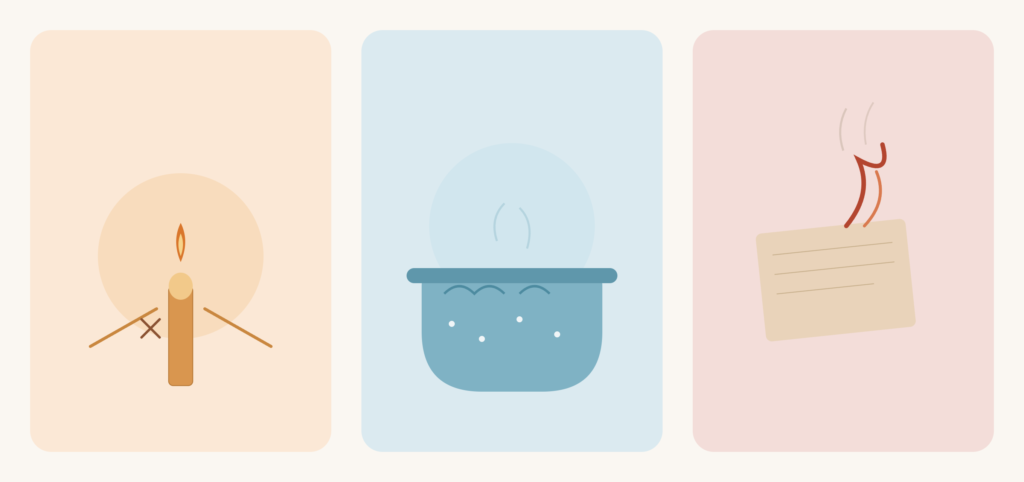
The candle ritual. This physical version uses two candles, one representing you and one representing the person or pattern you’re releasing, connected by a piece of string. The string is cut mid-ritual while stating an intention aloud, and the candles are left to burn down completely as a symbol of transformation.
Salt baths and journal burning. A warm bath with Epsom or sea salt, paired with visualization of the water drawing out heaviness, offers a gentler somatic option. Writing an unfiltered letter to the person or situation and safely burning it afterward is another commonly used release method.
None of these require special training, and most people intuitively adapt the details to what feels personally meaningful.
What Happens After the Ritual
Cord cutting is rarely a one-time fix, and treating it that way tends to set people up for disappointment. Practical follow-through matters just as much as the ritual itself.
That means returning or discarding items that still tie you to the person, removing old messages or photos that invite you back into the loop, and enforcing real boundaries, blocking numbers, avoiding their social media, and declining conversations that keep the connection alive in practical terms. Energetic intentions without practical boundaries tend to unravel quickly.
It’s also common for old feelings to resurface days or weeks later. This isn’t necessarily a sign the ritual failed. Emotional attachment often exists in layers, and a second wave of processing doesn’t erase the progress already made. The visualization practice can simply be repeated as needed.
Some people combine cord cutting with hypnotherapy to reframe subconscious beliefs, family constellation work to explore inherited relational patterns, or mindfulness and breathwork to support ongoing emotional regulation. None of these are required, but together they form a broader toolkit rather than relying on one method alone.
For daily insights on consciousness, clarity, and trusting yourself, explore Bahlon’s free daily transmissions. Subscribe here.
Related Readings:
- What Is an Energy Vampire? Signs and How to Protect Yourself
- What Are the Akashic Records and How Do You Access Them?
- Aura Colors and Their Meanings: A Complete Guide
Frequently Asked Questions
Does cord cutting affect the other person?
Cord cutting is generally described as an internal, personal process focused on your own emotional release rather than something done to another person. Most practitioners frame it as reclaiming your own energy, not influencing someone else’s.
How do I know if I need a cord-cutting ceremony?
Common signs include persistent thoughts about someone you’ve tried to move on from, feeling drained after contact with them, recurring dreams, or lingering anxiety tied to an unresolved relationship even after distancing yourself physically.
Can cord cutting be done without candles or physical tools?
Yes. Visualization and affirmation meditation requires nothing beyond quiet space and a few minutes of focused breathing and intention setting.
Is cord cutting a religious practice?
It draws from various spiritual and metaphysical traditions but isn’t tied to a specific religion. Many people incorporate it alongside therapy, mindfulness, or other secular practices without conflict.
Why do I still feel connected to someone after cutting contact?
The subconscious mind often holds onto emotional bonds, especially intense or unresolved ones, well after physical separation. This lingering attachment is generally seen as a normal part of healing, not a sign that something is wrong with you.