Ascension is the spiritual idea that human consciousness can evolve from a fear-based, survival-driven state, often called 3D, toward a more unified and loving state of awareness, often called 5D. People who feel they are moving through this process report physical, emotional, and perceptual changes, from fatigue and vivid dreams to stronger intuition and a deeper sense of connection. Ascension symptoms are experiential rather than clinically defined, so it helps to understand both the spiritual meaning and the health context before drawing conclusions.
What Is Ascension? A Clear Definition
The word carries more than one meaning, so it helps to separate them. In Christianity, Ascension Day commemorates Jesus being taken up into heaven, and it is observed on the fortieth day of Easter, always on a Thursday. In astronomy, right ascension is a celestial coordinate that works much like longitude for locating objects in the sky. In healthcare, Ascension is also the name of a large hospital system in the United States. This article focuses on the spiritual and metaphysical ascension meaning found in modern spirituality.
In that sense, the ascension definition is a gradual shift in awareness. The 3D to 5D language describes two broad ways of living. Third-dimensional consciousness is associated with ego, survival, separation, and living on autopilot. Fifth-dimensional consciousness is associated with unity, compassion, authenticity, and intuitive knowing. These are spiritual metaphors rather than measurable physical dimensions, and they are best read that way.

The underlying idea is far older than the vocabulary. Mystics in many traditions have described an ascent of the soul, from Hermetic and Neoplatonic writings to the Sufi stations of the heart to Teresa of Ávila’s Interior Castle. The modern language of frequencies, dimensions, and lightworkers grew largely out of Theosophy and later New Age teaching. It continues to evolve through practitioner communities today.
The Spiritual Meaning of Ascension
Practitioners tend to describe the spiritual meaning of ascension through three overlapping themes.
The first is a shift in consciousness. Instead of reacting from habit, fear, and the pursuit of approval, a person begins to notice the patterns running through their life and to choose from a more authentic place. Unity and unconditional love stop being ideas and become lived experiences.
The second is what many call a vibrational upgrade. The belief is that humans are energetic as well as physical beings, and that as inner states become more coherent, outer life reorganizes around them. This is a metaphysical claim rather than a laboratory finding, but it gives people a useful language for describing how different they feel when they are at peace versus in turmoil.
The third is release. Ascension is often described as letting go of old karmic patterns, emotional baggage, and attachments that no longer fit who a person is becoming. Because that release can be uncomfortable, many people find the process anything but serene.
Ascension is frequently used interchangeably with spiritual awakening. One helpful distinction is that awakening is the moment of noticing, while ascension is the long integration that follows. If these ideas are new to you, this guide to the stages of spiritual awakening offers a good foundation.
Ascension Symptoms: What People Commonly Report
Ascension symptoms are reported experiences, not diagnostic criteria. What follows is a synthesis of what practitioners most often describe, and each item is best held loosely.
Physical and energetic sensations
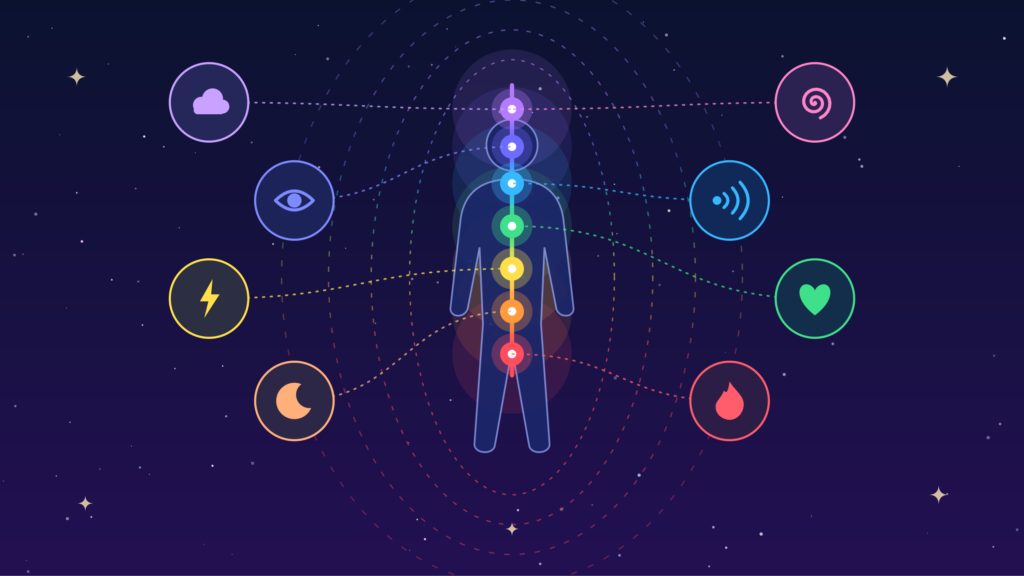
Many people describe tingling, buzzing, waves of energy, muscle twitches, or a sense of vibration moving through the body. Pressure around the crown and forehead is often linked in spiritual language to the crown chakra and third eye. Others mention heart palpitations, aches in the neck, spine, and joints, ringing in the ears, temperature swings, shifting appetite, digestive changes, and changes in skin or hair. Some notice sparks of light in their peripheral vision or a new sensitivity to sound and to electrically busy spaces.
Sleep, dreams, and energy
Fatigue that arrives without warning is one of the most cited signs, often alternating with bursts of alertness. Sleep can become irregular, and waking between roughly 2 a.m. and 4 a.m. is a familiar report. Dreams may grow vivid, symbolic, or lucid, and some people describe precognitive dreams or out-of-body experiences.
Emotional and mental shifts
Emotions can arrive in sudden waves, including tearfulness, joy, anger, or anxiety with no obvious trigger. Brain fog is common, such as losing a word mid-sentence or forgetting why you walked into a room. Some teachers read this as the mind loosening its grip on memory in favor of intuitive knowing. Empathy often deepens, along with a pull toward solitude and quiet.
Identity, intuition, and synchronicity
Many people feel unsure of who they are as old beliefs and roles lose their hold. This overlaps with what mystics call the dark night of the soul, which is explored in this piece on the dark night of the soul. On the brighter side, people report stronger intuition, a felt connection to nature, animals, and Source, and more frequent synchronicities such as noticing 11:11 or 444. Time may feel compressed or suspended, and some feel a sense of urgency that something is coming. Sudden changes in work, relationships, or location are also commonly described.
Evidence and Perspectives on Ascension

The science here deserves a fair reading. There is no empirical evidence for literal dimensions, frequency upgrades, or a planetary shift from 3D to 5D. Those remain matters of belief and personal experience. The experiences people report, however, are real, and researchers have studied related territory.
The psychiatrists Stanislav and Christina Grof introduced the idea of “spiritual emergency” in the 1980s to describe intense psychological and physical upheaval during spiritual transformation. The American Psychiatric Association’s diagnostic manual includes a category called “religious or spiritual problem,” which acknowledges that spiritual crises can be a legitimate focus of care without being a mental disorder. A 2017 study in PLOS ONE by Jared Lindahl and colleagues, part of research led at Brown University, documented a wide range of unexpected experiences among meditators. These included bodily sensations, perceptual changes, emotional swings, and altered sense of self, with effects that were sometimes beneficial and sometimes distressing.
There is also an important medical overlap. Fatigue, tingling, palpitations, dizziness, tinnitus, brain fog, night waking, and hot flashes can all stem from thyroid conditions, vitamin B12 or D deficiency, anemia, anxiety, migraines, sleep disorders, or hormonal transitions such as perimenopause. Ruling these out with a healthcare professional is simply good practice, and it does not mean your spiritual interpretation is wrong. A person can have a thyroid issue and a genuine spiritual opening at the same time.
Traditional perspectives add another layer. Yogic traditions describe kundalini energy rising along the spine with strong physical effects. Christian contemplatives such as John of the Cross wrote about seasons of darkness before deeper union. Carl Jung described synchronicity as meaningful coincidence. Skeptical psychologists point to the frequency illusion, where a number you have begun to notice seems to appear everywhere. Many people hold both readings at once, treating synchronicities as personally meaningful while remaining curious about how attention works.
How to Support Yourself Through Ascension
Since the process is described as one that involves the whole person, practical care matters as much as insight.

- Start with a checkup. Ask a doctor to rule out physical causes for persistent symptoms. Share what you are experiencing openly.
- Ground the body. Walk outside, spend time with plants or soil, cook a warm meal, take a bath, or move gently. If you want more ideas, these grounding techniques are a good place to begin.
- Protect sleep and nourishment. Keep regular meal times, drink water, and build a wind-down routine. If you wake at 3 a.m., a dim light, slow breathing, or a few lines of journaling can help.
- Give emotions somewhere to go. Journaling, art, movement, and honest conversation help release what surfaces. A therapist who is open to spirituality can be a steady companion.
- Go gently with intense practices. Long meditation retreats, aggressive breathwork, and heavy fasting can amplify symptoms. Shorter, consistent practice often integrates better.
- Delay irreversible decisions. The urge to quit a job, end a relationship, or relocate can feel urgent. Waiting a few weeks often reveals which changes are truly yours.
- Find your people. Trusted friends, teachers, or communities who understand this territory reduce isolation.
Most accounts describe waves rather than a fixed timeline, with intense periods followed by calm and integration over months or years.
Common Misconceptions About Ascension
Ascension is not a race or a ranking. Being in “5D” does not make someone better than anyone else, and more symptoms do not mean further progress. Many people awaken quietly, with few dramatic signs.
It is not an escape from ordinary life. Spiritual bypassing, a term coined by psychologist John Welwood, describes using spiritual ideas to avoid pain, relationships, or responsibilities. Traditions across the world tend to agree that real growth shows up in how we treat people and meet everyday demands.
It is not linear. People often cycle back through old fears and patterns, each time from a slightly wider view. That is usually integration rather than failure.

A longing for “home” needs care. Some people feel a deep yearning to leave the planet or return to Source, and practitioners distinguish this from wanting to die. The two can be hard to tell apart in the moment. If you ever have thoughts of ending your life, contact local emergency services or a crisis line right away, and reach out to someone you trust. You do not need to carry that alone.
Held with humility, ascension is less about reaching a higher dimension than about becoming more honest, more compassionate, and more at home in yourself, whatever you believe is happening beneath the surface.
For daily insights on consciousness, clarity, and trusting yourself, explore Bahlon’s free daily transmissions. Subscribe today and take the next step at your own pace.
Related Readings:
- Grounding Meditation: What It Is and How to Practice It
- What Is the Dark Night of the Soul, and How Do You Get Through It?
- What Is Spiritual Awakening? Signs and Stages
Frequently Asked Questions
What is ascension in simple terms?
Ascension is a spiritual process of moving from ego-driven, fear-based awareness toward unity, love, and intuition. It is described through the 3D to 5D framework and is understood as a personal, experiential journey.
What are the most common ascension symptoms?
Reported signs include fatigue, sleep changes, tingling or vibrating sensations, head pressure, emotional waves, brain fog, vivid dreams, heightened intuition, and more frequent synchronicities. Many of these also have medical explanations, so a checkup is wise.
How long does ascension last?
There is no fixed timeline. Practitioners describe waves of intensity and calm that unfold over months or years, and many see it as a lifelong process.
Are ascension symptoms real or just anxiety?
Both can be true. Anxiety, sleep problems, and medical conditions can produce the same sensations, and spiritual growth can also bring real emotional and physical changes. Professional support can help you sort out which factors are at play.
Is ascension the same as spiritual awakening?
They overlap and are often used interchangeably. Awakening usually refers to the initial shift in awareness, while ascension describes the ongoing evolution that follows.