The signs your third eye is opening typically include pressure or tingling between the eyebrows, more vivid dreams, sharper intuition, and a growing hunger for truth and meaning. In yogic and chakra traditions, these experiences are understood as the sixth energy center, known as Ajna, coming into fuller awareness. Many of them also have ordinary physical explanations, so the wisest approach is to hold each one with curiosity and discernment rather than certainty.
What the Third Eye Is, and Why People Pay Attention to It
The third eye is the sixth of the seven primary chakras. It sits at the center of the forehead, just above the space between the eyebrows. Its Sanskrit name, Ajna, translates as “to perceive” or “to command,” and its traditional color is indigo. Across many traditions it stands for intuition, inner vision, wisdom, and the capacity to see beyond surface appearances.
The idea is not confined to one culture. Hindu yogic teachings describe the Ajna chakra as the meeting point of the body’s main energy channels. Egyptian symbolism associates inner sight with the Eye of Horus, and ancient Greek thinkers wrote about a seat of the soul within the head. These lineages differ in their details, yet they share a conviction that human perception extends beyond the five senses.
Many modern practitioners link the third eye with the pineal gland, a small, pinecone-shaped structure deep in the brain. Science has established that the pineal gland produces melatonin, the hormone that helps regulate sleep and waking cycles. It is also evolutionarily related to light-sensitive tissue, which is one reason the symbolism feels so natural. What science has not established is any direct link between the gland and spiritual perception. That connection remains a matter of tradition and personal experience, and it is worth presenting honestly as such.
Physical Third Eye Opening Signs
The body is often where people first notice something shifting. Practitioners commonly describe the following sensations.
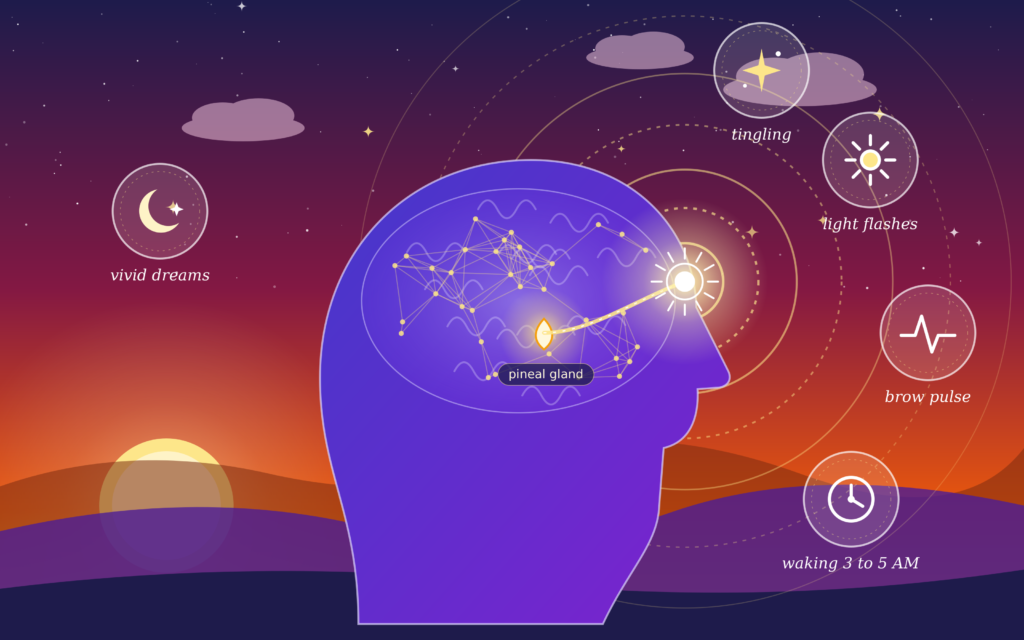
Pressure or tingling between the eyebrows. This is the most frequently reported of all the signs of third eye opening. It can feel like a gentle pulse, a dull ache, warmth, buzzing, or the sense of being lightly touched. It tends to become more noticeable during meditation, prayer, or energy work.
Forehead tension or mild headaches. Some people report fullness around the brow after deep concentration. In spiritual readings this is linked to activation of the brow center.
Light sensitivity and visual phenomena. Colors may seem more vivid, and ordinary light may feel more intense. With closed eyes, people describe flashes of light, glowing orbs, or fields of indigo, violet, and white. Some also see mental images, symbols, or faces.
Vivid and lucid dreams. Dreams may grow more detailed, emotional, and memorable. Lucid dreaming, where you realize you are dreaming while it happens, may become more frequent.
Changes in sleep. Some people wake often in the early hours, particularly between 3:00 and 5:00 AM. Others sleep more lightly or feel energized on less rest.
Warmth or energy in the forehead. A pulsing or heated feeling around the brow during practice is often read as energy gathering at the Ajna chakra.
A grounded note belongs here. Persistent forehead pressure, chronic headaches, flashes of light, and disrupted sleep can all have physical causes such as migraine, eye strain, stress, or sleep disorders. These sensations alone do not confirm a spiritual awakening. If they are intense or ongoing, a healthcare professional should be involved.
Intuitive and Mental Signs Your Third Eye Is Opening
For many people, the clearest signs your third eye is opening are not sensations at all. They are shifts in how they perceive people, situations, and themselves.
Sharper intuition and clear knowing. Gut feelings seem more reliable. Information may arrive as an immediate certainty rather than a conclusion reached through reasoning. Practitioners often call this clear knowing.
Heightened sensitivity to people and places. You may sense the mood of a room as you walk in, or notice someone’s emotional state before they put it into words. Small changes in tone, expression, or behavior become easier to read.
More synchronicities. Meaningful coincidences seem to multiply. You think of someone and they call. An answer arrives through a song, a book, or a stranger’s remark. Repeating number patterns such as 1111 or 333 draw your attention. Many traditions treat these as signs of alignment, and psychologists have long discussed the human tendency to find meaning in coincidence. Both views can sit side by side. Either way, the experience of noticing is real.
Seeing through illusions. Relationships, routines, or beliefs that once felt solid may begin to seem hollow. You may become quicker to recognize dishonesty, unhealthy patterns, or choices that conflict with your values. This is closely tied to the word Ajna itself: discernment.
Emotional and Spiritual Signs of Third Eye Opening
The emotional layer is often the least expected and the most important.
A deeper appetite for truth. Interest in meditation, self-inquiry, and spiritual teaching grows. Gossip, heavy media, and needless conflict lose their appeal, while honest conversation and real connection become more valuable.
Unexpected emotional releases. Old grief, anger, fear, or sadness may surface without an obvious trigger. In spiritual interpretation, this is stored emotional energy moving through, and it is viewed as healing rather than regression.
A stronger sense of spiritual connection. Many people describe feeling closer to Spirit, God, or a higher source of guidance, with inner direction feeling clearer and purpose more defined.
Shifting priorities. Pastimes that once absorbed you may quietly fall away. Growth, self-awareness, and meaningful relationships take their place.
These changes tend to come in waves rather than all at once, which is why the next section matters.
The Five Stages of Third Eye Awakening
Traditional accounts describe third eye awakening as a process instead of a single event. Knowing the stages can make the experience feel less alarming.
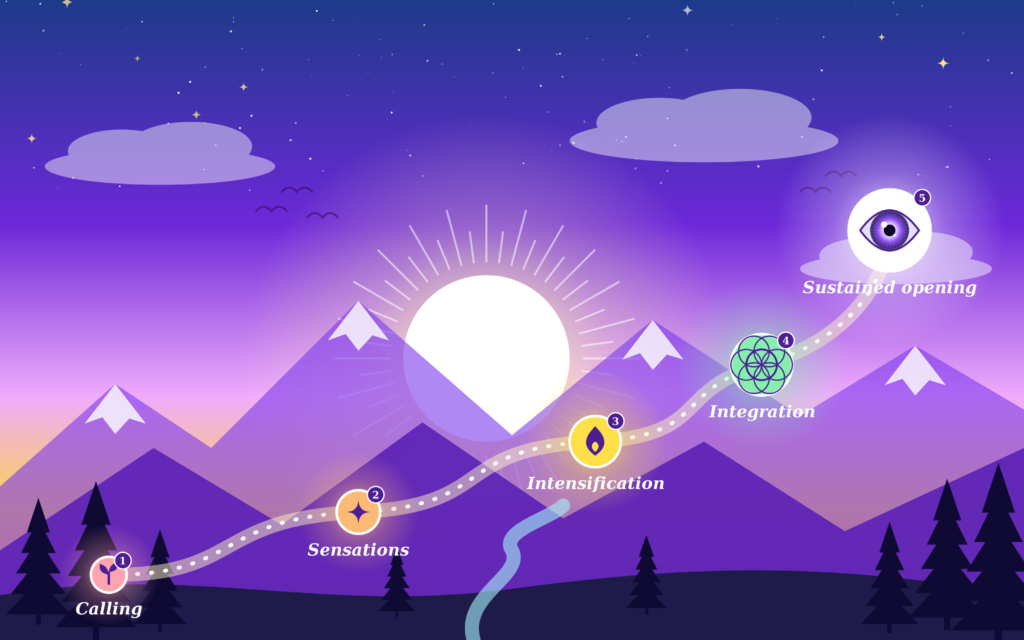
- Curiosity and calling. A strong pull toward meditation, chakra work, or spiritual reading appears, often before any physical sensation.
- Initial sensations. Brow pressure, tingling, deeper meditation, and vivid dreams show up, usually in short, intermittent bursts during practice.
- Intensification. Sensations, mental imagery, and emotional releases strengthen. This stage can feel unsettling because familiar ways of seeing reality loosen before a new one stabilizes. Grounding matters most here.
- Integration. Experiences settle. Intuition becomes a steady part of decision-making, and you learn to tell genuine insight apart from anxiety, imagination, or wishful thinking.
- Sustained opening. Inner guidance feels accessible without strain. This does not mean constant visions. It means a calm, stable relationship with your own perception.
There is no fixed timeline. Some people notice sensations within days of beginning meditation, while others move through the stages over months or years. Consistency, unresolved emotional material, the balance of the lower chakras, and a willingness to let the process unfold are all considered influences. Techniques that promise to open the third eye in a minute deserve skepticism.
Signs Your Third Eye Is Blocked
The signs your third eye is blocked are often the mirror image of the above. Traditionally they include constant overthinking, doubting your instincts, struggling to see the bigger picture, feeling cut off from spirituality, and difficulty recognizing what is true.
Chakra teachings suggest several experiences that can dim this center. Being told repeatedly as a child that your perceptions were imaginary can teach you to distrust your inner knowing. Growing up where intuition was labeled sinful or dangerous can create fear around it. A culture that rewards only logic can lead people to ignore intuitive information, and betrayal or deception can prompt a protective choice to stop looking at the truth.
From a psychological angle, these descriptions overlap with well-known effects of invalidation, fear, and mistrust on self-confidence. Seeing both frames can be helpful. Whichever vocabulary resonates, the path forward is similar: rebuilding trust in your own perception, gently and without force.
Practical Ways to Support Third Eye Opening Safely
Traditions agree that gradual, grounded practice is better than forcing results.
Meditation. Sit comfortably with a straight spine and bring attention to the space between your eyebrows. Breathe slowly. On the inhale, picture indigo or violet light gathering at the brow, and on the exhale, let it expand outward. Continue for ten to fifteen minutes, returning gently when your mind wanders. Finish by placing your hands over your eyes, taking three grounding breaths, and opening your eyes slowly. Five minutes daily generally helps more than an hour once in a while.
Breathwork. Alternate nostril breathing, or Nadi Shodhana, is said in yogic teaching to balance the Ida and Pingala channels so energy can move through Sushumna toward the Ajna chakra. Five to ten minutes before meditation is a common pairing. Many people also find slow breathing calming for entirely physiological reasons.
Dream and intuition journaling. Keep a notebook by the bed and record dreams on waking. Note intuitive impressions and coincidences during the day. Over time, patterns emerge, and you can check your impressions against what actually happened.
Sound. Chanting OM or the seed sound KSHAM is used in some traditions. Some people listen to binaural beats in the theta range during meditation.
Light and lifestyle. Morning sunlight supports healthy circadian rhythm, which is tied to the pineal gland’s melatonin cycle. Some practitioners also favor leafy greens, blueberries, raw cacao, and filtered water for pineal support. The research on diet and pineal calcification is limited and still developing, so treat these as supportive habits rather than proven methods.
Grounding. Walk outside, eat warm nourishing food, exercise, and attend to daily responsibilities. Traditions emphasize keeping the root and sacral chakras steady so the upper centers do not overwhelm you. Avoid intense practice in the two hours before bed if sleep is already disrupted.
Common Challenges and When to Seek Support
Increased sensitivity can feel like overwhelm, and unfamiliar experiences can trigger anxiety, especially for people raised to fear them. Learning to tell intuition from imagination takes time. A common rule of thumb in spiritual circles is that genuine intuitive insight tends to arrive calmly, while anxiety feels urgent, repetitive, and catastrophic. It is a useful guide, though not a perfect one, which is why discernment and reflection matter.
If an experience becomes distressing or interferes with work, relationships, or sleep, support is wise. A teacher experienced in energy work can help you make sense of what is happening, and a mental health professional can help if symptoms persist. Spiritual guidance and professional care work well together, and neither cancels the other.
Here’s a place to keep exploring. For daily insights on consciousness, clarity, and trusting yourself, explore Bahlon’s free daily transmissions.
- Learn How to Balance Your Chakras Today
- Meditation Guide for Beginners: How to Start, Step by Step
- Intuition Guide: Everything You Need to Know
Frequently Asked Questions
What do you see when your third eye opens?
Experiences vary. Common reports include indigo, violet, or white light, flashes or glowing orbs behind closed eyes, symbols, faces, landscapes, and unusually vivid dreams. Some people see nothing and describe the opening purely as stronger inner certainty.
What are the physical signs your third eye is open?
The most commonly reported are pressure or tingling between the eyebrows, warmth or pulsing in the forehead, light sensitivity, mild brow tension, vivid dreams, and early-morning waking. Because these can also stem from medical causes, persistent symptoms deserve a professional opinion.
Can you close your third eye once it opens?
Traditional accounts say you can turn the intensity down but not erase the awareness you have gained. Grounding, shorter meditations, and focus on the lower chakras can calm things. Many describe it as a dimmer switch rather than a door.
How does Kundalini relate to third eye opening?
In yogic teaching, Kundalini energy rises from the base of the spine through the chakras in sequence. When it reaches the brow center, it is said to activate the third eye, which is why Kundalini awakening can include intense third eye experiences.
Do you need a teacher to open your third eye?
No. Many people begin on their own with meditation and journaling. A skilled teacher can offer support with blockages and unfamiliar experiences, but needing guidance says nothing about your capability.