So why do you keep seeing butterflies? Most spiritual traditions interpret it as a sign of transformation, renewal, or a gentle message from a loved one who has passed. The butterfly’s own life cycle, from crawling caterpillar to winged creature, has made it one of the oldest and most widely shared symbols of change across human cultures. Whether the sighting feels like coincidence or something more, it tends to arrive at moments when a person is already sensing that something in their life is shifting.
That said, there isn’t one single, universally agreed-upon meaning. What a butterfly represents can shift depending on the color of its wings, the culture doing the interpreting, and the specific moment in someone’s life when it appears. This article walks through where these interpretations come from, what the research says about pattern recognition and meaningful coincidence, and how people across different traditions have made sense of a creature that seems to show up right when they need it most.
Why Do You Keep Seeing Butterflies? The Core Spiritual Meanings
At its core, the spiritual meaning of seeing butterflies repeatedly centers on four recurring themes: transformation, connection to those who have died, awakening, and freedom.
Transformation and renewal.
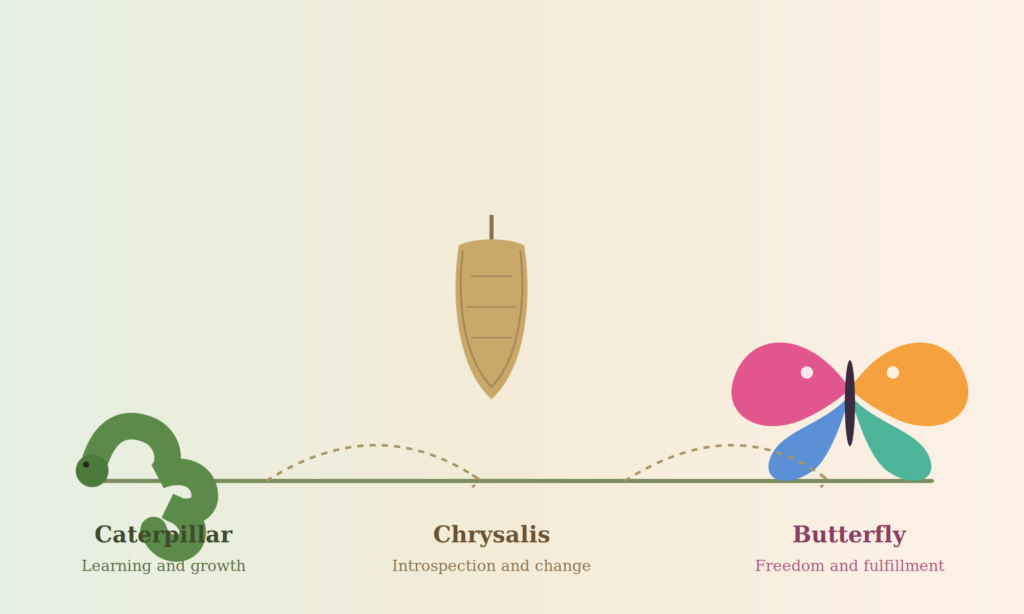
This is the most consistent thread running through nearly every tradition that assigns meaning to butterflies. The insect’s biology does the symbolic heavy lifting here: something that once crawled now flies. That shift from a limited form to an expanded one maps neatly onto the human experience of outgrowing an old identity, ending a relationship, changing careers, or recovering from a difficult period.
Messages from loved ones.
A significant number of people who report seeing butterflies frequently describe it happening around anniversaries of a death, during grief, or shortly after thinking intensely about someone who has passed. In this framework, the butterfly isn’t the message itself but the messenger, a comforting signal that a connection hasn’t been severed. This idea sits alongside other common experiences people describe when exploring signs from deceased loved ones, such as recurring numbers, songs, or dreams appearing at meaningful moments.
Spiritual awakening.
Some traditions read butterfly encounters as a nudge toward deeper self-awareness, framing the sighting as encouragement to trust intuition or pay closer attention to inner life rather than external noise. This overlaps closely with how people describe the early signs of a spiritual awakening, where small, seemingly ordinary moments start to feel unusually significant.
Freedom and lightness.
Because butterflies appear to fly with almost no effort, they’re often associated with letting go of heaviness, whether that’s guilt, fear, or the need to control outcomes.
None of these interpretations cancel each other out. Many people hold two or three of these meanings simultaneously, reading the moment through whichever lens feels most relevant to what they’re going through.
How the Symbolism Works: The Mechanics Behind the Meaning
Understanding why butterflies became this kind of symbol requires looking at their actual biology alongside the psychology of how humans assign meaning to events.
Biologically, a butterfly goes through four distinct stages: egg, larva (caterpillar), pupa (chrysalis), and adult. Inside the chrysalis, the caterpillar’s body doesn’t just grow wings, it largely dissolves and reorganizes into something structurally different. This total reorganization, rather than a simple addition of new parts, is precisely why the butterfly became such a powerful metaphor for deep personal change rather than mere improvement. It’s not a caterpillar with wings bolted on. It’s an entirely different creature built from the same raw material.
Psychologically, humans are pattern-seeking by nature. When we’re going through a period of change, grief, or decision-making, our attention becomes primed to notice things related to that internal state, a phenomenon psychologists sometimes describe through the lens of selective attention or the frequency illusion. If you’re already thinking about transformation, you’re more likely to consciously register a butterfly that was always going to be there, whether or not it carries any deeper significance. This doesn’t make the experience less meaningful to the person having it. It simply offers one lens for understanding why butterfly sightings tend to cluster around emotionally significant periods of life, a pattern that shows up across other experiences too, including why certain numbers seem to follow you everywhere.
Both explanations, the symbolic and the psychological, can be true at once. The butterfly can be biologically unremarkable and still function as a genuinely useful mirror for whatever internal work a person is doing.
Butterflies Across Cultures and Traditions
The spiritual significance of butterflies isn’t a single belief system. It’s a patchwork built from centuries of separate traditions that arrived at strikingly similar conclusions.
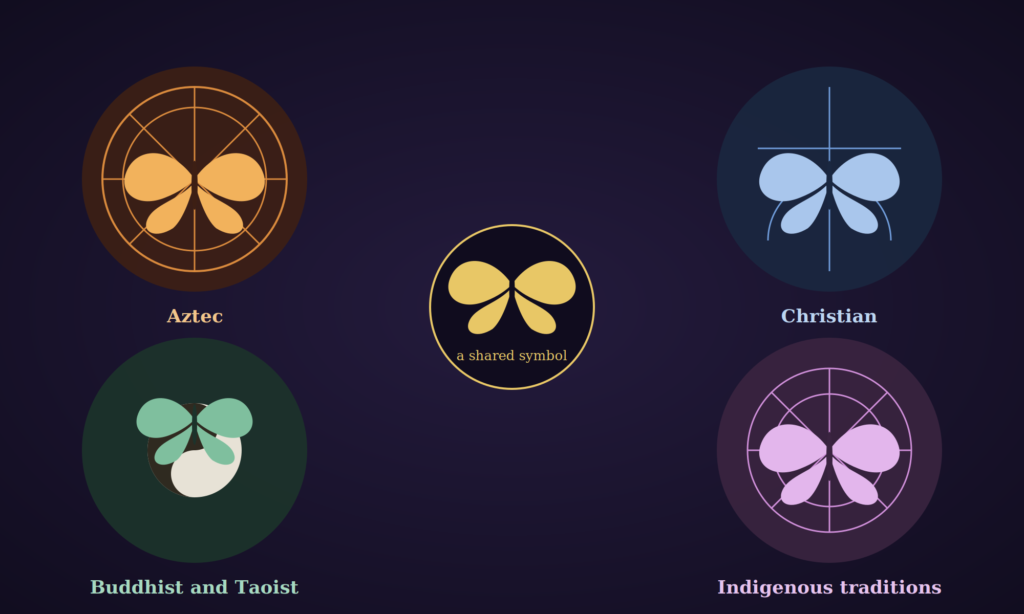
In Aztec culture, butterflies were connected to the souls of warriors who died in battle and women who died in childbirth, both considered honored deaths. According to this belief, those souls transformed into butterflies on their journey to the afterlife, making the butterfly a symbol of both sacrifice and rebirth rather than something to fear.
Within Christian tradition, the butterfly’s transformation has long been used as a visual parallel for resurrection and the promise of eternal life. The image of a creature leaving behind an old form to emerge renewed lines up closely with core Christian teachings about death not being an ending.
In Buddhist and Taoist thought, butterflies are more often tied to the idea of impermanence, the understanding that all things, including the self, are in constant flux. Their effortless flight is sometimes read as a model for detachment from material concerns and a reminder to move through life without excessive grasping.
Indigenous traditions across the Americas have also long associated butterflies with messages, weather changes, and the presence of ancestors, though specifics vary widely between nations and should not be flattened into a single narrative.
What’s notable isn’t that these traditions agree on every detail. It’s that cultures with no historical contact independently arrived at the same core idea: a butterfly represents a soul, a transition, or both.
What the Colors Are Said to Mean
Color adds another layer to how a butterfly sighting gets interpreted. These associations come from folklore and spiritual tradition rather than science, but they remain some of the most searched aspects of butterfly symbolism.
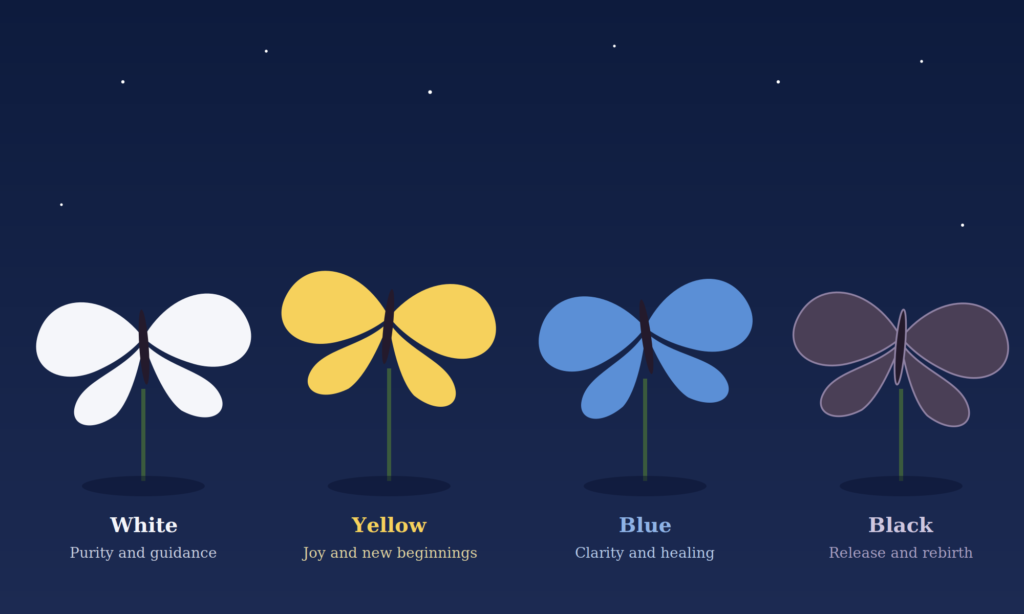
White butterflies are typically linked to purity, peace, and spiritual guidance. Many people interpret a white butterfly as a sign of protection, sometimes specifically from a deceased loved one or guardian spirit.
Yellow butterflies carry associations with joy, optimism, and new beginnings. Their bright coloring lends itself naturally to themes of positivity, creativity, and even prosperity.
Blue butterflies are often connected to mental clarity, healing, and a sense of calm. Some traditions describe blue as a color of communication with the divine or a signal that a long-held hope is close to being realized.
Black butterflies carry more complex symbolism. In some cultures they’re associated with death, while in others they represent the release of negative energy, deep introspection, or the courage required to face fear head-on. The dual meaning reflects how differently cultures have historically treated the color black itself.
Practical Ways to Reflect on a Butterfly Sighting
Whether or not you interpret butterflies as spiritually significant, there are grounded ways to sit with the question of why do you keep seeing butterflies rather than dismiss it outright.
Notice the context.
Was the butterfly sighting near a decision point, a loss, or a moment of stress? The timing often matters more than the sighting itself.
Pay attention to color.
if you remember it, and consider what that color’s traditional meaning might reflect back about your current situation.
Journal the moment.
Writing down what was happening in your life when you noticed the butterfly can help clarify whether the sighting is pointing to something real you’ve been avoiding thinking about.
Use it as a pause, not a prophecy.
Rather than treating a sighting as a literal instruction, many people find it more useful as an invitation to slow down and check in with themselves.
Let the meaning be personal.
Spiritual symbols work best when the interpretation comes from your own life circumstances rather than a rigid, one-size-fits-all definition.
Common Misconceptions About Butterfly Symbolism
A common misconception when exploring why do you keep seeing butterflies is that a sighting must mean something urgent or specific, like a warning. In most traditions, butterflies are associated with gentle reassurance rather than alarm.
Another misconception is that black butterflies are universally a bad omen. As outlined above, many traditions frame black butterflies around transformation and courage rather than death alone.
It’s also worth noting that not every meaningful coincidence needs a supernatural explanation to matter. Even from a purely psychological standpoint, noticing a butterfly during a hard season and choosing to interpret it as encouragement can genuinely support someone’s emotional resilience, regardless of what’s happening biologically behind the sighting.
For daily insights on consciousness, clarity, and trusting yourself, explore Bahlon’s free daily transmissions.
Related Readings:
- Spiritual Awakening Guide
- Spiritual Awakening Stages and Symptoms
- How to become Spiritual Awakening?
Frequently Asked Questions
What does it mean when a butterfly lands on you?
Many traditions interpret this as a particularly strong sign, often read as confirmation that you’re on the right path or that a spiritual guide is close by.
What does it mean when a butterfly flies around you repeatedly?
This is often interpreted as a message trying to get your attention, commonly associated with a loved one who has passed or a sign that change is actively unfolding in your life.
Is seeing butterflies frequently just a coincidence?
It can be. Psychologists point to selective attention as a likely explanation for why sightings seem to cluster during emotionally significant times. Many people find both the psychological and spiritual explanations meaningful at once.
Do different colored butterflies really mean different things?
Color symbolism comes from folklore and cultural tradition rather than scientific evidence, but it remains a widely used framework for interpreting what a specific sighting might represent.
What should I do if I keep seeing butterflies?
There’s no required action. If you find yourself asking why do you keep seeing butterflies during a particular week or season, it’s often worth noting what else was happening in your life at that moment. Many people find it helpful to simply sit with that timing and let the symbolism serve as a quiet prompt for reflection rather than a rule to follow.