Category: Personal Development
-
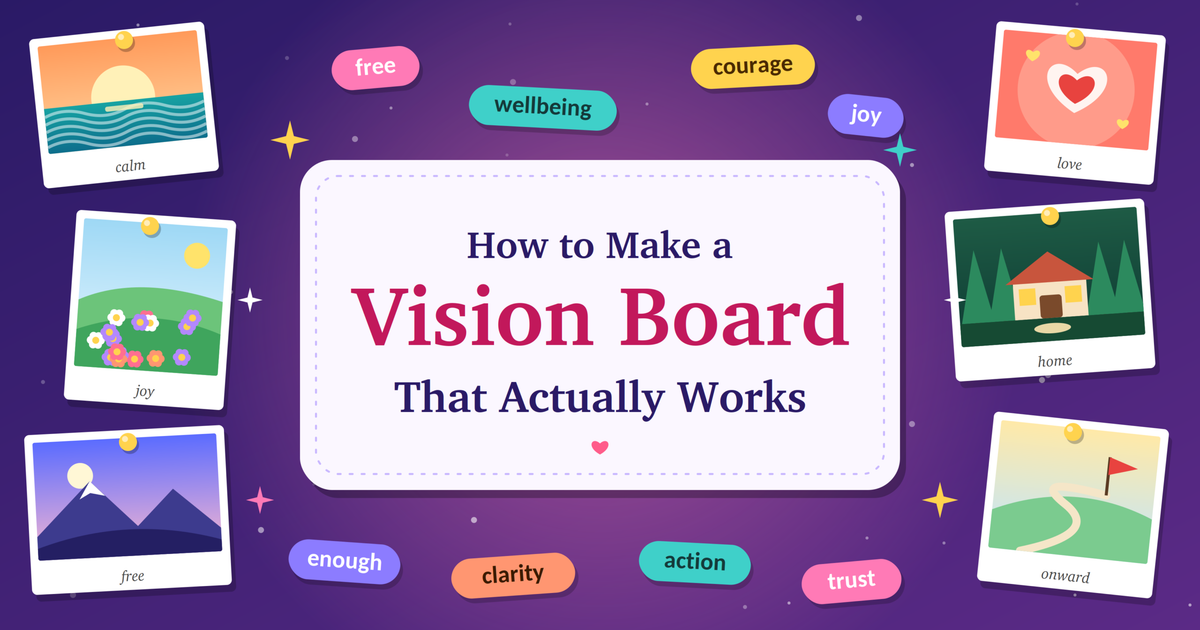
How to Make a Vision Board That Actually Works
Knowing how to make a vision board starts with a simple idea: the board is a tool for clarity, not a wish list. Choose a few goals that matter to you, pick images and words that evoke the feeling you want, and then pair the board with consistent, real-world action. Without that last step, a…
-
How to Trust the Timing of Your Life
To trust the timing of your life means accepting that your path unfolds on its own schedule, not one borrowed from someone else’s milestones. It means acknowledging that you may not understand why something is happening, or when it will resolve, while still choosing to move forward. This isn’t passive waiting. It’s an active practice…
-
How to Surrender to the Universe (and Why It’s So Hard)
Learning how to surrender to the universe starts with a simple shift: releasing the need to control every outcome and choosing instead to trust the natural unfolding of life. It sounds simple in theory, yet for most people it’s one of the hardest things to actually practice, because it asks you to loosen a grip…
-

What Does It Mean to Surrender Spiritually?
What does it mean to surrender spiritually? At its core, spiritual surrender means letting go of the need to control life’s outcomes and choosing instead to trust something larger than the ego, whether that’s called God, the universe, or the natural order of things. It is not resignation or giving up. It is an active…
-

How to Let Go of Control: A Spiritual Approach
Knowing how to let go of control means shifting your energy from forcing outcomes to trusting a larger process, whether you call that process the universe, a higher power, or simply the natural unfolding of life. In practice, it looks like doing your part fully and then releasing your grip on how, when, or whether…
-

Why You Can’t Lucid Dream and How to Fix It
Why you can’t lucid dream usually comes down to a few specific habits of mind, not bad luck. Most people who try fail not because lucid dreaming is rare, but because the sleeping brain is remarkably good at fooling itself. Roughly half of all people have had at least one lucid dream in their lifetime,…
-
Simulation Theory Explained: The Science and Philosophy Behind It
Simulation theory is the idea that reality as we experience it, including the physical universe and human consciousness, might actually be an artificial construct generated by an advanced computing system rather than a fundamental, “base level” reality. It is not a fringe conspiracy theory. It has been argued seriously by philosophers, physicists, and technologists, most…
-

Dream Journaling: Techniques for Better Sleep
Introduction Dream journaling is a fascinating practice that is not only an exploration of the subconscious but also a technique that could lead to better sleep quality. By keeping a dream journal, we immerse ourselves in the intricacies of our minds, uncovering patterns, themes, and narratives that could help us understand our waking lives better.…
-

Benefits of Journaling: Balanced Mind and Body
Introduction Journaling, an age-old practice often overlooked in the digital age, holds the potential to balance our minds and bodies in ways unimaginable. It goes beyond the realm of mere record-keeping to become a therapeutic tool that not only documents our thoughts and feelings but also aids in processing them. Not just a blank page…
-

Mindfulness Journaling: Way to Present Awareness
Introduction Mindfulness journaling is a self-reflective practice that encourages individuals to concentrate on the present moment, fostering a profound comprehension of their thoughts, emotions, and behaviors. This approach combines the principles of mindfulness—being consciously aware of your surrounding environment and your current state of mind, without judgment—and the therapeutic advantages of journaling. By documenting our…